
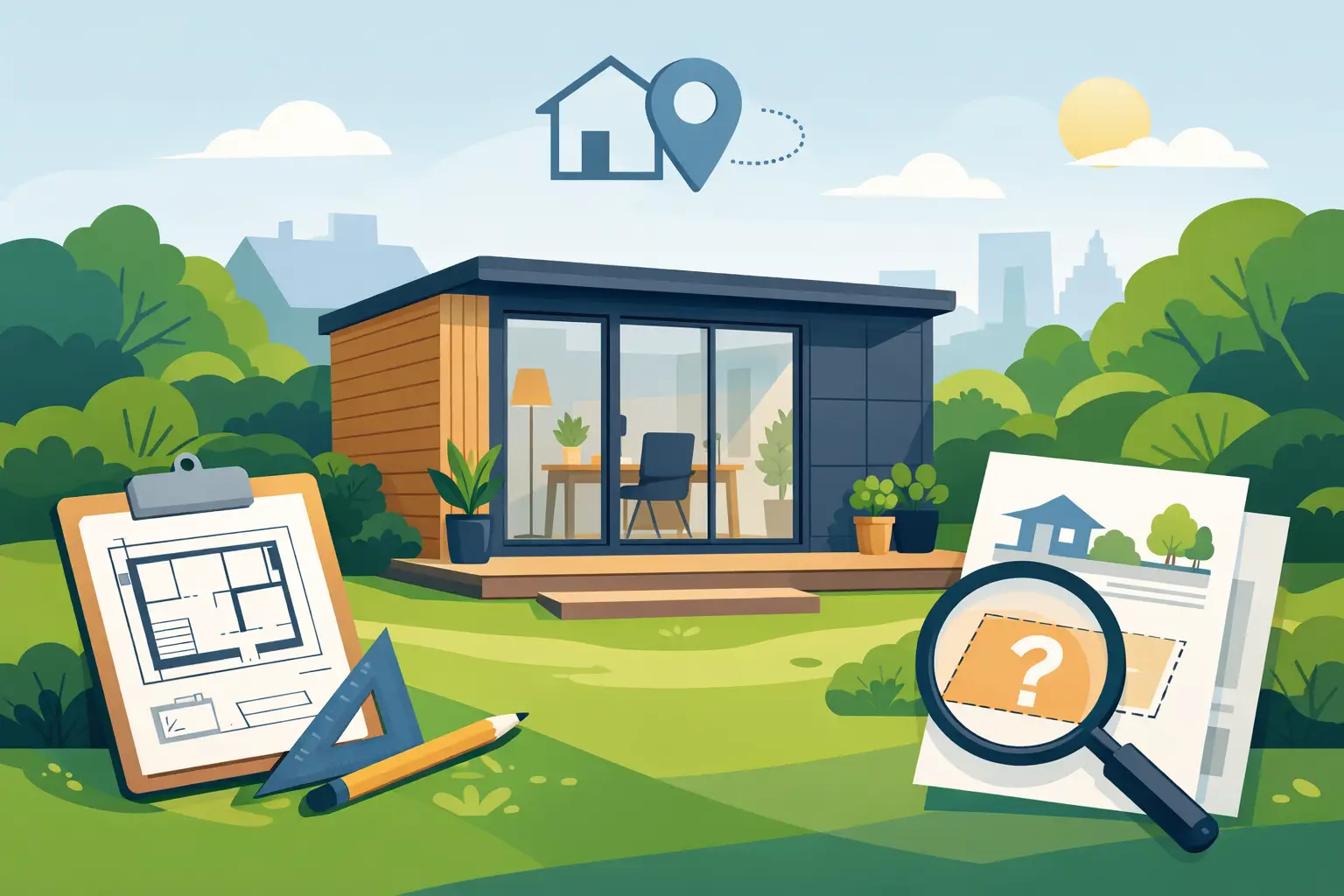
If you are pricing up a garden office, studio or annexe, one question usually appears before you choose cladding, glazing or layout: do garden rooms need planning permission? The reassuring answer is often no – but not always. It depends on how the building will be used, how large it is, where it sits in your garden and whether your home has any planning restrictions already attached.
That grey area is exactly why it pays to check the rules early. A well-designed garden room can give you valuable extra space without the cost, mess and delay of a full extension, but only if the project is set up correctly from the start.
Do garden rooms need planning permission in the UK?
Many garden rooms in the UK fall under permitted development, which means they can be installed without a full planning application. This is the route most homeowners hope for, and in many cases it is entirely realistic. If your garden room is incidental to the main house and stays within the size and positioning rules, formal planning permission may not be needed.
The word incidental matters more than most people realise. A garden office, gym, hobby room, music studio, games room or summer house is usually classed as incidental use. In simple terms, that means the building supports the enjoyment of the home rather than becoming a separate home in its own right.
Where people get caught out is assuming all detached buildings are treated the same. A compact home office at the end of the garden is very different from a large self-contained annexe with sleeping, cooking and bathroom facilities intended for full-time occupation. One may sit comfortably within permitted development. The Other may need planning approval and possibly additional sign-off.
When a garden room is usually allowed under permitted development
For many standard projects, the rules are fairly homeowner-friendly. A garden room is more likely to fall within permitted development if it is a single-storey outbuilding, does not cover too much of the garden, and is not positioned in front of the principal elevation of the house.
Height also matters. If the building has an overall height within the permitted limits, and particularly if it is being placed near a boundary, roof design becomes part of the conversation. A flat roof or low-profile roof often makes compliance much easier than a taller pitched structure.
The building should also remain subordinate to the main house. In practice, that means it should look and function like an accessory building rather than a new dwelling. A bespoke garden studio for work, leisure or entertaining usually fits that idea well. A structure designed to operate as an independent residence usually does not.
There are also broader site rules to bear in mind. Outbuildings and extensions together must not take up more than half the land around the original house. This catches some homeowners by surprise, especially on plots that already include conservatories, sheds or previous additions.
When planning permission is more likely to be needed
There are several situations where a planning application becomes more likely, and this is where a specialist supplier can save you a lot of time and uncertainty.
The clearest example is sleeping accommodation or independent living. If you want a granny annexe for regular residential use, the local authority may treat it very differently from a garden office or hobby room. The presence of a bedroom, kitchen and bathroom does not automatically mean refusal, but it does move the project into a more regulated category.
Listed buildings are another important exception. If your property is listed, permitted development rights are more restricted, and even a modest garden building can require formal consent. The same caution applies if your home is in a conservation area, Area of Outstanding Natural Beauty, National Park or similar designated land, where additional controls often apply.
Placement can trigger permission too. If the building is intended for land in front of the house, is unusually tall, or would dominate neighbouring boundaries, it is far less likely to sit comfortably within permitted development rules. Neighbour impact is not just a courtesy issue – overlooking, overshadowing and visual bulk can all become planning concerns.
Size, height and location matter more than people think
Homeowners often focus on floor area first, but planning officers rarely look at size in isolation. A larger garden room can still be acceptable if its height, footprint and position are carefully handled. Equally, a smaller building can create problems if it is too close to a boundary or designed in a way that feels overbearing.
This is why low-maintenance, purpose-built garden rooms are such a practical option. A bespoke design gives you more control over roof height, door placement, glazing and overall proportions, which can help you make the most of the space while staying on the right side of the rules.
It is also worth remembering that practical design and planning compliance often go hand in hand. For example, choosing high-performance insulation, durable composite finishes and quality windows makes the building more comfortable year-round, but it also supports a smarter, more considered scheme overall. A building that looks permanent, polished and proportionate tends to inspire more confidence than one that feels improvised.
Garden offices, studios and gyms versus granny annexes
Not all garden buildings are judged equally, even if they look similar from the outside.
A garden office, art studio, treatment room, home gym or entertainment space will often be the simplest route from a planning point of view, provided the structure remains incidental to the house. These uses are popular because they add proper, usable square footage without changing the legal status of the property.
A granny annexe is a different conversation. If it is designed for a relative to live in full-time, with independent day-to-day facilities, planning permission is much more likely to be required. Building regulations are also usually more involved because the expectations around safety, drainage, insulation and services are higher.
That does not make an annexe a bad idea – far from it. For many families, it is a smart and flexible solution. It simply needs to be approached with realistic expectations about the approvals process.
Building regulations are separate from planning
One of the most common misunderstandings is treating planning permission and building regulations as the same thing. They are not.
Planning looks at whether the development is acceptable in principle – its size, use, appearance and impact. Building regulations look at how it is constructed – the structural integrity, insulation levels, electrics, fire safety and other technical standards.
So even if your garden room does not need planning permission, it may still need to comply with building regulations, particularly if it is large, heavily serviced, or intended for regular day-to-day use. If you are creating a genuinely comfortable all-year-round workspace or leisure room, this is not something to gloss over. Good construction is what turns a garden building from a seasonal extra into a reliable part of the home.
The checks worth making before you buy
Before you commit to a design, it is worth asking a few straightforward questions. What exactly will the room be used for? How close will it sit to the boundary? How tall is the roofline? Has the property had previous extensions or outbuildings? Is the house listed or in a designated area?
If the answer to any of those raises doubt, get clarity early. It is far easier to adjust a design on paper than to deal with objections, delays or enforcement after installation.
This is where working with a specialist matters. A supplier that understands garden buildings properly can help you think beyond appearance alone and shape a scheme that is practical, compliant and genuinely suited to how you live. Composite Garden Studios, for example, focuses on bespoke spaces designed for year-round use, which is exactly the sort of detail-led approach that helps avoid expensive guesswork.
A sensible approach saves time later
The best garden room projects are not just attractive – they are well judged. They fit the plot, suit the household and respect the planning framework from the outset. That might mean a straightforward permitted development garden office with low-maintenance composite cladding and insulated walls. It might mean a more involved annexe project that needs formal approval but delivers long-term flexibility for family life.
Either way, the key is not to assume. If you treat planning as an early design consideration rather than a last-minute hurdle, you give yourself a much better chance of a smooth project and a finished space you can enjoy with confidence.
A garden room should make life easier, not more complicated. Get the permissions question sorted at the start, and the exciting part – creating a durable, comfortable space you will actually use – becomes much simpler.