
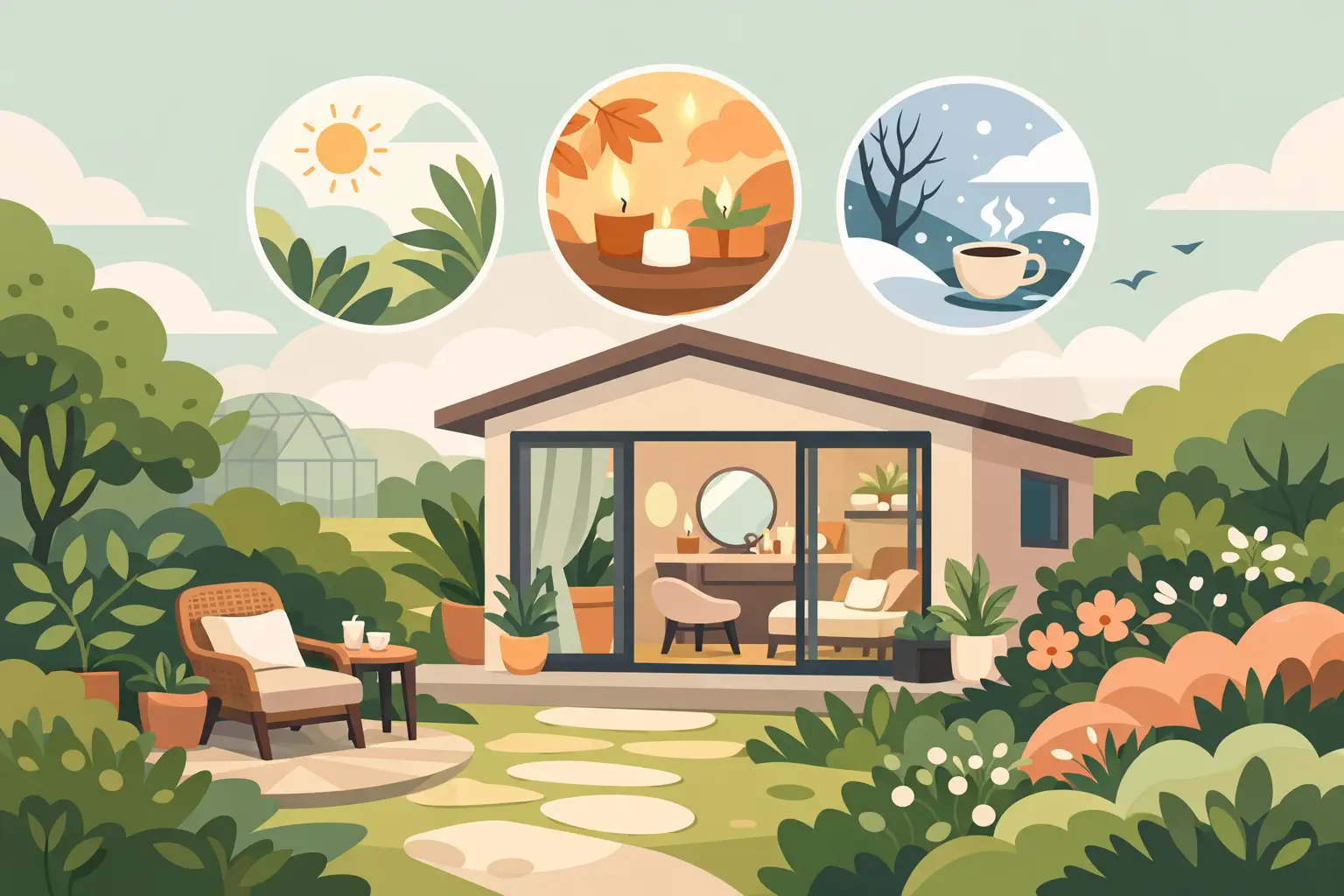
A spare bedroom can work for a while, but it rarely feels quite right once beauty equipment, storage, clients and home life all start competing for the same space. A garden beauty room gives you something far more practical – a dedicated, private setting that feels professional for appointments and calm for your own routine, without taking over the house.
For many UK homeowners, that balance is exactly the appeal. You gain a separate space for treatments, nails, lashes, facials, massage or aesthetics-style consultations, while still keeping everything close to home. Done properly, it is not a summer-only upgrade. It becomes a comfortable, insulated part of your property that looks good, works hard and stays easy to own.
Why a garden beauty room makes sense
The biggest advantage is separation. Clients are not walking through your kitchen, family noise stays out of the way, and the room can be set up around the way you actually work rather than around whatever furniture happens to fit indoors.
That matters whether you run a beauty business full time or want a premium personal treatment space at home. A beauty room needs the right atmosphere, but it also needs practical things to be simple – good lighting, heating, storage, privacy and enough space to move around a couch or treatment chair comfortably.
There is also the question of value. Extending your home can be disruptive, expensive and slow. A well-designed garden room often offers a more straightforward route to extra usable space, especially when you want something purpose-built rather than a general spare room with a beauty trolley pushed into the corner.
What to include in a garden beauty room design
A successful garden beauty room starts with the treatments or uses you have in mind. A lash technician needs a different layout from someone offering massage, and both need something different from a homeowner creating a luxury self-care room.
Space planning comes first
Before choosing colours or finishes, think about how the room needs to function day to day. If you are working with clients, allow enough floor space around the bed or chair, somewhere for a consultation seat, and clear zones for products, tools and handwashing arrangements if required for your service.
In a smaller footprint, every detail has to earn its place. Built-in storage is often more useful than freestanding units because it keeps the room tidy and professional without eating into circulation space. If the room is mainly for your own use, you may want a softer layout with more emphasis on comfort, mirrors and a dressing area.
Light changes everything
Beauty treatments live or die on lighting. Natural light helps the room feel open and welcoming, but too much direct glare can be awkward depending on the treatment. The best setups usually combine generous glazing with carefully planned task lighting so the room works in every season and at every time of day.
A bright room can feel fresh and high-end, but privacy still matters. Positioning windows well is often more effective than simply making them bigger. It depends on your garden, neighbouring properties and whether the room faces a road or overlooked boundary.
Comfort needs to last all year
If the room is cold in January or too hot in July, it will not get used properly. Year-round comfort comes from the build itself – insulated walls, a dependable roof system, quality doors and windows, and materials that are designed for regular use rather than occasional summer evenings.
This is where many cheaper structures fall short. They may look attractive at first, but if they struggle with temperature changes, condensation or wear, the room quickly becomes less appealing. A beauty room should feel calm and comfortable from the moment someone walks in, not like a shed with nicer flooring.
Choosing materials that stay looking smart
Appearance matters in any beauty setting, but so does upkeep. Traditional timber has its place, yet many homeowners do not want the ongoing cycle of painting, staining and worrying about rot. For a space that should support your lifestyle or business, low maintenance is not a small benefit. It is part of what makes the investment worthwhile.
Composite garden buildings are particularly well suited to this kind of use because they combine the look of timber with a more durable, hassle-free finish. You get a smart exterior that continues to suit the garden, without taking on the level of maintenance that often comes with wood.
That makes ownership simpler in the long run. A garden beauty room should help you feel more organised, more professional and more comfortable. It should not add another exterior project to your to-do list every spring.
A beauty room that feels professional, not improvised
Clients notice the details. Even if your service is excellent, the setting still shapes the experience. A purpose-built room feels more reassuring than a converted corner of the house because it creates a clear sense of arrival and privacy.
That does not mean the room needs to feel clinical. In fact, the most successful beauty rooms usually strike a balance between clean and welcoming. Soft finishes, clever storage, warm lighting and good acoustics all help. The goal is to create a space that feels polished and calm, while still being easy to clean and practical to work in.
For homeowners using the room personally, the same principle applies. A garden beauty room can become a place to reset – for skincare, getting ready, hair and make-up, or simply having somewhere quiet to enjoy time away from the main house. It is a lifestyle upgrade as much as a practical one.
Garden beauty room ideas for different uses
Not every project needs to follow the same model. Some homeowners want a commercial-feeling treatment room with a separate waiting area at the front. Others want a dual-purpose garden studio that works as a beauty room on weekends and a private retreat during the week.
If you offer one core treatment, a compact design may be enough. If you need room for multiple services, stock, equipment or back-to-back appointments, it makes sense to size up early rather than trying to squeeze everything in later. Future flexibility is worth considering too. A room that works for beauty now may later become a garden office, hobby space or guest room, so layout choices should support more than one possibility where practical.
This is one reason bespoke design matters. Off-the-shelf buildings can be limiting if the window positions, door placement or internal proportions are not right for your use. A tailored room gives you more control over how the space functions from day one.
Planning, privacy and practical details
Most buyers understandably start with the look of the building, but the practical side matters just as much. Access from the house, power supply, lighting positions and how clients would approach the room all need proper thought.
Planning permission depends on the scale, position and intended use of the building, so it is worth checking early rather than making assumptions. The same goes for any business-specific requirements relating to the treatments you provide. It is much easier to design around those needs from the start than retrofit solutions later.
Privacy is another detail that often gets underestimated. A beauty room should feel tucked away without feeling disconnected. Clever placement in the garden, thoughtful glazing and the right entrance orientation can make the building feel discreet and welcoming at the same time.
Why build quality matters more than trends
Interior trends come and go, but the structure itself needs to keep performing year after year. If you are investing in a garden beauty room, the shell of the building should be doing the heavy lifting – insulation, weather resistance, durability and a finish that keeps its appeal.
That is why many homeowners choose a bespoke composite garden room rather than a basic timber unit. The difference is not only in how it looks on installation day. It is in how it copes with British weather, how much maintenance it asks of you, and whether it still feels like a proper extension of the home several years down the line.
Composite Garden Studios focuses on exactly that balance – buildings that look smart, stay comfortable and offer the kind of low-maintenance ownership that suits busy households.
Making the investment work for your home
A garden beauty room should not feel like a compromise. It should solve a space problem while adding something genuinely useful and attractive to your property. For some, that means a professional base for clients without the cost and disruption of renting premises. For others, it means finally having a dedicated room for wellness, treatments and personal time.
The right design depends on how you plan to use it, how often you will be in it, and what standard of finish you want to live with long term. A smaller room can work brilliantly if planned well. A larger one may be the better choice if flexibility, comfort and future use matter more than keeping the footprint tight.
If you get the fundamentals right – insulation, layout, lighting, privacy and materials – a garden beauty room becomes much more than an extra building at the bottom of the garden. It becomes one of the most enjoyable and hard-working spaces on your property.
The best starting point is simple: think about how you want the room to feel on a cold Tuesday morning in February, not just how it looks on a sunny day in June.