
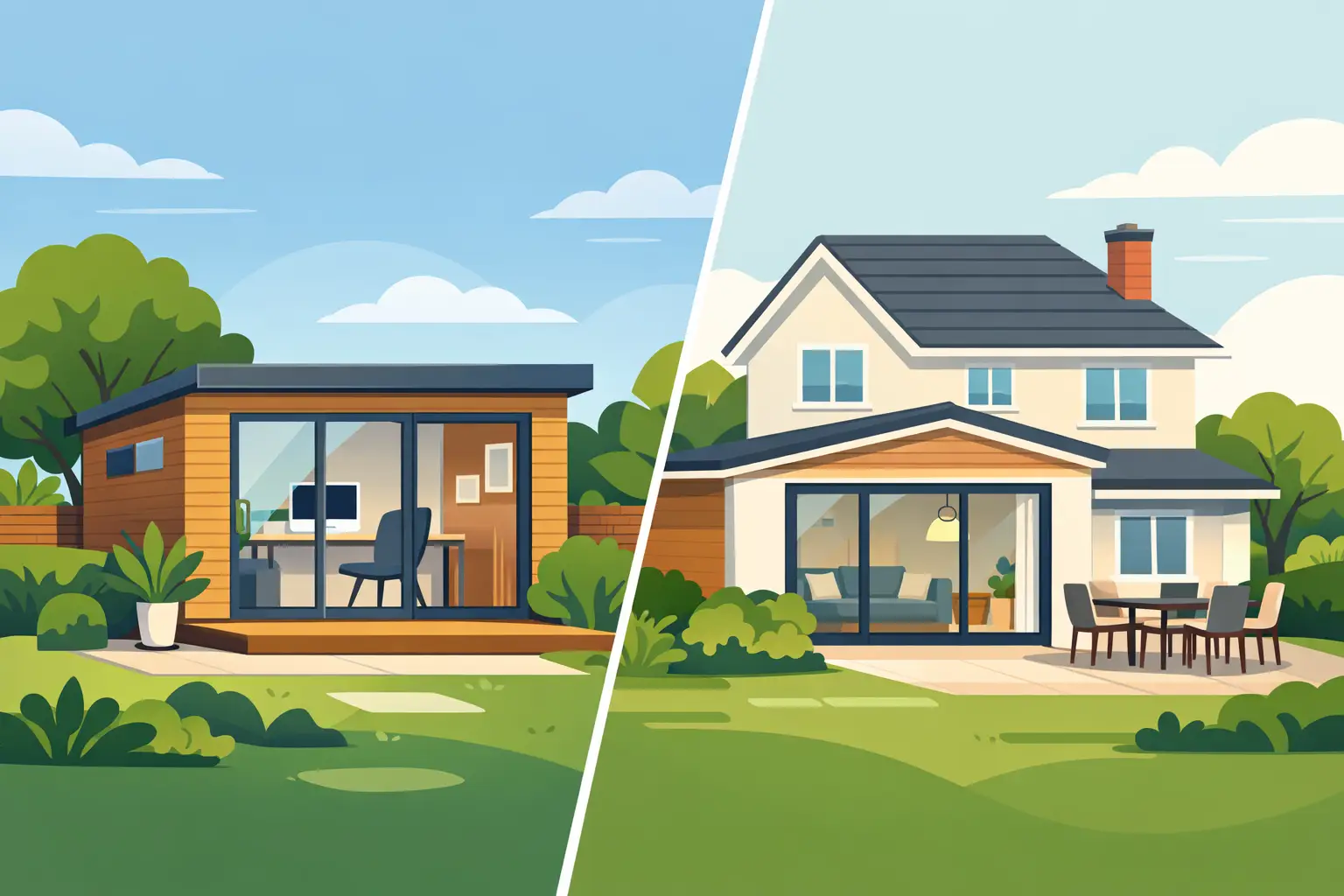
If your spare room has become a full-time office, the kitchen table is doing too many jobs, or the house simply feels tighter than it used to, the question often comes down to garden office vs home extension. Both can give you more usable space. The better choice depends on how quickly you need it, how you want to use it, and how much disruption you are willing to live with.
For many homeowners, this is not just about square footage. It is about creating a space that works properly day to day, looks right with the property, and does not turn into a long, messy project that takes over family life for months.
Garden office vs home extension: what is the real difference?
A home extension adds space directly onto the house. It can enlarge a kitchen, create a bigger living area, or add a utility room, shower room or extra ground floor space that feels fully integrated with the rest of the property.
A garden office or garden room is a separate building within your outdoor space. Despite the name, it does not have to be used only as an office. It can work as a studio, gym, hobby room, guest space, therapy room, teenage den or a quiet place to work away from the noise of the main house.
That difference matters more than it may first seem. An extension keeps everything under one roof, which suits some households perfectly. A garden room creates useful separation, which is often exactly what remote workers, growing families and lifestyle buyers are looking for.
Cost and value are not quite the same thing
Cost is usually one of the first deciding factors, but it helps to separate headline price from long-term value.
A traditional extension often involves significant groundwork, structural work, building control oversight and a longer programme on site. Costs can rise quickly once drainage, steelwork, roof changes, glazing and interior finishing are taken into account. If the aim is to create a large open-plan living area connected to the house, that investment may be justified.
A garden office is often a more controlled and predictable way to add extra room. Because it is a standalone structure, it avoids many of the structural complications that come with altering the main house. For homeowners who want a fully insulated, all-year-round space without the scale of a major building project, it can be a more efficient use of budget.
Value is about how the space gets used. If you need room for concentrated work, client calls, music practice or a personal retreat, a garden building can earn its keep every day in a way an extension may not. If you need to enlarge the core living area of the home because family life no longer fits, an extension may add value in a more practical sense.
Disruption is where many decisions are made
This is the point that changes minds.
An extension usually affects the daily running of the house while work is underway. There may be noise, dust, restricted access, trades moving through the property and periods where parts of the home are harder to use. If the extension connects to the kitchen or main living area, the disruption can be especially noticeable.
A garden office is typically installed with far less impact on your day-to-day routine. Work is largely contained outside, and the main house remains usable. For busy households, professionals working from home, or families with children, that reduced disruption can be one of the biggest advantages.
It is not just about convenience. It is about preserving normal life while still getting the extra space you need.
Planning and permissions
Planning is never a one-size-fits-all issue, and both options need proper consideration.
Extensions are more likely to require formal approvals, particularly depending on size, height, boundaries and the type of property. Building regulations will also play a central role.
Many garden rooms can fall within permitted development rules, depending on their design and placement, although this is never something to assume without checking. If you live in a listed property, a conservation area, or want a larger or more specialised structure, the planning position may be different.
The practical point is this: a garden room can often be a simpler route, but only when it is designed with the rules in mind from the start. Clear guidance at the enquiry stage can save time, cost and frustration later.
How the space feels matters just as much as size
A home extension can feel completely natural because it becomes part of the house. That can be ideal for open-plan family living, larger kitchens and spaces where constant connection is the goal.
A garden office offers something different – separation without compromise. Walking a short distance into a dedicated workspace changes how the space is used. It creates boundaries between work and home life, which many remote workers now see as essential rather than a luxury.
That same principle applies beyond work. A garden studio can become a place for yoga, painting, gaming, entertaining or quiet reading. Because it is set apart, it often feels more intentional. You are not borrowing space from the house. You are creating a destination within your own property.
Garden office vs home extension for year-round use
This is where quality matters.
A poorly built garden room may still carry the outdated image of a summer-only structure. That is not what most buyers want. If the aim is all-year-round use, insulation, roofing, glazing, ventilation and the overall build system need to be right.
A well-designed composite garden building is built for comfort in every season, with insulated walls and reliable materials that hold up over time. That makes it a realistic alternative to an extension for many uses, especially home working, hobbies and leisure.
An extension, of course, is also part of the insulated envelope of the home when built properly. The question is less about whether one can be warm enough and more about which type of space suits the way you want to live.
Maintenance and ownership over time
The build cost is only part of the story. Ongoing upkeep matters too.
Traditional timber garden buildings can demand regular treatment to keep them looking their best. That puts some buyers off, especially if they want a premium finish without the cycle of sanding, painting and staining.
Composite garden buildings appeal for a reason. They offer the look of timber with a far lower maintenance burden, along with strong weather resistance and long-term durability. For homeowners who want a smart, modern garden room without the usual upkeep, that is a major benefit.
An extension does not bring timber-building maintenance, but it does become part of the wider home, with all the associated decorating, roofing and repair responsibilities that come over time. Neither option is maintenance-free in the purest sense, but one may fit your lifestyle far better.
Which option suits your goal?
If your main objective is to enlarge the heart of the home, improve flow, or create a larger kitchen-diner, an extension is usually the stronger fit. It changes the way the house itself functions.
If your goal is to add flexible extra space quickly, with less disruption and clearer separation, a garden office or bespoke garden room often makes more sense. It is especially well suited to homeowners who want a professional workspace, a multi-use leisure room, a granny annexe-style setup or a dedicated area that does not compete with the rest of the house.
This is why there is no blanket winner in the garden office vs home extension debate. The right choice depends on whether you need integration or separation, whether your budget needs tighter control, and whether you want to improve family living inside the house or create a new space beyond it.
For many UK homeowners, the appeal of a bespoke garden building is not just cost or speed. It is the combination of convenience, comfort and low-maintenance ownership. A high-quality composite garden room can feel like a proper extension of your lifestyle without becoming a major extension of your building works.
Composite Garden Studios sees this first-hand with buyers who want more room but do not want months of upheaval or a structure that adds chores later. They want attractive, durable space they can use every day, in every season, with confidence.
Before choosing either route, think carefully about how the space will be used on an ordinary Tuesday, not just how it will look on completion day. The best investment is the one that makes daily life easier, calmer and more enjoyable for years to come.