
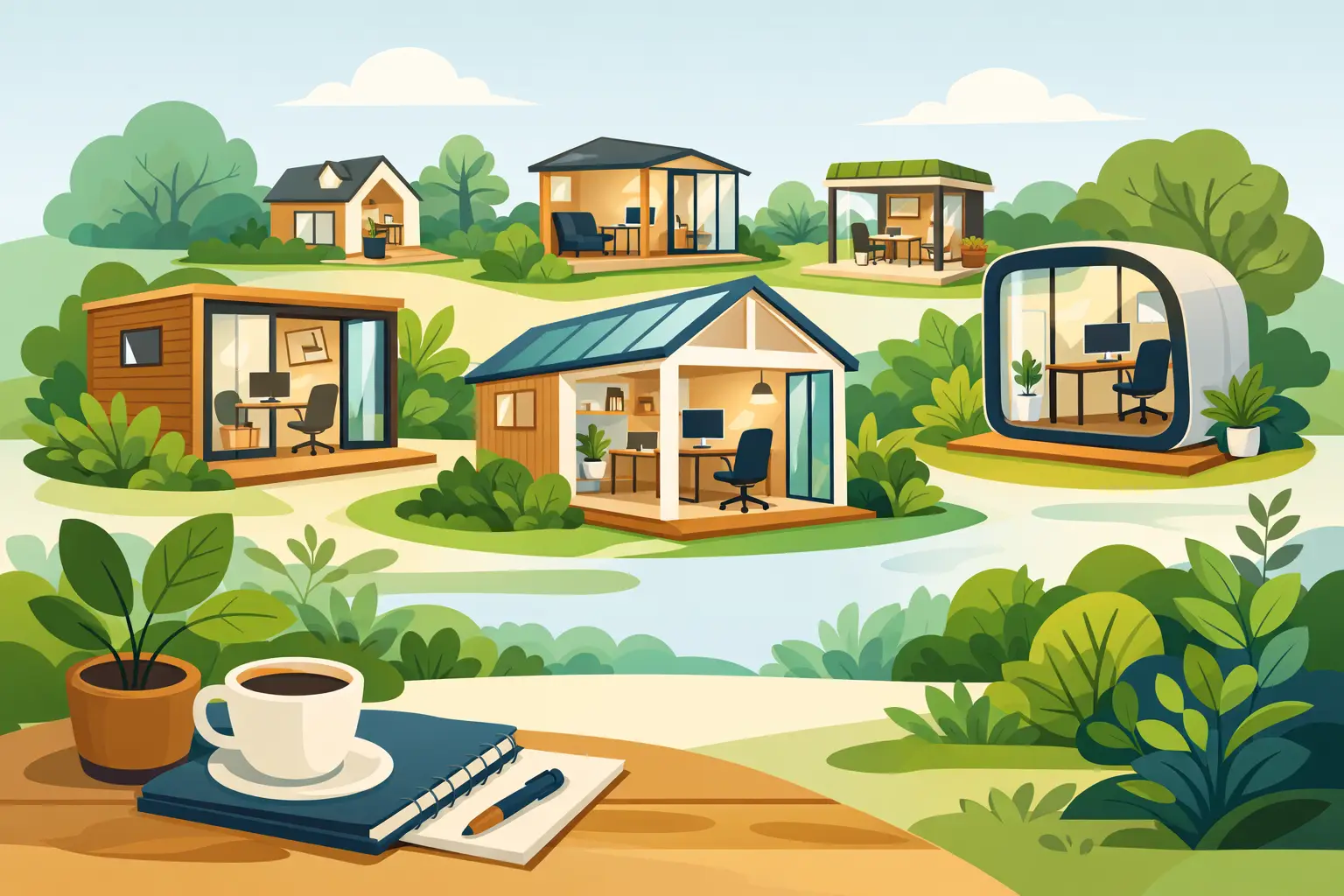
A garden office can look impressive from the outside and still feel awkward the moment you sit down to work. The best garden office layouts solve that problem early. They make the room feel calm, practical and comfortable from Monday morning calls to late-afternoon admin, while still fitting neatly into the garden and the way you live at home.
That matters more than most buyers expect. Layout shapes how much natural light reaches your desk, where storage can go without crowding the room, whether video calls feel professional, and how easily the space can switch from office to hobby room or guest space when needed. If you are investing in a year-round garden building, the layout is not a finishing touch. It is one of the main reasons the room will either work brilliantly or slowly become frustrating.
What makes the best garden office layouts work
A good layout is rarely about fitting in as much as possible. It is about giving each part of the room a clear purpose without making the space feel overdesigned. In most garden offices, that means balancing four things – desk position, storage, circulation and light.
Desk placement usually comes first because it affects everything else. If the desk faces a blank wall, concentration can be excellent, but the room may feel more enclosed. If it faces glazing, the space can feel brighter and more open, though glare becomes a bigger issue. Side-on to windows is often the sweet spot for many home workers, especially if the office is used all day.
Storage matters just as much, but it should support the layout rather than dominate it. Built-in cabinetry along one wall, a low run of cupboards beneath windows, or tall units in a rear corner can keep paperwork and equipment out of sight without making the room feel smaller. The best layouts leave enough walking space so the office still feels relaxed, not packed in.
1. The single-wall layout for compact garden offices
If your garden office has a smaller footprint, a single-wall layout is often the most efficient option. The desk, shelves and storage all sit along one wall, leaving the rest of the room open. This keeps the space feeling wider and avoids the boxed-in effect that can happen when furniture is spread across multiple sides.
This layout works particularly well in narrow garden rooms or where you want a clean, minimal look. It also makes cable management easier and keeps the room simple to heat and maintain. The trade-off is that you have less separation between work functions, so it suits laptop-based work, administration and meetings better than jobs needing multiple monitors, printers and filing systems.
2. The L-shaped layout for everyday practicality
For many homeowners, an L-shaped arrangement is one of the best garden office layouts because it gives you more usable surface area without needing a larger building. One side can be dedicated to your main workstation, while the return can hold a printer, paperwork, samples or a second screen.
It is a smart choice if your workday includes a mix of focused tasks and practical admin. It also helps define the office zone clearly, which can be useful in a multi-purpose garden room. If the room is compact, the key is not to oversize the furniture. A well-proportioned L-shape feels purposeful. An oversized one can make the whole office feel heavy.
3. The centre-desk layout for a premium feel
In larger garden offices, placing the desk nearer the centre of the room can create a more impressive, executive-style layout. It works best when there is enough depth behind the desk for a storage wall or display shelving, and enough space in front to avoid feeling cramped.
This approach can look especially strong in contemporary garden studios with wide glazing. It gives the room a confident, professional feel and tends to work well for people who spend time on video calls. The downside is that it needs proper planning. In a room that is too small, a centre-desk layout simply gets in the way and reduces flexibility.
4. The window-facing layout for natural light
Many buyers instinctively want the desk facing the garden, and there is a clear reason why. A window-facing layout makes the working day feel lighter and less enclosed. It can improve mood, make the space feel more connected to the garden and turn the view into part of the room.
This is particularly appealing if your garden office sits in a quiet, green spot rather than directly facing neighbouring properties. The main thing to manage is screen glare. Depending on orientation, you may need blinds, careful glazing choices or a slightly offset desk position. When handled properly, this is one of the most enjoyable layouts for day-to-day homeworking.
5. The side-lit layout for better screen use
If you use dual monitors, spend long hours at a desk or need a consistent setup for calls and focused work, side lighting is often the smarter solution. In this layout, the desk sits perpendicular to the main glazing rather than directly in front of it.
That gives you plenty of daylight without the same level of reflection on screens. It also leaves window walls cleaner, which can make the whole office feel more spacious. From a practical point of view, this is one of the safest choices because it tends to work in a wide range of garden building sizes and styles.
6. The zoning layout for work and more
Not every garden office is only an office. Some also need to work as a reading room, a creative studio, a meeting space or a quiet retreat once the laptop is closed. In that case, zoning the layout is often the best route.
A desk and task chair can occupy one side of the room, while a separate corner includes a lounge chair, storage bench or small meeting table. This approach is especially useful in medium and larger garden rooms where the space would otherwise feel underused. The trick is to keep the zones visually connected. Too many furniture styles or too much separation can make the room feel disjointed.
7. The twin-workstation layout for shared use
For couples who both work from home, or for households where the office needs to serve more than one person, a twin-workstation layout can be a strong investment. This might mean two desks along one wall, opposite-facing desks, or a longer fitted workspace with defined stations.
The success of this layout depends on acoustics, personal working styles and how often the room is used at the same time. If both people are frequently on calls, spacing and sound control matter just as much as the furniture arrangement. A bespoke garden office can make this far easier by allowing the layout to be considered from the design stage rather than squeezed in later.
8. The storage-first layout for busy professionals
Some jobs create more visual clutter than others. If you deal with samples, product stock, documents or equipment, storage-first planning can make the office feel far more efficient. In this layout, one elevation is dedicated primarily to built-in storage, while the desk area remains visually simple.
This works well because it protects the calm feel of the room. Everything has a place, but the workspace itself still feels open. In a bespoke composite garden office, integrated storage can be designed to suit the exact width and height of the building, which usually looks neater than trying to fill the room later with freestanding furniture.
9. The flexible layout for long-term value
Sometimes the best layout is the one that gives you options later. A flexible arrangement uses easily movable furniture, leaves clear wall space and avoids fixing the entire room around one exact way of working. That can be ideal if your role may change, if the room might later become a studio or guest space, or if family needs are likely to shift.
This is where many homeowners benefit from thinking beyond the first six months. A garden office should work now, but it should also still make sense in three or five years. Flexibility adds lasting value, particularly when the building itself is designed for all-year-round use rather than seasonal use.
Choosing the best garden office layouts for your space
The right layout depends on more than taste. Room size, door position, glazing, garden outlook and the type of work you do all shape what will feel comfortable. A layout that suits a garden-facing creative studio may not be right for someone handling confidential calls all day. Equally, the layout that looks best on paper may not be the one that gives you the easiest daily routine.
This is why a tailored approach matters. With a bespoke building, you can plan the layout alongside the structure itself – adjusting doors, windows and internal proportions to support the way you actually work. That is often the difference between a garden office that simply fits in the garden and one that becomes a genuine extension of the home.
Composite Garden Studios focuses on that kind of practical, low-maintenance design. When the building is insulated, durable and made for year-round comfort, the layout has a better foundation to succeed.
If you are weighing up ideas, start with how you want the room to feel at 10am on a busy Tuesday, not just how it might look when it is empty. That usually leads you to the layout that will keep working long after the novelty wears off.