
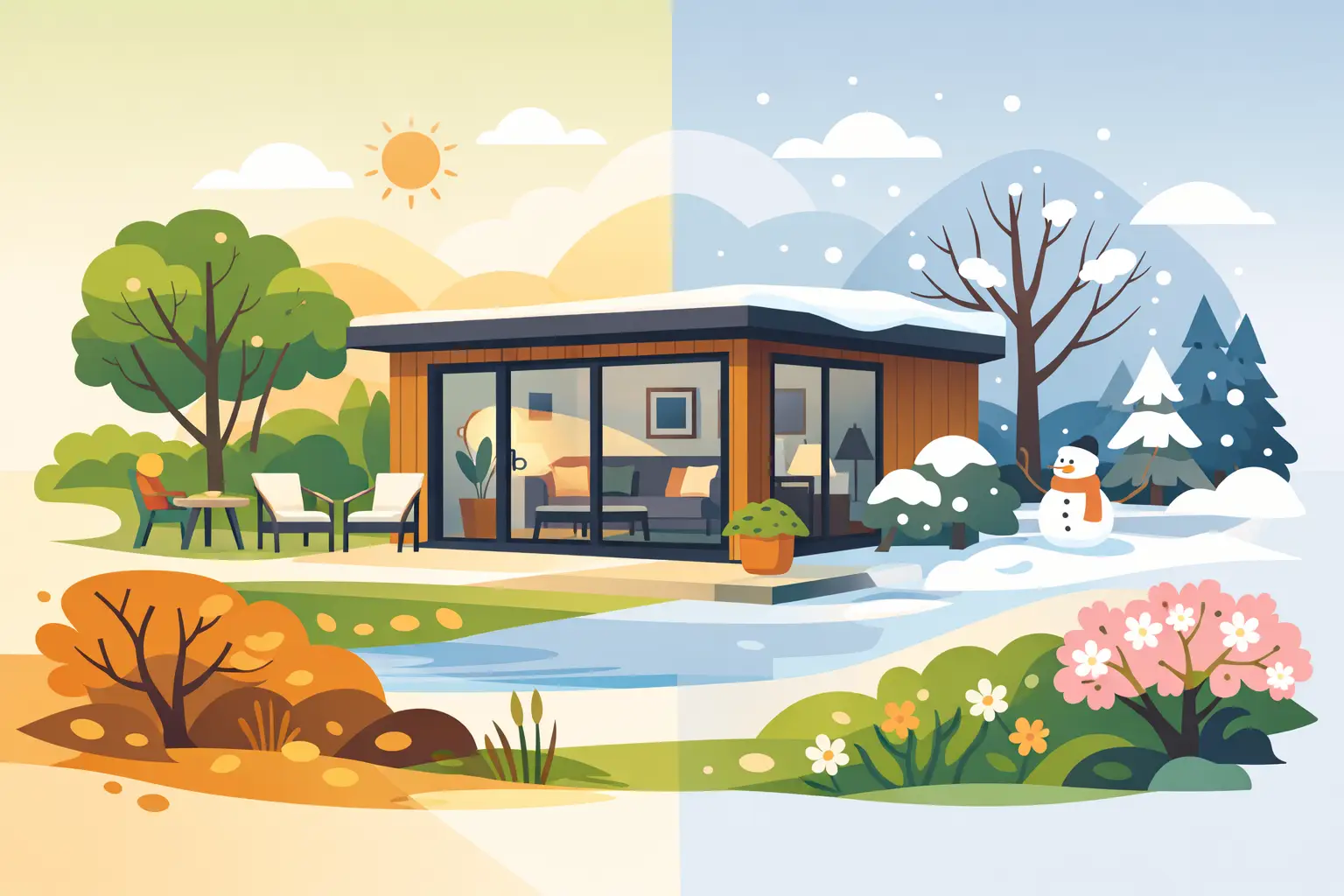
A garden room that only feels comfortable in July is not really extra living space. If you want an all year round garden room, the standard has to be much higher – warmer in winter, cooler in summer, quieter, more secure and built to cope with daily life without becoming a maintenance project of its own.
That is where many buyers find the gap between appearance and performance. Plenty of garden buildings look attractive in photos, but the real test comes on a cold January morning, during a wet week in November, or in the middle of a summer heatwave when the sun sits on the glazing all afternoon. A genuinely usable space needs to work in every season, not just on the days when the weather is kind.
What makes an all year round garden room different?
The biggest difference is not size or style. It is construction quality. A building designed for occasional summer use can get away with lighter materials and minimal insulation. An all year round garden room cannot. It needs to hold heat efficiently, manage temperature swings, resist moisture and feel solid enough for everyday use.
Insulated walls, roof and floor matter far more than many people expect. Heat does not just escape through one weak point. It moves through the whole structure. If the roof is under-specified or the floor is poorly insulated, the room will always feel harder and more expensive to heat. Good windows and doors are equally important because glazing can be one of the biggest sources of heat loss if it is not up to standard.
Then there is the practical side of ownership. A room you use every day should not demand constant upkeep. This is one reason composite garden buildings have become such a strong option for homeowners who want comfort without the sanding, staining and repainting that often comes with traditional timber.
Why material choice matters all year round
A garden room sits outside through everything the British weather throws at it. Rain, frost, low winter sun, strong UV in summer and damp conditions over long periods all put pressure on the building envelope. That is why low-maintenance, weather-resistant materials make such a difference over time.
Composite cladding is especially appealing for year-round use because it combines durability with a smart, timber-style appearance. You still get the warmth and character homeowners want in the garden, but with far less ongoing work. There is no regular painting schedule to keep up with, no need to worry about rot in the same way, and no annual cycle of trying to keep the exterior looking fresh.
That matters more than people often realise at the buying stage. A garden room may seem like a simple purchase, but it becomes part of how you live at home. If it starts to feel high-maintenance after the first couple of years, the value of that extra space quickly changes.
Designing for comfort in every season
If you want the room to feel good in daily use, design decisions should be made around comfort rather than just looks. Glazing is a good example. Large areas of glass can look fantastic and bring in plenty of natural light, but too much glazing in the wrong position can make a room overheat in summer or feel exposed in winter evenings.
The right balance depends on how you plan to use the space. A garden office may benefit from generous light without direct glare on screens. A leisure room or garden bar may suit a different window layout that creates privacy and a cosier feel. A granny annexe or family room needs to prioritise warmth, ventilation and practical movement through the space.
Orientation also plays a part. South-facing positions can be bright and inviting, but they can also gain a lot of heat. North-facing rooms may feel more stable for office use, though they can need a little more support from lighting design. There is no single perfect formula. The best outcome comes from designing the building around the garden, the property and the intended use.
Heating and insulation should work together
Homeowners sometimes focus on heating first, but insulation is what makes heating effective. Even a powerful heater will struggle if the building loses warmth too quickly. A well-insulated room, by contrast, is easier to keep comfortable and usually cheaper to run.
For many uses, electric heating is a practical choice, especially when paired with strong insulation and quality windows and doors. The room warms up faster, stays stable for longer and feels more like a natural extension of the house. That is the real aim – not just a detached structure in the garden, but a space you naturally want to use in December as much as in June.
Ventilation is part of year-round comfort too
Warmth matters, but so does airflow. In a tightly built room, poor ventilation can lead to stuffiness, condensation and an uncomfortable indoor environment. This is particularly relevant in multi-use spaces, home gyms, hobby rooms and annex-style layouts.
Opening windows, considered door placement and sensible room design all help. The best garden rooms are not simply sealed boxes. They are balanced spaces that retain heat when needed but still feel fresh and pleasant to spend time in.
The best uses for an all year round garden room
One of the biggest advantages of going all year round is flexibility. A seasonal building has a narrow purpose. A properly insulated, low-maintenance garden room can adapt as your needs change.
For professionals working from home, it creates proper separation from the house without commuting or major building work. That often means better focus, fewer distractions and a clearer work-life boundary. For families, it can become a playroom, cinema room, teenage hangout or somewhere quieter to host guests.
Older homeowners may see it as a practical step towards multigenerational living, especially when looking at granny annexe options that offer privacy and comfort close to the main home. Others want a lifestyle space – a home gym, yoga studio, music room, golf simulator room or somewhere to entertain. The common thread is simple: if the room works in every season, it gets used properly.
Cost versus value – where buyers should be careful
Budget matters, but cheapest rarely means best value with a garden room. A lower upfront price can hide compromises in insulation, structure, roofing, glazing or finishes. Those savings tend to show up later as discomfort, higher running costs or maintenance demands.
That does not mean every buyer needs the same specification. It means the building should match the level of use you expect from it. If you want a room for daily work, regular guests or family living, the specification needs to support that from day one.
This is where a bespoke approach often makes more sense than buying something off the shelf. You can size the room properly, configure doors and windows around the garden, and choose finishes that complement the property rather than settling for a standard box that almost fits.
At Composite Garden Studios, that tailored approach is central to getting the building right. A well-designed garden room should feel considered, not generic.
Planning ahead avoids expensive compromises
An all year round garden room is easier to get right when practical decisions are made early. Power supply, lighting, internet access, storage, access paths and interior layout all affect how useful the finished room will be. These details are often underestimated at the start because buyers focus naturally on the exterior.
Think about the room on a dark weekday afternoon, not just a bright weekend viewing. Will it have enough sockets? Will the lighting suit work as well as evening relaxation? Do you need built-in storage to stop the space becoming cluttered? Is the route from the house practical in bad weather?
Those questions shape long-term satisfaction. The best garden rooms are not just attractive additions to the garden. They solve a real space problem in a way that feels easy to live with.
Choosing a garden room that still looks good years later
Style still matters. A garden room should improve the look of the garden and sit comfortably alongside the home. Clean lines, quality finishes and authentic timber-style detailing can all help the building feel premium rather than purely functional.
But visual appeal should hold up over time. That is another reason low-maintenance composite materials are so popular. The building keeps its finish with far less effort, which means it is more likely to look as good in year five as it did when first installed.
For most homeowners, that balance is the goal: a space that feels modern and smart, performs properly in every season and does not create more jobs around the house.
If you are planning an all year round garden room, think beyond the first impression. Build for the coldest week of winter, the hottest day of summer and the ordinary routines in between. That is when the extra space starts earning its place every single day.