
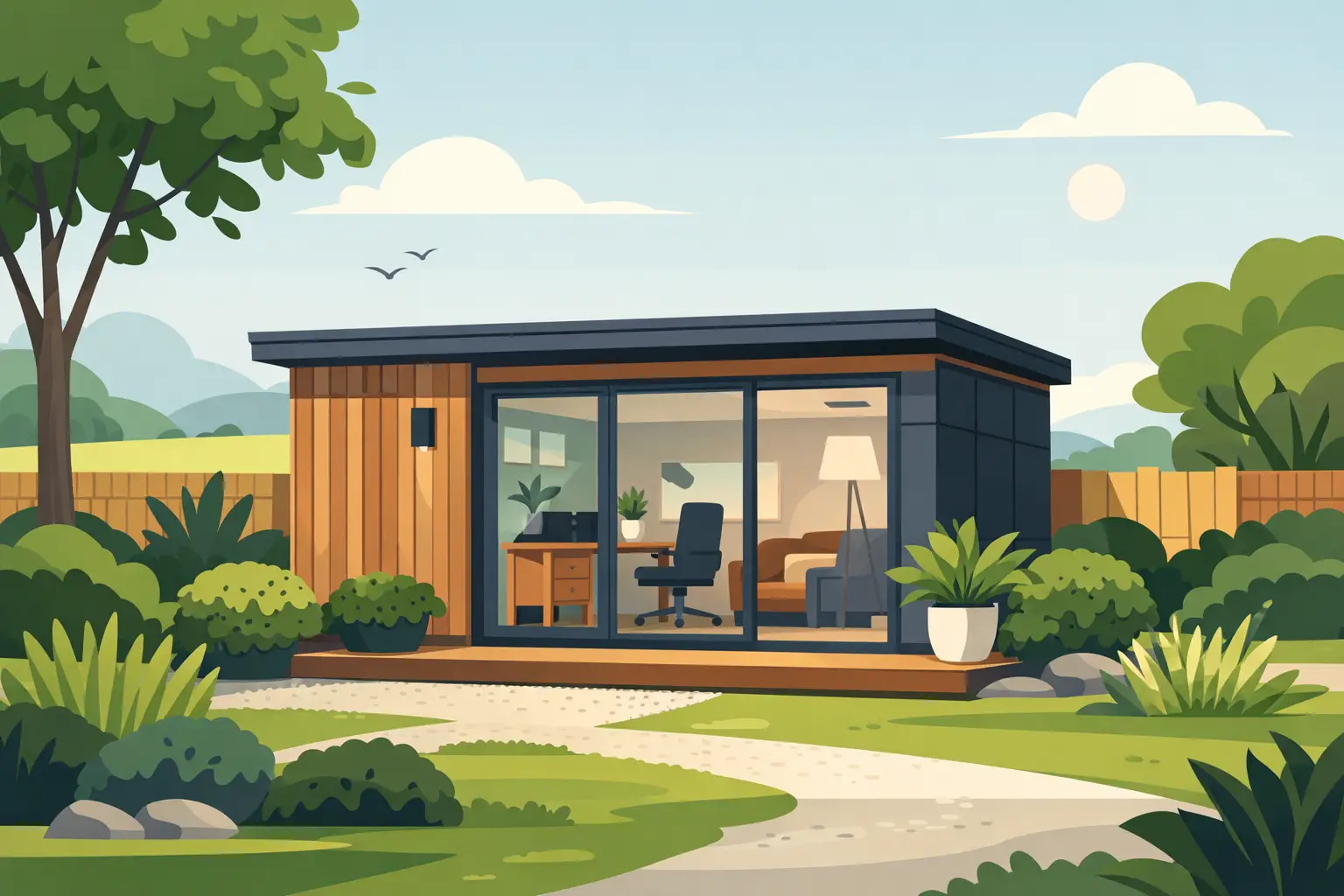
The appeal of low maintenance garden studios usually becomes obvious after the first winter. Timber that needs treating, cladding that starts to look tired, roofs that demand attention, and paintwork that never quite stays finished can turn a simple extra room into another household job. For homeowners who want more space without more hassle, a well-built garden studio solves a very specific problem.
A garden studio should make life easier, not add another maintenance list to it. Whether you need a calm place to work, a flexible room for family life, or a separate space for hobbies and entertaining, the best results come from a building that looks good and stays that way with minimal effort. That is exactly why low maintenance has become one of the biggest deciding factors for buyers across the UK.
What makes low maintenance garden studios different
Not every garden building is low maintenance just because it is new. The real difference comes from the materials, the build quality and the way the whole structure is designed to cope with British weather over time.
Traditional timber buildings can look attractive at first, but they often ask more of the owner. Painting, staining, checking for rot, watching for warping and keeping moisture at bay all become part of ownership. Some people are happy with that. Many are not, especially if the goal is to create practical extra space rather than take on an ongoing project.
Low maintenance garden studios are designed to reduce those recurring jobs. Composite exteriors are a major part of that. They give you the warm look of timber, but without the same level of upkeep. You get a cleaner finish, strong weather resistance and a surface that does not need regular repainting or staining to stay presentable.
That matters more than people sometimes expect. A garden room sits outside all year, exposed to rain, cold, strong sun and seasonal temperature changes. If the materials are not chosen properly, wear starts to show quickly. If they are, the building keeps its appearance and performance with very little input from you.
Low maintenance does not mean basic
One of the old assumptions about practical outdoor buildings was that convenience came at the cost of style. That is no longer the case. Modern low maintenance garden studios can be smart, contemporary and tailored to suit the property around them.
For many homeowners, the attraction is not just avoiding upkeep. It is being able to add a high-quality room that feels like a genuine extension of the home. A well-designed studio can be used as a garden office, creative workspace, home gym, guest room, music room or a quiet retreat away from the main house. The point is flexibility, and that flexibility only works if the room is comfortable enough to use throughout the year.
This is where insulation, roofing, glazing and internal finish all come into play. A low-maintenance exterior is important, but it should sit alongside year-round usability. A studio that looks good but overheats in summer or feels cold in January will not deliver the value most buyers are looking for.
Why materials matter more than most buyers realise
When comparing garden studios, it is easy to focus on size, layout and price first. Those all matter, but materials often have the biggest effect on long-term satisfaction.
Composite cladding is popular for good reason. It is engineered to handle exposure better than standard timber, while still giving a natural-looking finish. That means no annual staining routine and far less worry about the surface deteriorating with age. For busy homeowners, that is a major advantage.
Roofing matters too. High-performance roof systems help protect the structure from water ingress and reduce the risk of the small problems that become expensive ones later. Quality windows and doors also play a bigger role than appearance alone. They affect warmth, security, noise control and how solid the building feels in everyday use.
There is a trade-off to acknowledge here. A genuinely low-maintenance studio may cost more upfront than a cheaper basic garden building. But lower ongoing upkeep, better durability and a longer-lasting finish can make that extra investment the more sensible option over time. For most buyers, the question is not simply what costs less today, but what asks less of them over the next ten or fifteen years.
Choosing a studio that suits real life
The best garden studio is the one that fits how you actually plan to use it. A work-from-home office has different priorities from a family room or hobby space. If you need daily use, comfort and insulation become non-negotiable. If you want a leisure room for evenings and weekends, layout and atmosphere may matter more.
Low maintenance is still central in every case because it protects the convenience you are buying in the first place. If the studio is meant to create breathing room in your home, it should not create extra chores. That is why bespoke design is often a better route than choosing a one-size-fits-all structure.
A made-to-measure approach allows you to think about glazing, access, storage, privacy and orientation properly. A south-facing building with lots of glass may be ideal for one garden and less suitable for another. A compact studio can work brilliantly if it is designed efficiently. A larger building can be worth the investment if it needs to serve several purposes at once.
This is where specialist advice adds value. Companies such as Composite Garden Studios focus on buildings that combine tailored design with durable, low-upkeep materials, which is exactly what many households are looking for when they want extra space without the disruption of an extension.
The everyday benefits homeowners notice first
Most people are initially drawn to the big-picture benefits – more room, better work-life balance, a smarter use of the garden. But once the building is in place, the everyday practical wins tend to matter just as much.
A low-maintenance studio saves time. It reduces the list of jobs competing for your weekends. It also helps preserve the look of your garden, because the building continues to feel neat and finished rather than gradually becoming something that needs attention.
There is also peace of mind in knowing the structure is built for all-season use. In the UK, that matters. Heavy rain, damp conditions and cold spells quickly expose weaknesses in poor-quality garden buildings. A studio with insulated walls, reliable roofing and durable exterior materials stands up far better to those conditions.
For homeowners thinking long term, there is another benefit. A well-kept, attractive garden room can add to the overall appeal of the property. That does not mean every studio should be viewed purely as a resale feature, but quality extra space is rarely a drawback when it has been designed to complement the home.
How to judge whether a garden studio is truly low maintenance
Marketing claims can make many buildings sound similar, so it helps to look past broad phrases and ask what low maintenance actually means in practice.
Start with the exterior finish. Will it need painting, staining or sealing? If so, how often? Ask about resistance to rot, fading and weathering. Then look at the roof, doors and windows, because these are common points where long-term quality becomes obvious.
It is also worth asking how the building performs in winter and summer. A studio that requires constant heating because insulation is poor may still be hard work, even if the outside needs little attention. Low maintenance should apply to ownership as a whole, not just the cladding.
Finally, consider the level of customisation available. A building that is designed around your garden and your lifestyle is more likely to be used properly and appreciated for years to come. A cheap compromise often stays a compromise.
A smarter alternative to extending the house
For many UK households, moving is expensive and extending can be disruptive, slow and far more complex than expected. A garden studio offers a different route – one that can add meaningful usable space while keeping the main home untouched.
That space can change with you. An office can become a teenage den, then a guest room, then a hobby studio later on. The more durable and low maintenance the building is, the easier it is to keep adapting it without feeling burdened by upkeep.
That is really the point. The right garden studio is not only about adding square footage. It is about creating space you will still enjoy using years from now, because it continues to look good, feel comfortable and ask very little in return.
If you are investing in a garden building, it makes sense to choose one that gives you the freedom of extra space without tying you to another set of household jobs. That is where low maintenance stops being a nice feature and starts becoming the whole reason the studio works.