
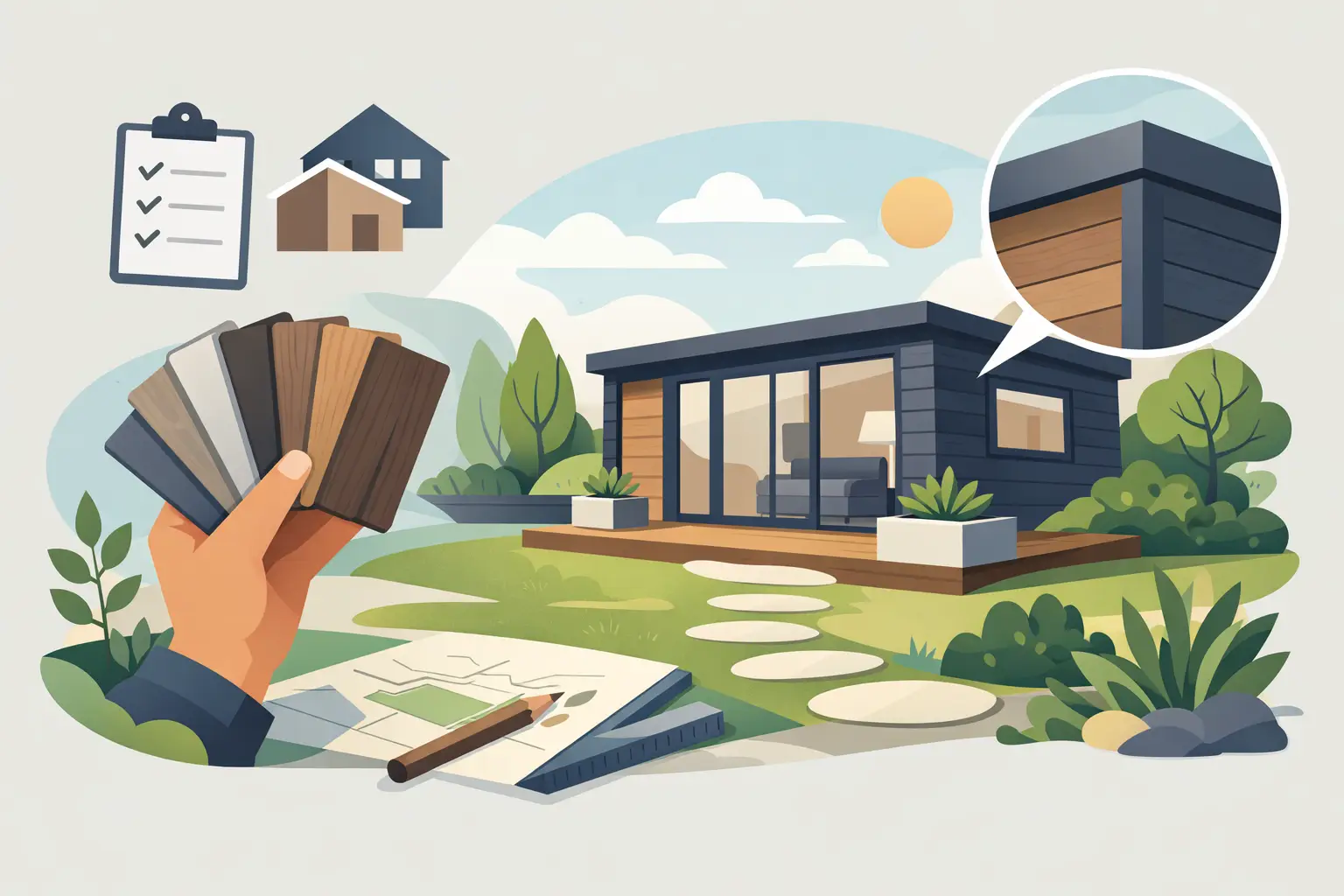
A garden room can solve a very specific problem. You need somewhere quiet to work, extra space for teenagers, a place to host family, or simply a room that does not involve taking over the dining table. That is why knowing how to choose composite garden rooms properly matters. The right building feels like a natural extension of your home. The wrong one can look good in photos but fall short in daily life.
Composite garden rooms stand out because they offer the warmth of a timber look without the upkeep that often comes with traditional wood. For many homeowners, that low-maintenance appeal is the starting point. But choosing well is about more than cladding. It comes down to how you will use the space, how comfortable it will be in January as well as July, and whether the design works for your garden and your budget.
How to choose composite garden rooms for real life
The first question is not about finishes or glazing. It is about purpose. A garden office needs different things from a granny annexe, and a hobby room has different priorities from a home gym or golf simulator space. If you start with a vague idea of wanting extra room, you can end up paying for features you do not need or missing ones you will use every day.
Think about how the space will work on an ordinary Tuesday. If it is an office, you may need strong insulation, plenty of sockets, reliable lighting and enough room for fitted storage. If it is a family space, you may want wider doors, easier access and a more open feel. If the room is for overnight guests or multigenerational living, privacy, heating, plumbing options and layout become much more important.
A good composite garden room should be shaped around the way you live, not the other way round. Bespoke design matters here because small changes in footprint, door position or window placement can make a big difference to how useful the room feels.
Start with year-round comfort
A garden room should not be a fair-weather extra. One of the biggest differences between a premium building and a cheaper alternative is how it performs through the colder months. Insulated walls, roof and floor all matter, as do the quality of the windows and doors.
If you plan to use the room every week, comfort is not optional. A room that overheats in summer or feels cold and damp in winter soon becomes wasted space. Composite garden rooms are often chosen because they combine durable external materials with a properly insulated structure, making them better suited to everyday use across the year.
Heating choices will also affect your decision. Electric panel heaters or underfloor heating can work well, but the building itself needs to hold warmth efficiently. Otherwise, running costs rise and comfort drops. This is one area where spending a little more upfront can deliver better value over time.
Size should match use, not just budget
It is tempting to work backwards from a number. But the cheapest size is not always the smartest choice. If a room is too small, it quickly becomes cramped and limiting. If it is too large, you may spend more than necessary and overpower the garden.
A simple way to approach this is to think in terms of furniture and movement. A desk and chair alone need less room than a desk, storage, a reading chair and space to take video calls comfortably. A garden gym needs enough room to move safely, not just fit equipment in. A guest room or annexe needs circulation space that feels practical rather than squeezed.
The shape of the garden matters as much as the square footage. In a long narrow garden, a deep building may not be the best option. In a wider plot, a more expansive frontage with large glazing can look balanced and inviting. The right proportions help the room feel settled in the space rather than dropped into it.
Materials and finish are about more than appearance
Composite cladding is a major selling point because it offers the visual appeal of timber with far less maintenance. There is no routine painting, staining or worrying about rot in the same way you would with many timber alternatives. For busy homeowners, that hassle-free ownership is a real advantage.
That said, not all finishes create the same result. Colour choice, trim detail, roofline and glazing style all affect whether the room feels contemporary, classic or somewhere in between. The best option is usually one that complements the house rather than competes with it.
A natural timber-style finish often works well because it softens the look of a modern structure and helps it sit comfortably in a garden setting. If your home is more traditional, this can be especially important. If your property is newer, a cleaner, sharper look may feel right. The main thing is to choose a design you will still be pleased to see in five or ten years.
Layout decisions that make the room easier to live with
When people think about layout, they often focus on the exterior. In practice, the internal arrangement is what shapes the day-to-day experience. Door position affects privacy, furniture placement and how the room connects to the garden. Window placement influences natural light, views and screen glare if you are working inside.
For a garden office, front-facing glazing can bring in light, but too much direct sun may make the room uncomfortable at certain times of day. For a leisure room, large sliding or French doors may help the space feel more open and sociable. For a granny annexe or guest space, the layout may need to feel more self-contained.
Storage is another detail that is often overlooked. A room looks bigger and works better when clutter has somewhere to go. Even a simple built-in cupboard can make a studio or office more practical.
Planning, access and site conditions
Before you get too attached to a design, consider the practical side. Planning rules vary depending on size, height, intended use and where the building will sit within the plot. Many garden rooms can fall within permitted development, but that is not something to assume. Annexes and highly serviced spaces often require more careful planning.
Access to the garden also matters. If installation is difficult because of narrow side access, steps or restricted entry, that can affect design choices and project costs. Ground conditions are equally important. A sloping site or awkward terrain is not necessarily a problem, but it does need to be factored in early.
This is where working with a specialist makes a difference. A company that understands planning guidance, base requirements and bespoke layouts can help you avoid expensive changes later.
How to judge long-term value
If you are comparing quotes, it helps to look beyond headline price. A lower figure can be attractive, but what is included matters just as much as what it costs. Insulation levels, roof performance, glazing quality, electrical specification and guarantees all shape the real value of the building.
Composite garden rooms tend to appeal to buyers who want something that looks smart and stays that way. That means low upkeep, solid construction and finishes that continue to perform well with minimal effort. If you are investing in a room to improve how you live at home, the best choice is usually the one that gives you lasting comfort and confidence, not simply the cheapest route.
There is also the question of flexibility. A room that works as an office today and a studio, guest space or hobby room later has more long-term value than one designed too narrowly. Future-proofing can be as simple as allowing enough sockets, choosing a versatile layout and making sure the room feels generous enough to adapt.
How to choose composite garden rooms without overcomplicating it
The process becomes much clearer when you filter every decision through four things: use, comfort, appearance and upkeep. If the room supports your lifestyle, performs well in every season, suits your home and does not create unnecessary maintenance, you are on the right track.
That is why many homeowners choose a bespoke route with a specialist such as Composite Garden Studios rather than trying to force a standard design to fit. A tailored building can make better use of the space, reflect how you plan to live in it and give you a smarter result overall.
A composite garden room should make life easier, not add another job to the list. Choose the one that gives you more room to work, relax or host in comfort, and you will feel the benefit every time you step through the door.