
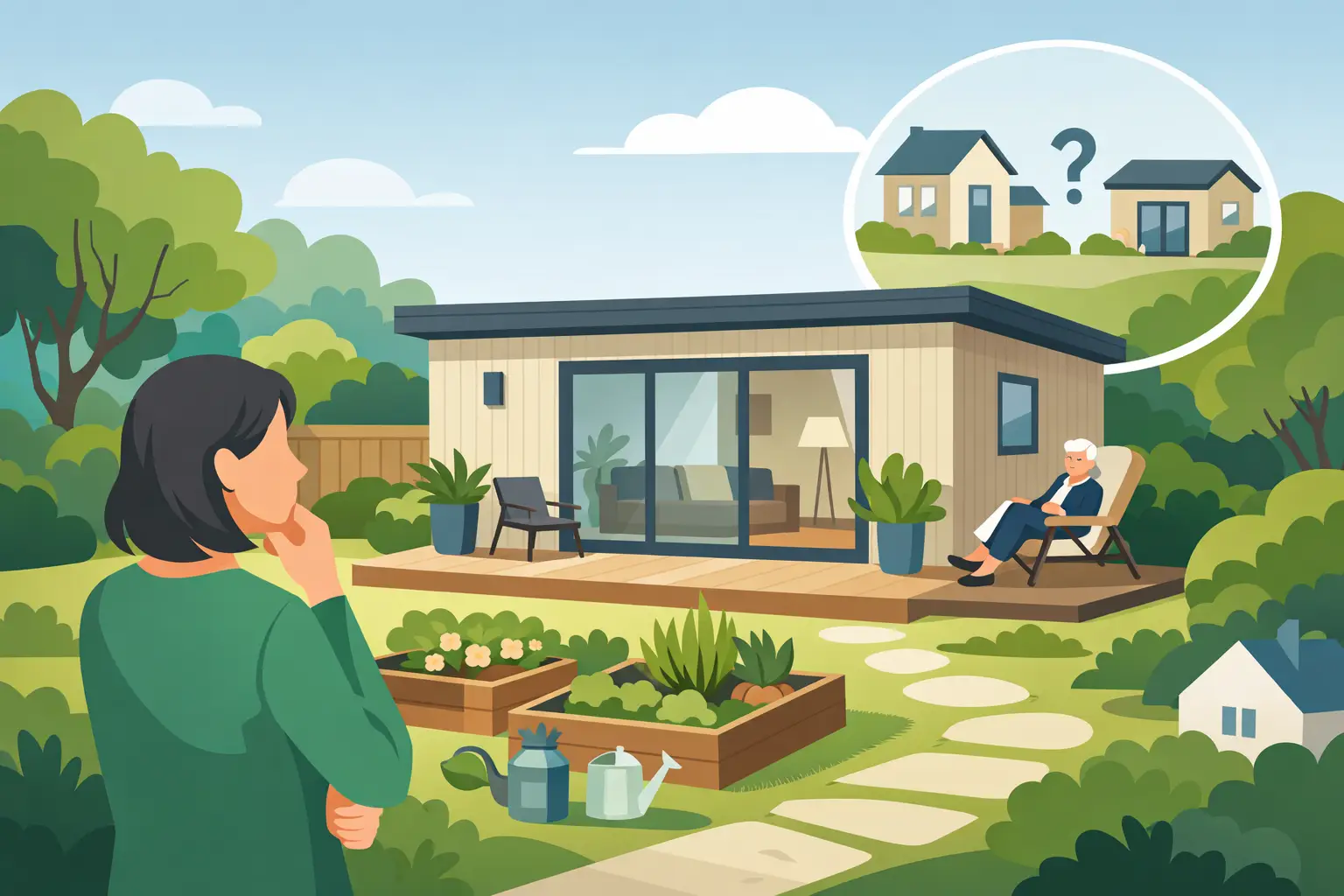
When an older parent needs to live closer, most families face the same awkward choice – move house, build a full extension, or try to make an existing spare room work. A garden granny annexe offers a fourth option that often makes far more sense. It creates a private, self-contained space close to the main house, without giving up independence or taking over family life under one roof.
For many UK homeowners, that balance is exactly the point. You want mum or dad nearby, but you also want them to have their own front door, their own routine and a comfortable place to relax. Done properly, a well-designed annexe can feel less like a compromise and more like a genuine upgrade in how the whole household lives.
Why a garden granny annexe appeals to modern families
The biggest advantage is simple – proximity without crowding. Older relatives can stay close enough for everyday support, meals and company, while still keeping the privacy that matters so much to their confidence and wellbeing. That makes a garden annexe a practical solution for multigenerational living, especially where needs are changing gradually rather than overnight.
It is also a more flexible use of space than many people first realise. A garden granny annexe may be designed for an elderly parent now, but over time it can adapt. Some homeowners later use the same building as a guest suite, a hobby room, accommodation for an adult child, or a quiet retreat for work and leisure. That long-term versatility helps justify the investment.
Compared with moving to a larger property, staying put often feels more manageable. You keep the home and area you already know, avoid the disruption of a major relocation, and make better use of outdoor space that may currently be underused. Compared with a traditional extension, a separate garden building can also preserve clearer boundaries between household members.
What makes a granny annexe comfortable all year round
A granny annexe should never feel like a glorified shed at the bottom of the garden. If it is going to work as genuine living accommodation, comfort has to come first. That means proper insulation, dependable roofing, secure windows and doors, and a layout that supports everyday life rather than just occasional use.
This is where material choice matters. Traditional timber buildings can look attractive on day one, but they often bring an ongoing cycle of painting, staining and general upkeep. For many families, that is not what they want from a long-term solution for an older relative. A low-maintenance composite garden building offers a more practical route, combining the appearance of timber with far less hassle over time.
A well-built composite annexe is designed for year-round use, not just the warmer months. Insulated walls, quality glazing and reliable construction help create a stable internal environment that feels comfortable in winter and usable through summer. For an elderly occupant, that consistency matters. It is not just about keeping warm – it is about creating a space that feels secure, dry and easy to live in every day.
The layout matters more than the square footage
A common mistake is focusing too heavily on total size. Of course, space matters, but good design matters more. A compact annexe with a smart layout can feel calm, spacious and practical, while a larger building with poor planning can feel awkward.
Most garden granny annexe designs work best when the living area, sleeping area, bathroom and kitchenette are arranged with simple movement in mind. Clear circulation space, easy access to the bathroom, and room for comfortable seating are often more valuable than trying to squeeze in extra features that will rarely be used. For older occupants, the space should feel intuitive rather than complicated.
Natural light also makes a huge difference. Large windows and doors can make the annexe feel bright and welcoming, but the design still needs privacy and sensible positioning within the garden. The best results usually come from tailoring the layout to the plot, the main house and the person who will live there.
Planning permission and practical points
This is often the first question homeowners ask, and rightly so. Planning rules for annexes can vary depending on the intended use, the scale of the building, and the specific site. A simple garden room used as incidental space is one thing. A self-contained annexe for residential use is another.
That is why it is worth treating planning as a key part of the project from the start, not an afterthought. Factors such as footprint, height, distance from boundaries, services and how the annexe will be occupied can all affect what is required. It depends on your property and local authority, so early guidance is always sensible.
Beyond planning, there are practical issues to consider. Water, drainage, electrics and heating all need careful thought. Access is equally important. If the annexe is intended for an older parent, think honestly about the route from the main house, the path underfoot, lighting, and whether the setup will still work well if mobility needs change later.
Cost versus value – the real trade-off
A garden granny annexe is a meaningful investment, so it is natural to compare it with other ways of creating more space. Some families look at extensions, loft conversions or moving home altogether. Others compare premium bespoke annexes with cheaper off-the-shelf structures.
The lowest upfront price is not always the best value. If a building needs frequent maintenance, feels cold in winter, or lacks the finish needed for everyday living, the apparent saving can quickly lose its appeal. For a space designed to house a close family member, reliability and comfort should not be treated as optional extras.
The stronger value often comes from choosing a building that is designed to last and easy to own. Composite materials are attractive for exactly that reason. They offer the warmth and style homeowners want, with less concern about rot, repainting and weather-related wear. When you are creating a living space rather than a simple storage or hobby room, that lower-maintenance approach becomes a major advantage.
There is also the wider household value to consider. A separate annexe can reduce pressure on the main house, support family care arrangements, and make day-to-day living calmer for everyone involved. Those benefits are harder to price, but they are often what matter most once the project is complete.
Designing a garden granny annexe that feels like home
The most successful annexes do not feel temporary or secondary. They feel considered. That starts with exterior design. A building that complements the garden and main property will feel like a natural part of the home, rather than an afterthought placed at the end of the lawn.
Inside, finishes should support comfort and simplicity. Easy-clean surfaces, good lighting, dependable heating and a practical bathroom setup all help the space feel settled from day one. If the occupant is downsizing from a larger home, built-in storage becomes particularly important. Clutter can make even a generous room feel limiting.
There is also an emotional side to good design. Moving into an annexe, even within family grounds, can feel like a major life change for an older person. A calm, attractive space with proper proportions, natural light and reassuring quality can make that transition much easier. It shows that the move is about independence and comfort, not simply making do.
This is why bespoke design is often the better route. Every family setup is different, every garden is different, and every occupant has different priorities. A tailored annexe can respond to those details in a way that a standard one-size-fits-all building rarely can. For homeowners looking for hassle-free low maintenance living, companies such as Composite Garden Studios focus on combining that bespoke flexibility with durable composite construction and year-round usability.
Is it the right choice for every household?
Not always. If the garden is very limited, access is poor, or the occupant needs a level of medical support that requires closer supervision, another arrangement may be more suitable. Likewise, some families prefer a fully integrated extension because it keeps everyone under one roof.
But for many households, the appeal of a garden annexe is hard to ignore. It creates a middle ground between total separation and constant closeness. That middle ground is where a lot of real life happens – shared meals, regular check-ins, a helping hand when needed, and still enough privacy for everyone to breathe.
The right project comes down to honest planning. Think about how the space will be used now, how needs may shift in five or ten years, and what level of maintenance you are willing to take on. When those answers are clear, the design decisions become much easier.
A garden granny annexe works best when it is built for real living, not just extra space. If you get that part right, you are not simply adding a building to the garden. You are making room for family life to work better, with more comfort, more independence and far less compromise.