
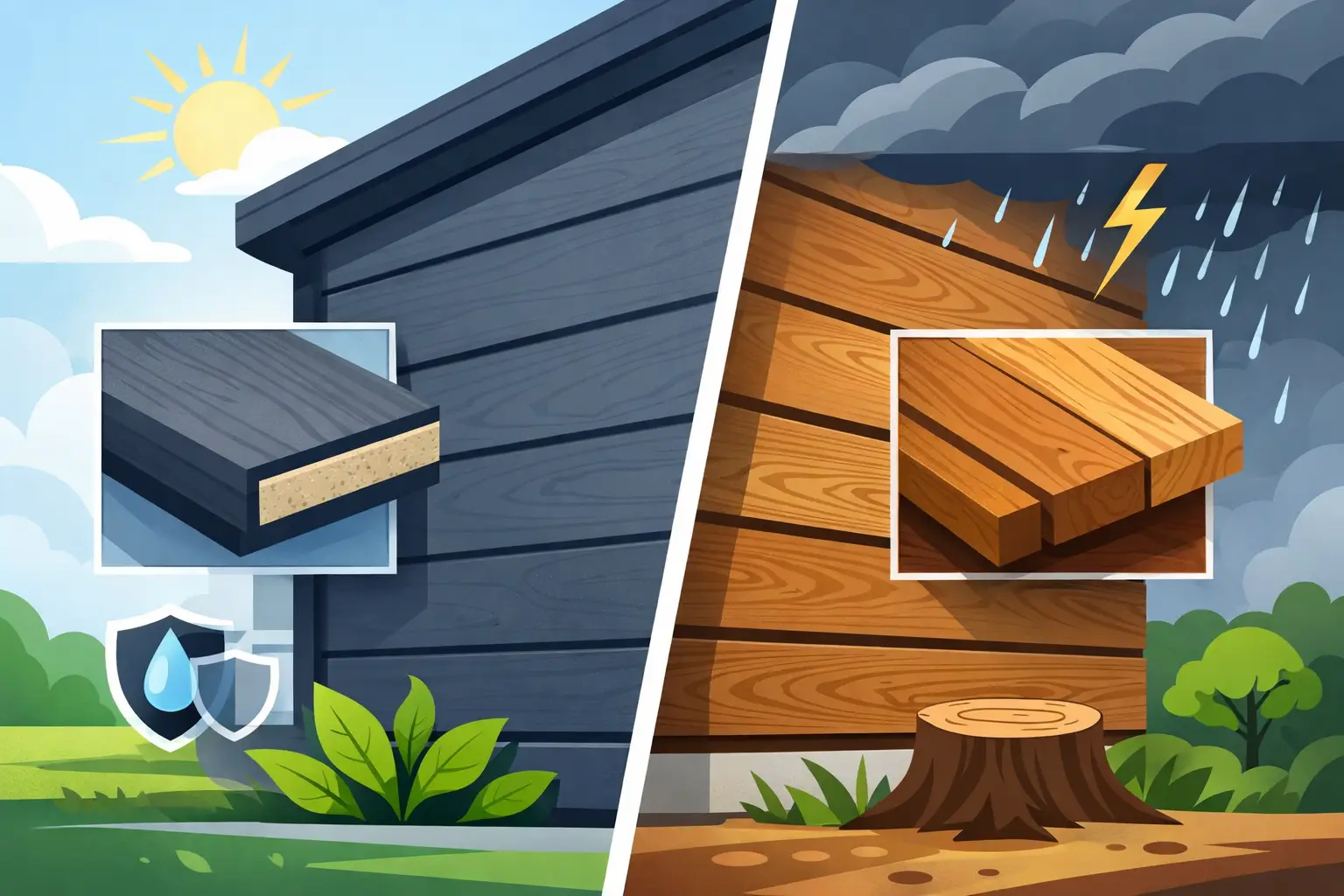
If you are planning a garden room, office or studio, the question of composite cladding vs wood usually comes up early. It affects far more than appearance. The cladding you choose will shape how much maintenance the building needs, how it weathers through British winters, and how confident you feel about its long-term value.
For many homeowners, this is the point where a garden building stops being a nice idea and starts becoming a practical investment. A finish that looks great on day one is not enough. It needs to keep its appearance, protect the structure beneath it and fit your lifestyle without demanding constant attention.
Composite cladding vs wood: what is the real difference?
At a glance, both materials can look excellent. Modern timber cladding has warmth and natural character, while high-quality composite is designed to capture that same visual appeal with far less upkeep. The biggest difference is not just how they look when installed, but how they behave over time.
Wood is a natural material. That is part of its appeal, but it also means variation, movement and ageing are built into the product. Timber can expand, contract, fade and absorb moisture depending on the weather and how well it is maintained.
Composite cladding is engineered for consistency and durability. It is made to offer the look of timber with greater resistance to rot, warping and the cycle of sanding, staining and repainting that often comes with traditional wooden exteriors. For homeowners who want a smart finish without a long list of future jobs, that difference matters.
Why maintenance is often the deciding factor
For most buyers, maintenance is where wood and composite really part company.
Timber cladding can certainly look beautiful, especially when it is new and freshly treated. The challenge is keeping it that way. In the UK climate, rain, frost, wind and strong summer sun all take their toll. To preserve the finish and help protect the boards, wood usually needs ongoing treatment. That might mean staining, sealing or repainting at intervals, plus checking for signs of wear, moisture damage or insect activity.
That level of upkeep suits some homeowners. If you enjoy caring for natural materials and do not mind periodic maintenance, timber can still be a good choice. But if your goal is a hassle-free garden building that looks smart year after year, wood can quickly start to feel like a commitment.
Composite cladding is popular for the opposite reason. It is designed to stay looking good with minimal intervention. In most cases, cleaning is straightforward and there is no need for painting or staining. That makes ownership simpler and more predictable, particularly for busy households using a garden room as a daily office, gym, studio or guest space.
Performance in British weather
A cladding material does not have to survive perfect conditions. It has to cope with damp mornings, sideways rain and seasonal temperature changes.
This is where composite has a practical advantage. Because it is built for external performance, it is far less vulnerable to the moisture-related issues that can affect timber over time. Rot is one of the biggest concerns with wooden cladding, especially if maintenance slips or exposure is harsh. Even quality timber needs ongoing care to reduce that risk.
Composite cladding offers more peace of mind in changeable weather. It is made to resist the problems that often shorten the life of timber exteriors, including splitting, cracking and surface deterioration caused by repeated wet and dry cycles.
That said, not all composite products are equal, and not all timber performs poorly. Installation quality, detailing and the overall build standard still matter. A badly fitted composite exterior will not perform as well as a properly designed structure, just as a well-maintained timber building can still give many years of service. The difference is that composite generally asks less of the owner along the way.
Looks matter – and both can work well
Some homeowners still assume composite looks artificial. That may have been true of older products, but high-quality composite cladding has moved on considerably. Today, it can offer convincing timber-style textures and contemporary finishes that suit modern garden rooms very well.
Wood, of course, has genuine natural grain and a charm that many people love. No manufactured material can fully replicate the individuality of real timber. If authenticity is your top priority, that may pull you towards wood.
But appearance should be judged over the full life of the building, not just after installation. Timber often starts strong and then gradually loses colour and uniformity unless it is regularly treated. Composite tends to keep a more consistent finish with far less effort. For many buyers, that makes it the more attractive option in real-world ownership.
In bespoke garden buildings, the best result usually comes from balancing visual warmth with practical performance. That is why composite has become such a strong choice for homeowners who want a premium finish without the burden of constant upkeep.
Cost now versus cost later
Price is never just about the initial quote.
Wooden cladding can sometimes look more affordable at first, depending on the timber species, treatment level and design. If you only compare upfront supply costs, timber may appear to be the budget-friendly route. However, that is only part of the story.
Over time, wood often brings additional spending on treatments, repainting or staining materials, maintenance labour and occasional repairs or board replacement. Even if you handle the work yourself, there is still a cost in time and effort.
Composite cladding may require a higher initial investment, but it can offer better value across the life of the building. Lower maintenance, stronger weather resistance and a longer-lasting appearance can make it a more cost-effective option in the bigger picture.
For buyers investing in a garden office, annexe or leisure room, that long-term view is usually the more useful one. The building is not a short-term purchase. It is part of how you plan to live, work or relax at home for years to come.
Composite cladding vs wood for garden buildings
When comparing composite cladding vs wood specifically for garden buildings, context matters. A shed used for basic storage has different demands from a fully insulated garden studio used every day.
If the building is intended to be a proper extension of your home, the materials need to reflect that standard. You want comfort, durability and an exterior that continues to look sharp with minimal disruption. This is especially true for premium spaces such as home offices, summer houses, granny annexes and entertainment rooms.
In that setting, composite often makes more sense. It supports the idea of all-year-round use and hassle-free ownership. You are not just buying a structure. You are creating extra living space, and most homeowners want that experience to feel straightforward rather than maintenance-heavy.
At Composite Garden Studios Ltd, that is exactly why composite finishes are such a core part of the offer. They give homeowners the timber-style appearance many want, but with a far more practical ownership experience.
When wood may still be the right choice
There are situations where timber remains a sensible option.
If you strongly prefer natural materials, enjoy regular maintenance and are happy to treat the exterior as part of ongoing home care, wood can still be rewarding. Some traditional settings also suit natural timber aesthetically, particularly where weathering is seen as part of the character rather than a drawback.
There is also a personal preference element. Some buyers simply value the authenticity of real wood enough to accept the extra work. That is a valid decision, as long as it is made with clear expectations.
The key is honesty. If you know you are unlikely to repaint, stain or inspect the exterior regularly, timber may not be the best fit. It is better to choose a material that matches how you actually want to live, not how you hope you will maintain it.
Which should you choose?
If your priority is natural character and you do not mind regular upkeep, wood can still earn its place. But if you want a smart, durable exterior that supports year-round use and keeps maintenance to a minimum, composite is hard to ignore.
For most UK homeowners investing in a bespoke garden building, composite delivers the better balance of appearance, longevity and convenience. It gives you the look people want from timber, without tying you to the ongoing cycle of treatment and repair that often comes with it.
A garden room should make life easier, not add another job to your weekend. Choosing the right cladding at the start is one of the simplest ways to make sure it stays that way.