
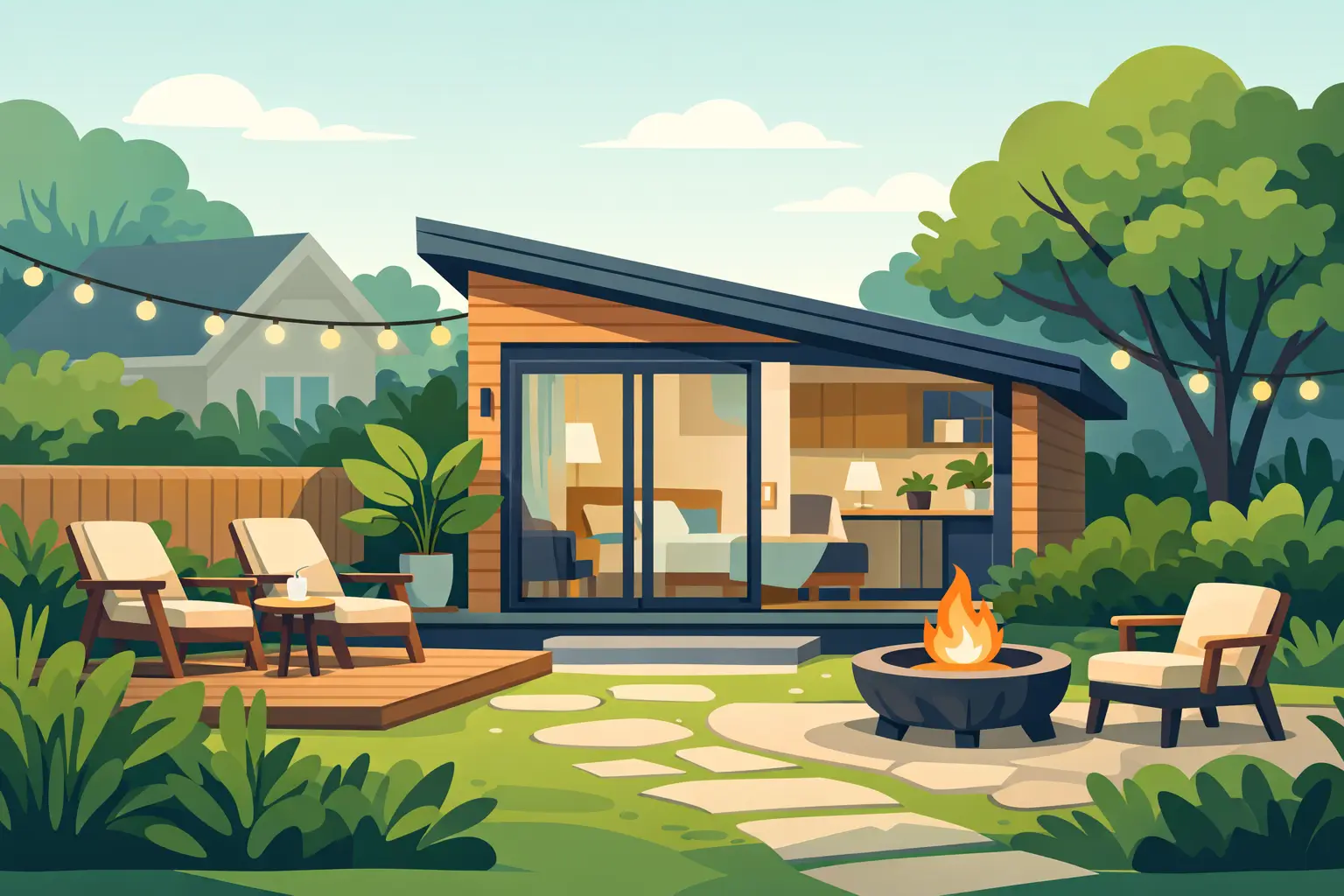
A spare bedroom can quickly become an office, playroom or place to store the things family life accumulates. Turning garden space into guest accommodation gives you another option: a comfortable, private place for visiting relatives and friends, without asking anyone to sleep on the sofa or rearranging your home each time they stay.
For many homeowners, a purpose-built garden room is a more practical route to extra space than a full extension. It can create a welcoming retreat at the end of the garden, offer guests a little independence, and still serve your household between visits. The key is designing it as a genuinely useful, all-year-round space rather than a summer-only hideaway.
Start with how guests will use the space
The best guest accommodation is planned around real stays, not just a good-looking room. Think about who is most likely to use it. A couple staying for a long weekend will have different needs from an older parent visiting regularly, grown-up children coming home for Christmas, or friends needing a quiet place after a dinner party.
A compact studio can work beautifully for occasional overnight guests when it has enough room for a proper bed, bedside storage and a small seating area. If visitors will stay more often, a larger layout with a separate sleeping zone can make the experience feel much more comfortable. A sofa bed can add flexibility, but it should not be the only plan if the building is intended to be used frequently.
Privacy matters just as much as floor area. Positioning the entrance and windows carefully can give guests a sense of their own space while protecting overlooking between the garden building and the main house. Consider the route from the house too. A well-lit, level path is far more inviting on a wet November evening than stepping across a lawn.
Turning garden space into guest accommodation that works year-round
A garden building intended for guests needs the comfort levels of a proper room, not a basic summer house. British weather makes insulation, quality glazing and a high-performance roof essential. Without them, a room may feel too cold in winter, too warm in direct summer sun and vulnerable to condensation as temperatures change.
Insulated walls, roof and floor help the room retain warmth and make it cheaper to heat when visitors arrive. Good windows and doors reduce draughts while letting in daylight, and opening windows provide useful ventilation. Heating should be selected early in the design process, whether that is electric heating, underfloor heating or another suitable system, so the space is ready to use without compromise.
Composite construction is particularly suited to a guest garden room because it brings together a timber-style finish and low-maintenance performance. Unlike traditional timber cladding, high-quality composite materials do not require regular painting, staining or treatment to keep them looking smart. That means less time maintaining the building and more time enjoying a space that is ready whenever guests call.
Think beyond the bed
The details that make a stay feel considered are often simple. Allow for bedside lighting, conveniently placed sockets, enough storage for a weekend bag and somewhere to hang coats. A small worktop for tea and coffee can be a welcome addition, while a compact table provides a useful spot for breakfast, reading or catching up on emails.
If the accommodation is for an older relative or someone with limited mobility, access deserves particular attention. Wider doors, minimal thresholds, good exterior lighting and a straightforward route from parking or the house can make a substantial difference. These choices can also make the room easier for everyone to use over time.
A garden room can be designed for more than guest stays. Between visits, it might become a home office, hobby room, reading space or family snug. This dual-purpose approach helps make the investment work harder, especially when overnight guests are occasional rather than weekly.
Decide whether you need a bathroom or kitchenette
A bedroom-style garden room can be an excellent guest space, but guests will normally return to the house to use the bathroom. For short stays and a building close to the home, that may be perfectly suitable. It also keeps the project simpler and leaves more of the interior available for a generous bedroom or lounge area.
Adding a shower room, WC or kitchenette can make accommodation more independent, but it changes the scope of the project. Water supply, drainage, electrical work and the building’s intended use all need careful consideration. These additions can affect cost, practical installation requirements and planning considerations, so it is wise to establish what you need before finalising the layout.
There is also an important distinction between occasional guest accommodation and a self-contained dwelling. If a garden building is intended to be lived in independently, rented out, or used as a separate residence, different permissions and building regulations may apply. It is always sensible to check the requirements for your specific property and plans before work begins.
Make the design feel connected to your home
A garden guest room should feel like an extension of your lifestyle, not an afterthought at the bottom of the garden. Choosing a finish that complements your home, along with window and door styles that suit the setting, will help it sit naturally within the plot.
Natural timber-style composite finishes offer warmth without the ongoing upkeep of wood. They can work equally well beside a contemporary new-build, a suburban family home or a more traditional property. The right combination of cladding, glazing and roofline can make a compact building feel refined rather than cramped.
Inside, keep the palette calm and practical. Lighter wall colours, layered lighting and thoughtful storage make smaller rooms feel more open. Blackout blinds or curtains are worthwhile for summer mornings, while a comfortable chair and soft furnishings stop the room feeling like a spare box with a bed in it.
The view from the room matters too. Frame a planted border, mature tree or quiet corner of the garden where possible. If the building faces a boundary fence, climbing plants, screening and considered landscaping can create a much more restful outlook.
Plan the practicalities before you commit
Garden size, access and ground conditions influence what can be built and how the installation will take place. Measure more than the footprint of the proposed room. Leave enough space for paths, landscaping, opening doors and maintenance access where needed. Think about whether materials can reach the site easily and whether the building will block valuable light into the house or garden.
Planning rules for garden buildings can vary according to size, height, position, property type and intended use. Some projects may fall within permitted development allowances, while others will require planning permission. Listed buildings, conservation areas and properties with particular restrictions need additional care. A specialist supplier can provide planning guidance, but the responsibility for securing the correct approvals sits with the homeowner.
It is also worth considering electrics from the beginning. Guests expect charging points, good lighting and reliable heating, and you may want exterior lights for the path and entrance. Planning the cable route early prevents disruptive work later and helps the finished space feel properly integrated.
A flexible investment in how your home works
Guest accommodation does not have to stand empty for most of the year. A well-designed garden studio can give visitors a peaceful place to stay, then return to daily use as an office, creative room, gym or quiet escape. That flexibility is one of its strongest advantages over a conventional spare bedroom.
Composite Garden Studios creates bespoke garden buildings designed around how homeowners want to live. From a compact guest suite to a larger insulated garden room with room to relax, the aim is the same: attractive, durable extra space with hassle-free, low-maintenance ownership.
Before choosing a design, picture the first real visit. Where will guests put their bags, make a drink, charge a mobile phone and settle down for the night? When those everyday moments have been planned for, a garden building becomes more than somewhere to sleep – it becomes a place people will genuinely look forward to staying.