
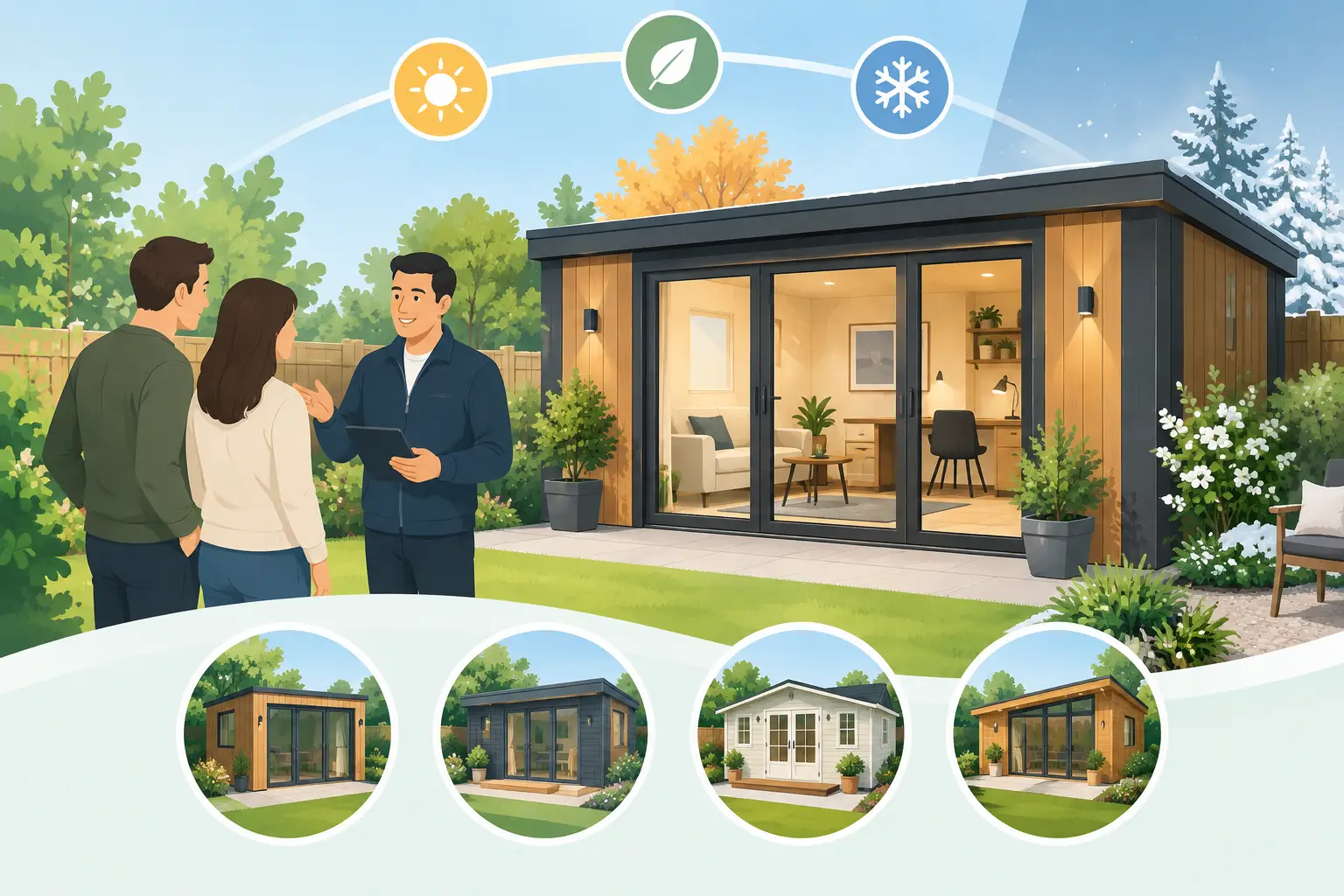
A garden annexe has to do far more than look good from the patio. Whether it will provide independent space for a parent, a comfortable base for a grown-up child or a private guest suite, it needs to feel secure, warm and practical every day of the year. That is why comparing garden annexe suppliers should begin with the building itself, not simply the headline price or an attractive image.
A well-planned annexe can add valuable living space without the upheaval of a traditional extension. But the supplier you choose will influence everything from the quality of insulation and windows to how clearly planning requirements are explained. The best choice is one that makes the process straightforward while delivering a building designed around the people who will use it.
What Garden Annexe Suppliers Should Provide
A garden annexe is a more considered investment than a basic summer house. It may be used for sleeping, relaxing, working or hosting family members, often throughout the year. It should therefore be designed as a comfortable, insulated garden building from the outset, with a layout that suits real routines rather than a standard footprint that happens to fit in the garden.
Look for a supplier that starts with your intended use. A compact guest annexe may need a bedroom area, shower room and space for a small kitchenette. A multigenerational living space may need wider access, an easy-to-use bathroom layout and enough room for comfortable day-to-day living. Those details affect the size, internal arrangement, services and overall specification.
A bespoke approach also makes it easier to place doors and windows where they work for your garden. The view, privacy from neighbouring homes, the route from the house and where daylight falls all matter. A good supplier will help you consider the building as part of the wider garden, not as a standalone box positioned wherever there is spare lawn.
Ask what is included from the beginning
Quotes are only useful when they are clear. Before comparing figures, establish exactly what each supplier includes in its proposal. Foundations, insulation, electrical installation, internal finishes, doors, windows, heating preparation, delivery and installation can all vary considerably between projects.
The lowest initial price can become less appealing if essential elements are treated as extras later in the process. Ask for a straightforward breakdown and check whether the specification is suitable for year-round occupation. A supplier should be comfortable explaining what is included, what is optional and why each element has been recommended.
Prioritise All-Year Comfort, Not Just Appearance
A smart exterior is important, particularly when the annexe will sit close to the house. However, long-term comfort depends on the performance of the whole structure. Insulated walls, a high-performance roof, quality glazing and well-fitted doors all work together to help maintain a more comfortable internal temperature.
This matters in a British winter, when a poorly specified garden building can feel cold, draughty and expensive to heat. It also matters in warmer weather. Thoughtful window placement, suitable glazing and ventilation can make the space more pleasant when the sun is strong.
Ask suppliers how the walls, roof and floor are constructed, rather than relying on general terms such as “fully insulated”. There is no need to become a construction expert, but you should understand the materials being used and the level of thermal performance the building is designed to provide. The answer should be specific, clear and relevant to how you intend to use the annexe.
Windows, doors and everyday security
Doors and windows influence comfort, natural light and security. Large glazed areas can make an annexe feel open and inviting, but they should suit the building’s orientation and privacy needs. A side-facing window may be ideal for daylight in one garden yet overlook a neighbour in another.
Quality windows and doors also make a practical difference over time. They should close properly, offer dependable security and complement the finish of the building. This is particularly relevant for an annexe containing personal belongings or used by a family member who needs to feel safe and independent.
Choose Materials That Reduce Future Work
Many homeowners want extra space because life is busy already. The last thing they need is another structure that requires regular sanding, staining, repainting or repair. Traditional timber can be attractive, but it often brings an ongoing maintenance commitment, particularly when exposed to rain, frost and changing temperatures.
Composite cladding offers a practical alternative for homeowners who want the warmth of a timber-style finish without the same level of upkeep. High-quality composite materials are designed to resist rotting and reduce the need for painting or staining. That can make a meaningful difference to the ownership experience, especially for a larger garden annexe that becomes a permanent feature of the home.
This does not mean every surface is entirely maintenance-free. Glass will still need cleaning, gutters need occasional attention and external areas should be kept clear. The point is to choose a building made for hassle-free, low-maintenance living rather than one that creates a growing list of weekend jobs.
When comparing exterior finishes, ask to see examples of completed work and consider how the material will look alongside your home, fencing and planting. A natural timber-style appearance can sit comfortably in both contemporary and more traditional gardens, provided the colour and detailing are chosen with care.
Planning, Building Regulations and Site Considerations
Planning is often the question homeowners ask first, and rightly so. The answer depends on the size, height, position and intended use of the building, as well as the property itself. A garden building used as a home office has different considerations from one that includes sleeping accommodation, a bathroom and kitchen facilities.
A responsible supplier will not make blanket promises that planning permission is never required. Instead, they should help you understand the likely considerations and point out where professional advice or an application may be needed. Properties in conservation areas, listed settings or locations with particular restrictions can require extra care.
Building regulations can also be relevant, particularly where an annexe has sleeping accommodation or services such as plumbing and electrics. The important thing is not to be put off by the process, but to work with a supplier that treats it seriously and explains the route clearly.
Your site matters too. Access for installation, ground conditions, drainage, nearby trees and the distance from boundaries can all affect the project. An early discussion about these practical points helps prevent surprises after a design has been agreed. It also gives you the chance to refine the annexe’s position before groundwork begins.
Design for Independence and Flexibility
The most successful annexes are not necessarily the largest. They are the ones that make sensible use of space. A carefully planned smaller annexe can feel generous if it has good natural light, useful storage and a layout that avoids wasted circulation space.
Think beyond the immediate need. If the annexe is for an older relative, would a level threshold, wider doorway or accessible shower make life easier? If it is intended for guests now, could it become a home office, hobby room or family retreat later? Flexibility helps protect the value of the investment as household needs change.
Internal finishes deserve attention too. Durable flooring, practical lighting and sufficient sockets make the building easier to live in from day one. A space intended for longer stays should feel properly finished, not like a garden room with a bed added at the end.
At Composite Garden Studios, every project can be shaped around the intended lifestyle, from the external composite finish to the layout, glazing and interior requirements. That tailored approach is especially valuable for annexes because no two gardens or families use space in quite the same way.
Check Experience, Guarantees and Communication
A garden annexe supplier should give you confidence before any work starts. Look at the standard of their completed buildings, the consistency of their specifications and how they communicate when you ask detailed questions. Clear answers early on are often a good indication of how the project will be handled later.
Guarantees are also worth examining closely. Check what is covered, how long the cover lasts and whether it applies to the structure, cladding, windows, roofing and installation. A meaningful guarantee reflects confidence in the materials and workmanship, but it should be easy to understand rather than buried in vague wording.
It is sensible to ask about the expected project sequence as well. You should know when design decisions are finalised, what preparation is needed from you, how access will be managed and what happens if weather or site conditions affect timings. A professional supplier will set realistic expectations rather than promising an artificially simple process.
Make the Decision Around Life After Installation
Price matters, but value is found in the years after the installers have left. A cheaper building that feels cold, needs frequent maintenance or no longer suits your family can become a false economy. Equally, the highest specification is not always necessary if the annexe is only intended for occasional use.
Choose the level of finish around how the space will genuinely be used, then compare suppliers on quality, clarity and long-term ownership costs. The right garden annexe should feel like a natural part of home life: a comfortable place for family, guests or quiet time, built to keep giving you space without adding unnecessary work.