
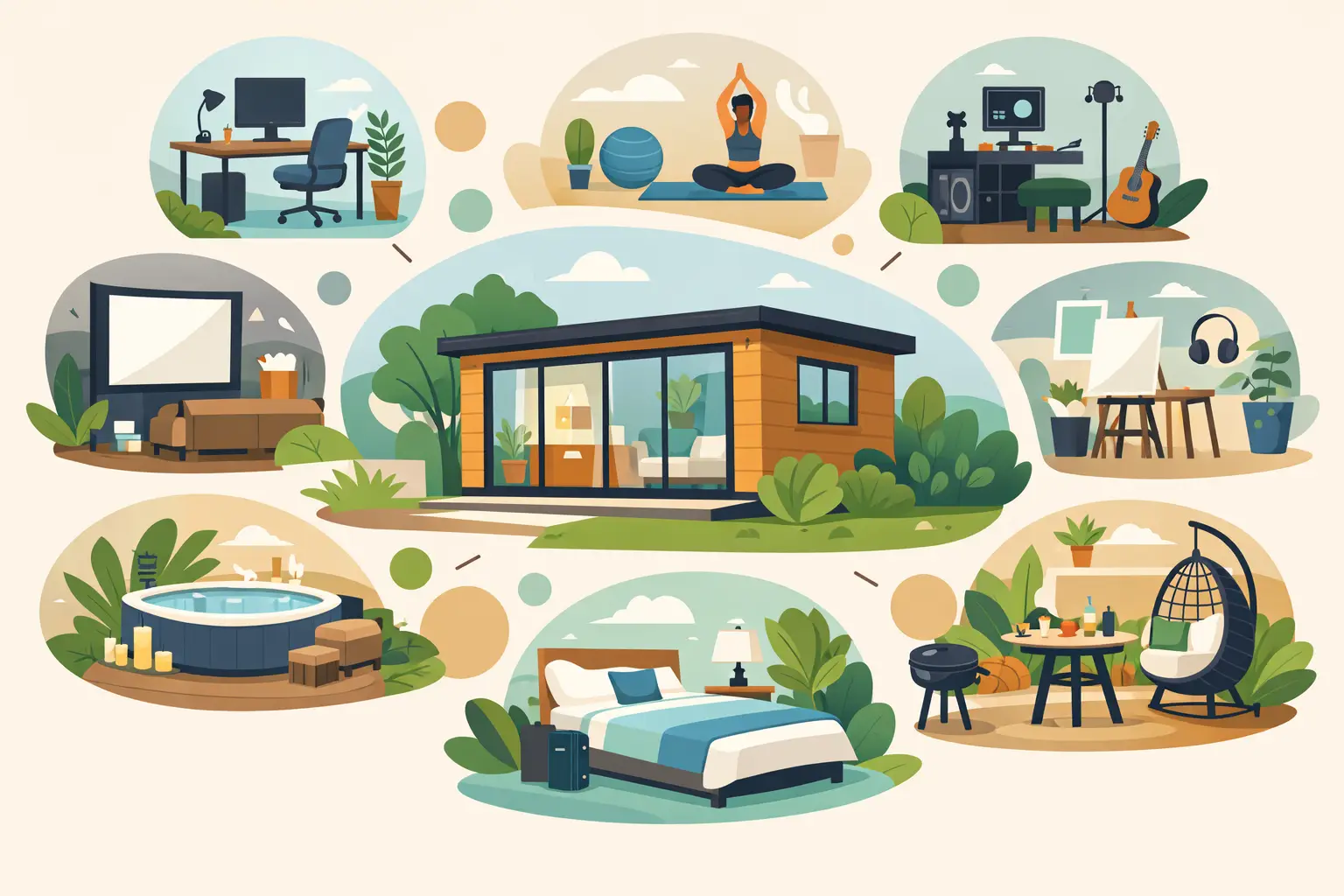
A spare bedroom may work for a while, but it rarely gives you a proper boundary between home life and everything you need to get done. The best garden rooms solve that problem by giving you dedicated space, a short walk from the house, without taking over the rooms your family already relies on. From a quiet office to a sociable bar or a comfortable annexe, the right garden building can make your whole property work harder.
A garden room is not simply somewhere to put a desk or store exercise equipment. When it is insulated, secure and designed for all-year-round use, it becomes a genuine extension of how you live. The most successful projects begin with a clear purpose, then build in enough flexibility for the years ahead.
The best garden room uses for everyday living
1. A focused garden office
For many homeowners, a garden office is the most practical reason to invest in a garden room. It creates physical separation from the kitchen table, household noise and the constant temptation to carry on working after hours. Closing the door at the end of the day can make a real difference to work-life balance.
A well-designed office needs more than floor space for a desk. Consider where natural light will fall on your screen, whether you need room for a second workstation, and how you will heat the space in winter. Reliable power, data connectivity, quality glazing and good insulation should be planned from the beginning rather than added as afterthoughts.
If clients or colleagues will visit, allow room for two comfortable chairs or a compact meeting table. A bespoke layout can also include fitted storage, keeping paperwork and equipment out of sight and helping the room feel calm and professional.
2. A home gym that you will actually use
A gym in the garden removes the most common barriers to exercise: travel time, crowded equipment and monthly membership fees. It is especially useful for busy parents and professionals who want to fit in a session before work, during lunch or after the children are in bed.
The design should reflect the type of training you enjoy. A yoga or Pilates room benefits from open floor space, soft lighting and a clear view of the garden. A weights-based gym may require reinforced flooring, ventilation, storage for equipment and enough ceiling height for overhead movements. For cardio equipment, think about power points, airflow and acoustic considerations if your garden is close to neighbouring homes.
A garden gym does not need to look clinical. Timber-style composite finishes, wide glazed doors and carefully chosen lighting can create a space that feels motivating without looking out of place in the garden.
3. A hobby studio with room to create
Hobbies have a habit of spreading across the dining table, garage or spare room. A dedicated studio gives creative work the space it deserves, whether that means painting, sewing, photography, pottery, model making or music practice.
Artists often benefit from generous daylight and wall space for large canvases or display boards. Crafters may need worktops, shelving and a sink arrangement where suitable. Musicians should prioritise sound insulation and consider the room’s position in the garden, particularly if they plan to practise regularly.
The advantage of a bespoke garden studio is that it can be configured around the activity rather than forcing the activity into a generic shed. Good storage is central here. When materials are easy to reach and simple to put away, the space stays enjoyable to use.
4. A family games and entertainment room
A separate leisure room can give teenagers their own place to socialise while keeping the main house quieter and less cluttered. It can also become the setting for family film nights, board games, gaming, a pool table or a purpose-built snooker room.
This use calls for careful measurements. A snooker table, for example, needs substantial clearance around every side for cueing, while a golf simulator requires adequate depth, width and ceiling height. It is worth designing around the largest item first, then planning seating, storage and screens around it.
Consider temperature control and glare as well as size. A room used for films or gaming benefits from blinds, considered lighting and a comfortable seating layout. Insulated walls and high-performance roofing help keep the room pleasant in every season, rather than restricting entertainment to warm summer evenings.
5. A garden bar or hosting space
When friends are over, a garden bar or entertaining room keeps the flow between indoors and outdoors easy. It can be as simple as a cosy seating room with a drinks fridge, or as ambitious as a fully styled bar with a serving counter, music system and bi-fold doors opening onto a patio.
This is one of the more lifestyle-led garden room uses, but it should still be practical. Plan for power, task lighting, heating, sockets and durable flooring. If the room will host evening gatherings, think about privacy, access to the house and how noise will carry across the garden.
A flexible entertaining space can also serve as a quiet retreat during the day. Choosing neutral finishes and adaptable furniture helps it work for coffee with a neighbour, a family celebration or a peaceful evening away from the television.
6. A calm wellness room
A garden room can create a welcome pause in a busy household. Used as a yoga studio, meditation room, treatment space or private retreat, it offers a setting that feels separate from chores and screens without leaving home.
The key is restraint. Large windows framing greenery, uncluttered storage and warm, layered lighting often do more for the atmosphere than filling the room with features. If you intend to use it for treatments, ensure there is enough space around a couch and a comfortable waiting area if clients will be arriving.
Privacy matters too. The position of doors and windows can be tailored to the garden, making the most of a pleasant view while avoiding direct sightlines from neighbouring properties. A quality composite exterior is also a sensible choice for homeowners who want a polished finish without the regular painting or staining associated with traditional timber.
7. A practical granny annexe
For families supporting an older relative, a garden annexe can provide closeness and independence at the same time. It may offer a bedroom, living area, kitchenette and shower room, creating comfortable accommodation within the family’s own grounds.
This is a more involved project than a simple office or hobby room. The right layout depends on mobility needs, privacy, drainage, services and the level of day-to-day independence required. Wider doorways, level access, accessible shower facilities and clear circulation space can all make a meaningful difference.
Planning requirements and building regulations may apply depending on the design, location and intended use, so this should be checked early. A specialist can help you understand the practical options before a design is finalised. The aim is not to squeeze a home into the smallest possible footprint, but to create an attractive, comfortable space that genuinely supports family life.
8. A guest room for flexible hosting
A garden guest room is ideal for homeowners who enjoy having family and friends to stay but do not want to give up a bedroom in the main house all year. With insulation, heating and a considered interior, it can offer visitors privacy while preserving your own routine.
If overnight use is the main purpose, plan storage, lighting and convenient access to bathroom facilities from the outset. A larger building may accommodate an en-suite or kitchenette, subject to the appropriate design and permissions. For occasional visitors, a sofa bed and compact storage can allow the same room to double as an office or lounge between stays.
9. A small business workspace
A garden room can give a home-based business a more professional base. It suits consultants, beauty therapists, tutors, designers, personal trainers and many other services that need a presentable place to meet clients or concentrate on their work.
Before committing to this route, consider customer access, parking, signage, insurance and whether your proposed activity could affect neighbours. Some businesses will need permission or additional approvals, particularly where client visits are frequent. Getting these details right protects the long-term value of the investment.
10. A flexible room for what comes next
The strongest garden room designs often avoid being too narrowly defined. An office today could become a teenage den, a studio, a guest room or a reading retreat later on. This is particularly valuable if your family circumstances, working pattern or hobbies may change.
Build flexibility through sensible proportions, plentiful sockets, integrated storage and a layout that does not depend on one large fixed item. A room with a good level of insulation, secure windows and doors, and low-maintenance composite cladding will remain useful whatever role it takes on.
Choosing the right garden room use for your space
Start with the activity that would make the biggest difference to your daily life, not simply the room that looks best in a brochure. Measure the equipment you need, think about who will use the space, and consider how often it will be occupied in winter as well as summer. A compact office may be perfect for one person, while a family games room or annexe needs more generous proportions and a different internal layout.
Location matters just as much. A room close to the house is convenient for work, guests and evening use. A more secluded position may better suit a wellness space, art studio or music room. Orientation affects light and comfort, while access affects how easily furniture, equipment and services can be installed.
Composite Garden Studios can tailor a garden building around those practical decisions, combining authentic timber-style appearance with insulated construction and hassle-free, low-maintenance ownership. The most rewarding choice is the one that removes a daily frustration now and still gives you options later. Picture the moment you would use the room most, then design from that real-life need.