
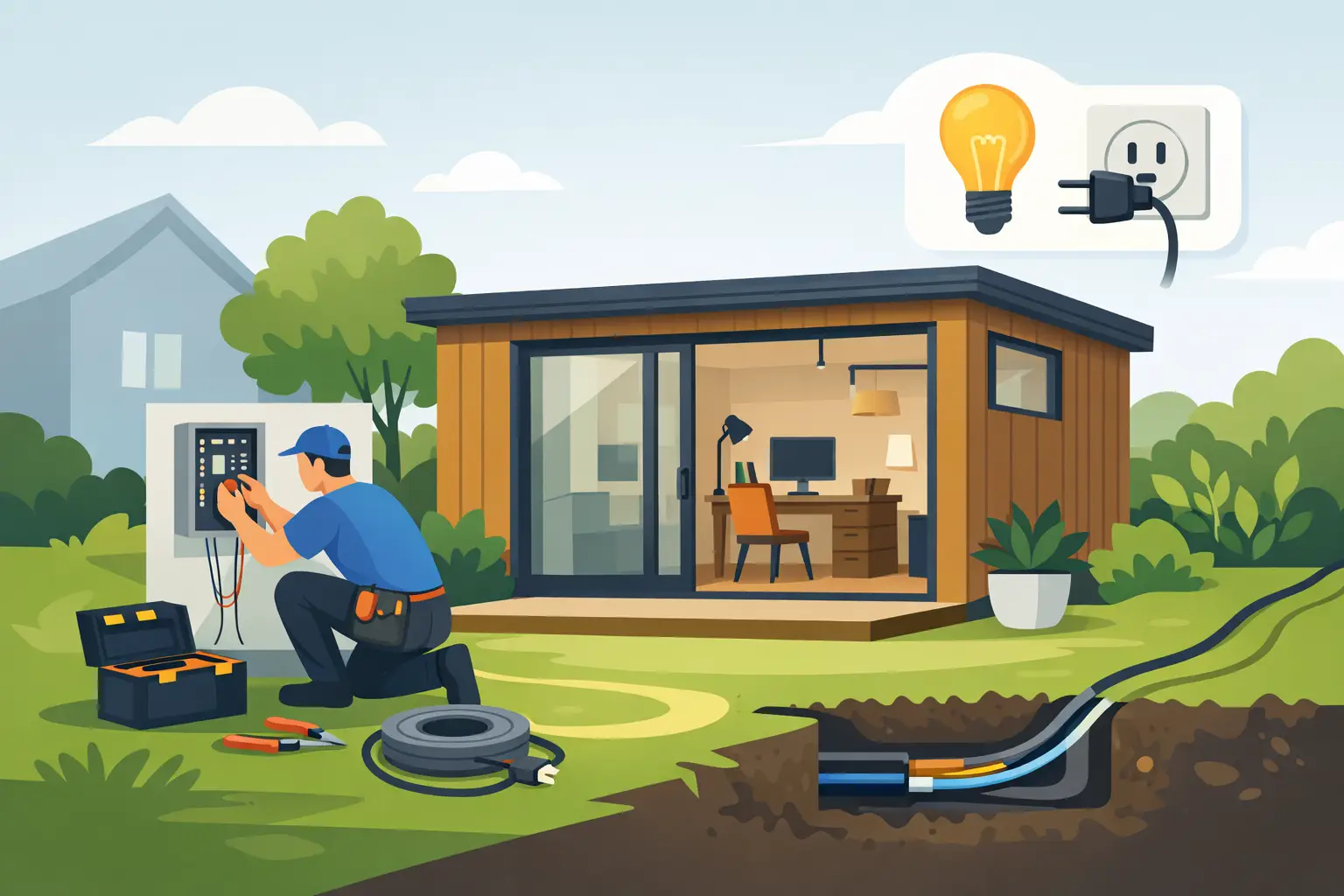
A garden room can look complete from the outside yet still fall short in everyday use if the power supply has been treated as an afterthought. A well-planned garden studio electrical installation is what makes the space practical in every season – whether it is a focused home office, a family hobby room, a gym, a golf simulator space or a comfortable annexe.
The best time to consider electrics is during the design stage, before foundations, flooring and internal finishes are in place. This gives you more freedom over where cables run, where sockets sit and how the studio will support the way you actually intend to use it. It also helps avoid visible trunking, overloaded extension leads and costly changes once the building is complete.
Garden Studio Electrical Installation: Plan Around Real Life
Start with the purpose of your garden studio rather than a generic socket layout. A compact writing room may need little more than desk power, good lighting and heating. A garden office used by two people could need separate workstation sockets, reliable broadband equipment, a printer and charging points. A leisure room may have more demanding requirements, from televisions and sound systems to treadmill motors, gaming equipment or specialist lighting.
Think about what will be plugged in on an ordinary weekday, but also what may be used occasionally. It is far easier to include a spare socket or allow capacity for a future wall-mounted screen during the build than to alter a finished composite interior later.
A practical layout usually considers power in three areas: where people work or relax, where heating or cooling equipment will sit, and where you may want external power for lighting or garden maintenance. The goal is not simply to have more sockets. It is to put them in sensible places, so the room remains calm, uncluttered and easy to live with.
Build in enough sockets
For a desk-based garden office, sockets behind or beside the desk keep laptop chargers, monitors and docking stations tidy. Positioning additional outlets on another wall allows the room to be rearranged without trailing leads across the floor. In a multi-use studio, consider a socket near seating for charging devices and another close to the entrance for a vacuum cleaner or occasional equipment.
External sockets can also be worthwhile, particularly if the studio changes how you use the garden. They can provide convenient power for garden tools, outdoor decorative lighting or a water feature without running leads through an open window or doorway. Exterior fittings need to be suitable for outdoor conditions and installed correctly.
Choose lighting for the room’s job
One central ceiling light is rarely enough for a studio that will be used regularly. Good lighting should make the room feel welcoming while supporting the activities taking place inside it.
A home office benefits from bright, even light that reduces screen glare and dark corners. Dimmable lighting can make the same room feel more relaxed after work. In a gym or creative space, brighter task lighting may be more useful, while a cinema, snooker or entertaining room may suit zoned lighting that can be adjusted for different moods.
Consider switches at both the entrance and key working areas if the room is larger. Exterior lighting near the door is equally useful during dark winter afternoons, helping make the path to and from the house safer and more inviting.
Where Will the Power Come From?
Most garden studios are supplied from the main house, with a dedicated cable route running from the consumer unit or another suitable point. The precise approach depends on the property’s existing electrical installation, the distance to the garden room, the proposed load and the route available for the cable.
The cable is commonly run underground to protect it and preserve the appearance of the garden. This needs planning alongside groundwork, drainage and landscaping. A route through flower beds, lawns or paved areas may all be possible, but each comes with different practical considerations for access and future garden changes.
For some projects, the house consumer unit has sufficient capacity for the new circuit. For others, an electrician may recommend improvements, a separate arrangement for the garden building or a more substantial incoming supply. There is no single answer based on studio size alone. A small building with high-demand equipment can require more consideration than a larger room used only for a laptop and low-energy lighting.
Avoid assuming that a standard domestic plug socket in the house is an adequate long-term answer. It may be convenient temporarily, but it is not the right basis for a permanent, all-year-round garden room. A professionally designed supply is safer, neater and better suited to the demands of the building.
Heating, Hot Water and High-Load Equipment
Modern insulated garden studios are designed to retain warmth, but electrical demand still needs to account for how the room will be heated. Electric panel heaters, infrared heaters, air conditioning units with heat pump functions and electric underfloor heating all have different power requirements. The best choice depends on room size, insulation performance, desired response time and how often you will use the space.
If the studio will be used as an annexe, treatment room or space with a kitchenette, discuss hot water and appliances early too. A small under-sink water heater, microwave, fridge, kettle or induction hob can quickly change the expected electrical load when used together.
Specialist leisure spaces deserve the same attention. A golf simulator may involve projectors, computers, launch monitors, impact screens and ventilation. A snooker room may require carefully positioned table lighting and entertainment equipment. A garden gym may need circuits that can safely support running machines, rowing machines or climate control. Designing for the intended use from the outset protects both convenience and performance.
Do Not Overlook Data, Security and Outdoor Connections
Power is only part of a connected garden studio. If the building is a working space, reliable internet is often as valuable as the electrical installation itself. Wi-Fi can be sufficient in some gardens, but signal strength may reduce with distance, external walls and the construction of the main house. For a dependable home office, a wired data connection may be worth considering during the same groundwork phase as the electrical cable.
You may also want to allow for security lighting, an alarm, CCTV or a video doorbell. These additions are easier to accommodate when cable routes and equipment positions are agreed before interior walls are finished.
For a studio positioned at the far end of the garden, think about the whole journey as well as the building itself. Lighting along a path, by steps or around a patio can improve usability after dark. It should be designed sensitively, however, so it provides useful illumination without flooding the garden or neighbouring properties with unnecessary light.
Safety, Certification and UK Requirements
Electrical work for a garden building must be designed and carried out safely by a competent electrician. In England and Wales, certain electrical work is covered by Part P of the Building Regulations, and notification or certification may be required depending on the work involved. Scotland and Northern Ireland have their own requirements, so local rules should always be checked.
Your electrician will assess matters such as cable sizing, circuit protection, earthing arrangements, safe isolation and the condition and capacity of the existing house installation. This is not paperwork for paperwork’s sake. These details protect people, property and the equipment you rely on every day.
On completion, make sure you receive the appropriate electrical certification and retain it with your property documents. It can be useful for future maintenance, insurance queries and when selling the home. If a garden studio includes plumbing, a bathroom or kitchen facilities, the wider compliance picture may require further consideration as well.
Coordinate Electrics With the Studio Design
A bespoke garden room should feel considered from the moment you open the door. At Composite Garden Studios, the value of tailored design lies in bringing the structure, internal layout and intended lifestyle together rather than treating each element separately.
Decide early where desks, sofas, storage, mirrors, screens and heating will go. That lets sockets, switches and lighting support the layout instead of competing with it. It also keeps the clean, timber-style appearance of a composite garden studio intact, with fewer exposed cables and fewer compromises after installation.
Allow a little room for change, too. Your garden office might later become a teenager’s study room, an art studio or a place to host family at weekends. A sensible electrical plan gives the building that flexibility without turning a future refresh into a disruptive project.
A comfortable garden studio is not defined by how many sockets it has, but by how effortlessly it supports your day. Discuss your intended use, equipment and future plans before the build begins, and the finished space will be ready to work as hard as the rest of your home.