
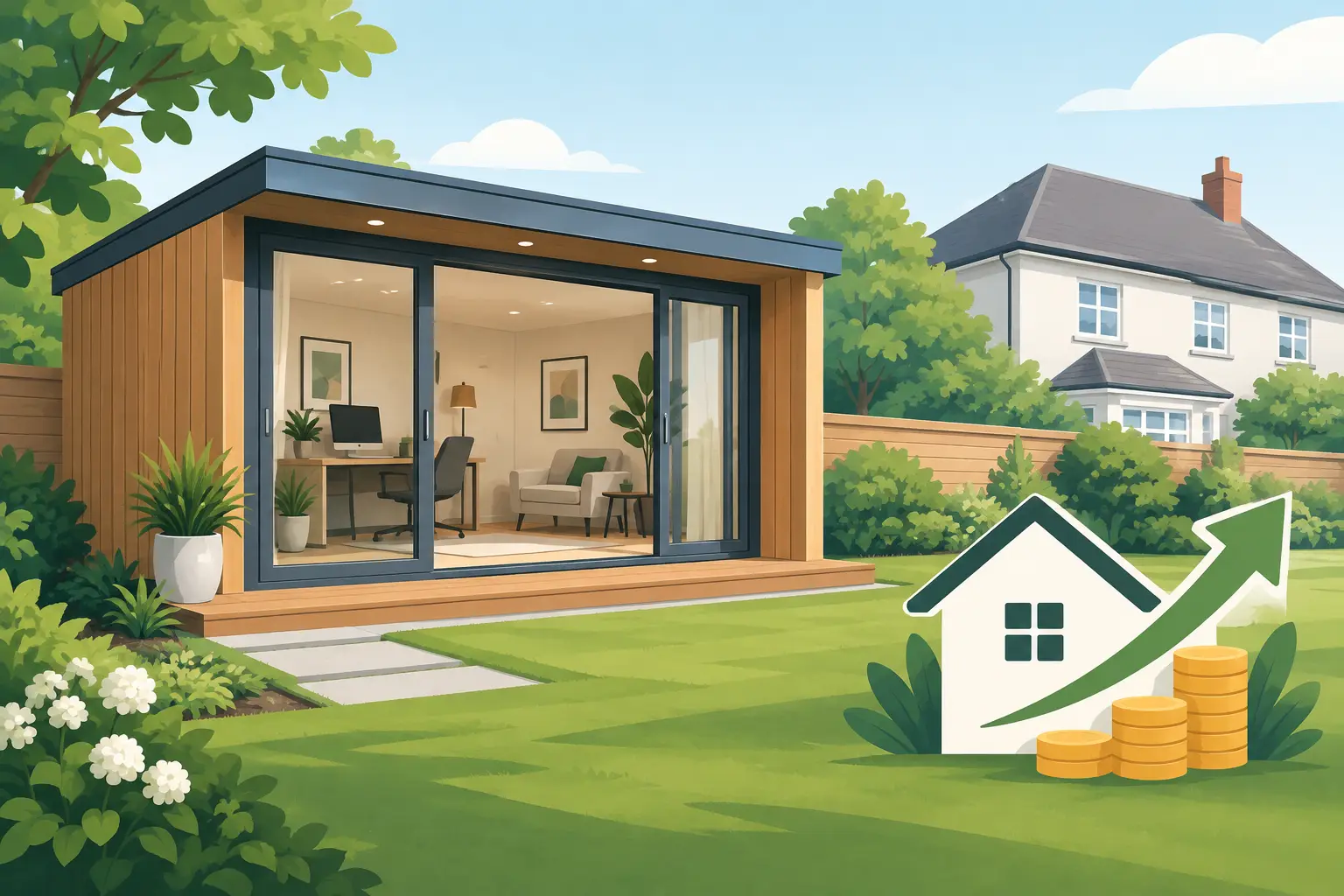
A spare bedroom can be useful, but a purpose-built space at the end of the garden can change how a home feels day to day. For homeowners weighing up garden rooms property value, the key question is not simply whether a building adds pounds to an eventual sale price. It is whether it creates the kind of flexible, usable space that buyers can immediately see themselves enjoying.
A well-designed garden room can make a property more appealing, support a stronger asking price and help it stand out against similar homes. However, value is never automatic. Size, build quality, year-round comfort, intended use and the way the room sits within the garden all make a difference.
Garden Rooms and Property Value: What Buyers See
Buyers respond to usable space. A garden building that looks attractive but is cold in winter, overheated in summer or visibly worn will have limited appeal. By contrast, an insulated garden studio with quality windows, secure doors, lighting and a finish that complements the house can feel like a genuine extension of the lifestyle on offer.
The strongest designs create a clear purpose while retaining flexibility. A buyer may view the room as a home office, while the next family sees a music room, teenage den, gym or quiet retreat. This adaptability matters because it widens the property’s appeal without asking buyers to imagine a major conversion themselves.
Remote and hybrid working have also made dedicated work space more valuable. A comfortable garden office separates work from family life without taking over a dining table or spare room. For buyers who work from home regularly, that separation may be a deciding factor rather than a nice extra.
It Is the Quality of Space That Counts
Not every garden building contributes equally to a property’s appeal. A basic shed or seasonal summerhouse can be enjoyable, but it is unlikely to be viewed in the same way as a high-specification, insulated garden room. The difference is in how confidently the space can be used throughout the year.
For a garden room to feel valuable, it should be warm, dry, secure and inviting in January as well as July. Effective insulation, high-performance roofing, proper ventilation and reliable glazing all contribute to that experience. Electricity and thoughtful internal lighting matter too, particularly where the room will be used for work, hobbies or entertaining after dark.
Materials influence long-term perception. Traditional timber can look beautiful, but it needs ongoing protection from moisture, UV exposure and general weathering. A low-maintenance composite exterior offers the warmth and character of a timber-style finish without the regular painting, staining or concerns around rotting that can put buyers off. That hassle-free ownership is a meaningful selling point, particularly for busy households.
A room should also look permanent and considered, rather than dropped into the garden as an afterthought. Proportion, cladding colour, roofline, glazing and the route from the house all play a part. When the garden room belongs visually to the property, it can make the whole outdoor area feel more complete.
How a Garden Room Adds Value in Real Life
A garden room can support property value in several ways, although the return will depend on the local market and the quality of the finished project. Its most immediate benefit is extra usable floor area without the cost, disruption and loss of internal living space that can come with a conventional extension.
For a growing family, it can provide a dedicated playroom or study space. For a couple, it might become a gym, art studio or entertaining room that keeps the main house calm and uncluttered. A specialist leisure room, such as a golf simulator or snooker room, can be highly attractive to the right buyer, though a flexible layout usually has the broadest resale appeal.
There is also value in protecting the house itself. A garden office can prevent a spare bedroom from becoming permanently tied to desks, screens and storage. That leaves the main home easier to live in now and easier to present when it comes time to sell.
For larger projects, a garden annexe can offer a different kind of value. Comfortable space for an older relative, a returning adult child or guests can transform how a household works. These schemes require more careful consideration of planning, services and building regulations, but the lifestyle benefit can be substantial when the design is right.
Planning and Compliance Protect Your Investment
A garden room is more reassuring to future buyers when it has been planned responsibly. Many garden buildings can be installed under permitted development rules, provided they meet the relevant conditions. Yet those conditions are specific and can vary depending on the property, its location and the proposed design.
Listed buildings, homes in conservation areas, national parks and other designated land may have tighter controls. Height, position, coverage of the garden and whether the building is intended for incidental use can all affect what is allowed. A room used as a self-contained living space or sleeping accommodation raises further considerations.
Building regulations may also apply, especially where the building exceeds certain size thresholds, is close to a boundary, includes sleeping accommodation or requires more complex services. It is worth getting clear advice before committing to a design. Correct planning and compliance do not just avoid delays – they give future buyers greater confidence in what they are purchasing.
Design Choices That Can Limit Appeal
More space is not always better. An oversized building can dominate a modest garden, block light into the house or leave too little room for children to play and adults to relax outside. In those cases, the building may reduce the garden’s appeal rather than enhance it.
Equally, highly personal layouts can narrow the audience. A dark, windowless cinema room or a very specialised hobby space may be perfect for its first owner, but buyers need to understand how it could work for them. Generous glazing, neutral internal finishes, sensible storage and a simple open layout make it easier to picture different uses.
Access deserves attention as well. A muddy route across the lawn can undermine an otherwise impressive office or studio. A well-planned path, modest landscaping and appropriate exterior lighting make the room feel connected to the home. They also improve the experience of using it every day.
Choosing a Garden Room With Lasting Appeal
The most successful projects begin with an honest brief. Consider how the room will be used this year, but also how needs may change over the next five or ten years. A studio that works as an office now may later become a hobby room, a space for older children or a place to host friends.
It helps to focus on four fundamentals:
- A size that adds useful space while preserving a balanced garden.
- Insulation, glazing and roofing designed for dependable all-year-round comfort.
- A durable exterior that keeps its appearance without continual maintenance.
- A layout and finish that can suit more than one future use.
Bespoke design gives homeowners more control over these decisions. Rather than adapting to an off-the-shelf building, you can position doors and windows for privacy, make the most of a garden view and choose a finish that complements the property. At Composite Garden Studios, this approach supports garden rooms designed around real households, not a one-size-fits-all plan.
Should You Expect a Guaranteed Return?
No reputable supplier should promise a fixed percentage increase in property value. House prices are shaped by location, market conditions, the condition of the main house and what buyers in that area prioritise. In some locations, a well-finished garden office could be a major advantage; elsewhere, a larger kitchen or off-street parking may carry more weight.
The better way to judge the investment is through both present use and future marketability. If a garden room solves a genuine lack of space, improves everyday life and is built to a standard that will still look good years from now, it has a strong case for adding appeal. Even where the sale price does not rise pound for pound with the build cost, the home may attract more interest and sell more easily.
Choose a garden room that you will enjoy using now, then make sure it is warm, well-positioned, low maintenance and adaptable enough for the next owner to value it too.