
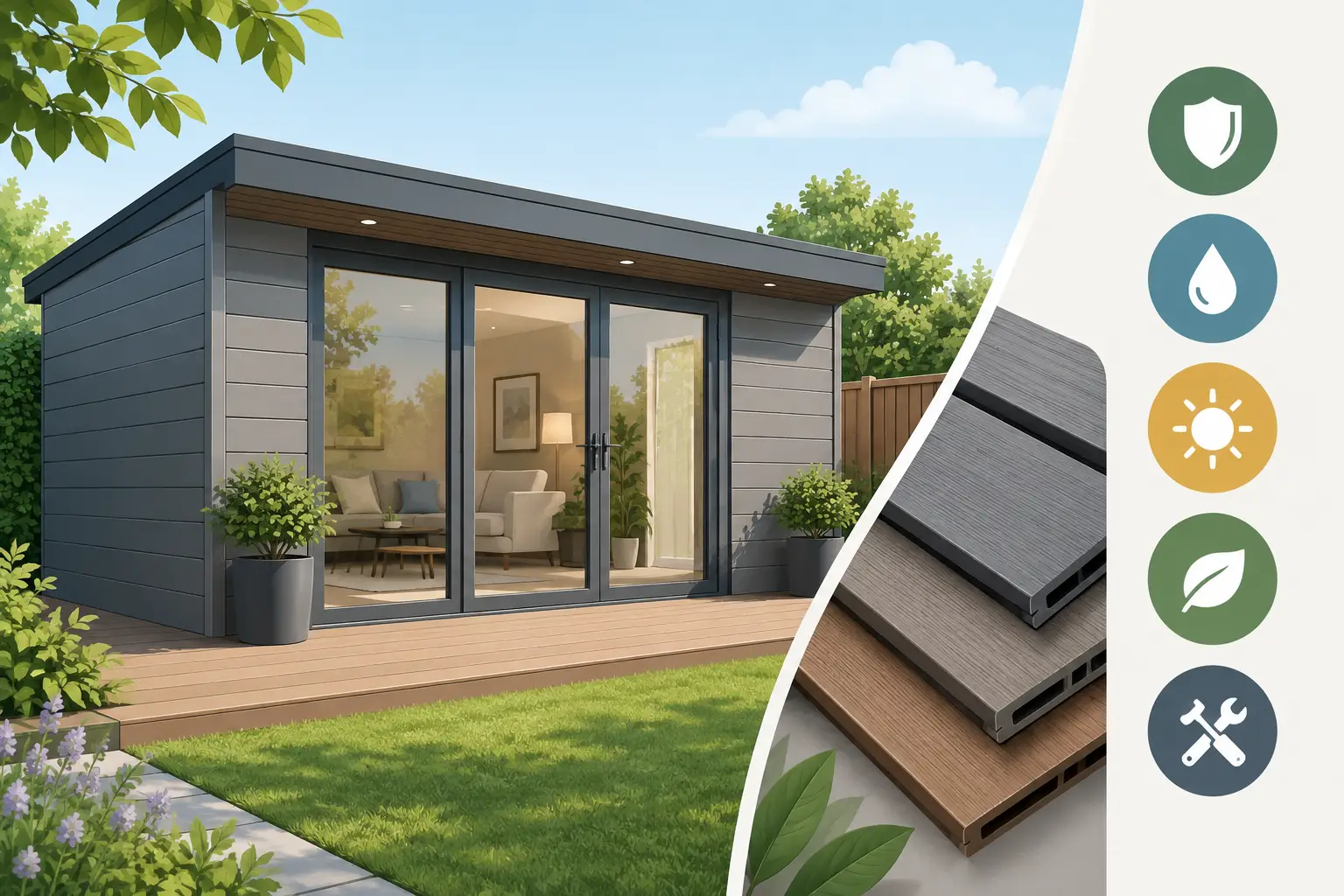
A garden room should make life easier, not add another exterior maintenance job to the weekend. That is why the top composite cladding benefits matter so much to homeowners investing in a garden office, hobby room, entertaining space or annexe. Composite cladding gives your building the warm, characterful appearance of timber while removing many of the issues that make traditional wooden structures demanding to own.
For a garden building that will sit in full sun, driving rain and changing temperatures year after year, the outer finish is far more than a design choice. It protects the structure, shapes the appearance of your garden and affects how much time and money you spend maintaining it.
Top composite cladding benefits for modern garden living
Composite cladding is manufactured from a blend of recycled wood fibres and polymers. The result is a practical exterior board designed to replicate the texture and appeal of real timber, without relying on regular staining, painting or sealing to stay looking smart.
The material works particularly well on a premium, insulated garden building because it supports the kind of ownership experience most people want: a space that is ready for work, relaxation and family life throughout the year, rather than a project that needs constant attention.
Low maintenance that suits busy households
The most immediate benefit is the reduced maintenance. Natural timber can look beautiful, but it is exposed to moisture, sunlight and temperature changes. Over time, it may need repainting, staining or treatment to maintain its finish and help protect it from weathering.
Composite cladding is designed to avoid that regular cycle. It does not require painting or staining, and a simple wash with mild soapy water is usually enough to remove everyday dirt. For homeowners balancing work, family and weekends, that means more time using the garden room and less time looking after its exterior.
This does not mean no care at all. Keeping the cladding clear of mud, leaves and splashes will help it continue to look its best, particularly around lower sections of the building. However, the routine is straightforward compared with maintaining a painted or stained timber finish.
Better resistance to damp, rot and insect damage
British weather asks a lot of any external material. Rain can linger on shaded walls, winter frost can test exposed surfaces and humid conditions can encourage moisture-related problems. Timber needs the right protection and upkeep to manage these challenges over the long term.
Composite boards are resistant to rot and do not provide the same attractive environment for insects as untreated wood. This makes them a reassuring choice for garden rooms positioned near trees, fencing or planted borders, where damp conditions can be more common.
Good building design still matters. A quality garden room needs suitable ventilation, correct detailing around windows and doors, and a solid base that keeps the structure properly supported. Composite cladding is a high-performing outer layer, not a substitute for sound construction. When the building envelope is designed as a whole, it can provide dependable protection for years to come.
A timber-look finish without the upkeep
Many homeowners want their garden building to feel like part of the garden rather than an obvious add-on. Composite cladding offers the grain, depth and warmth associated with timber, helping a garden office or studio sit naturally alongside lawns, patios and planting schemes.
The difference is consistency. Natural timber changes as it ages, and some people enjoy that evolving character. Others prefer a more even finish that remains close to the original colour and texture with less intervention. Composite is the stronger fit for the second group, especially where the building is a major feature of a carefully planned outdoor space.
Colour choice also gives you more freedom to create the right look. Deep contemporary tones can make a garden room feel striking and architectural, while softer natural shades complement a traditional property or leafy setting. Pairing the cladding with quality windows, doors and roof trims produces a more considered finish than treating the exterior as an afterthought.
Reliable colour in changing conditions
Sunlight can be just as challenging as rain. On a south-facing garden, repeated UV exposure may fade painted timber and leave it needing fresh treatment sooner than expected. Quality composite cladding is made with colour and protective properties built into the board, helping it retain a more consistent appearance over time.
There can be a small amount of natural weathering after installation, and the exact effect depends on the colour, orientation and exposure of the site. A wall facing open countryside or coastal weather will experience different conditions from one in a sheltered urban garden. Even so, composite offers a far more predictable route to long-lasting colour than many traditional alternatives.
A practical partner for year-round comfort
Cladding alone does not make a garden room warm. The real difference comes from the complete build-up: insulated walls, high-performance roofing, a suitable floor construction and quality windows and doors. Yet the external cladding remains an important part of that system, providing a durable weather-facing layer around the insulated structure.
This matters when your new space has a serious job to do. A garden office needs to be comfortable on a cold January morning. A gym, studio or golf simulator room needs to stay usable beyond the summer months. A granny annexe needs materials chosen with long-term reliability in mind.
A well-specified composite garden building is designed around these everyday realities. It offers a comfortable extension of the home without the disruption, expense and lengthy building programme often associated with a traditional extension.
Strong value over the life of the building
The initial price of composite cladding may be higher than basic softwood options. Looking only at the first quote can therefore make timber appear to be the cheaper route. But that comparison rarely includes future paint, stain, treatment products, labour and the time involved in regular upkeep.
For many homeowners, the better question is what the building will cost and demand over the next ten or fifteen years. A low-maintenance exterior can make a meaningful difference, particularly on a larger garden room where there is more surface area to maintain.
It can also help preserve the sense of pride in the investment. A garden studio that continues to look clean, modern and well cared for is easier to enjoy every day, whether you use it for client calls, family gatherings or a quiet place to switch off.
Choosing composite cladding that is right for your project
Not all composite cladding, garden buildings or installation standards are alike. The board profile, finish, fixing method and detailing all affect the final result. It is worth looking beyond a sample board and considering how the cladding will appear across full walls, around corners, beneath roof overhangs and alongside glazing.
Think about your garden’s setting too. Darker shades can create a dramatic look, but may show dust or pollen more readily in certain locations. Lighter tones can brighten a compact garden, although they may need more frequent cleaning near busy paths or children’s play areas. A bespoke design allows the proportions, window positions and external finish to work with your property rather than against it.
At Composite Garden Studios, composite cladding is used as part of a complete, made-to-measure garden building designed for hassle-free low-maintenance living. The aim is not simply to create extra square footage, but a space that looks at home in your garden and remains enjoyable to own.
Before committing, consider how you want to use the room now and in the future. A flexible, well-insulated building with a durable composite exterior can begin as a home office and later become a teenager’s study space, creative studio or relaxed garden retreat. Choose a finish that supports that long-term view, and your garden room can keep earning its place long after the first exciting week of use.