
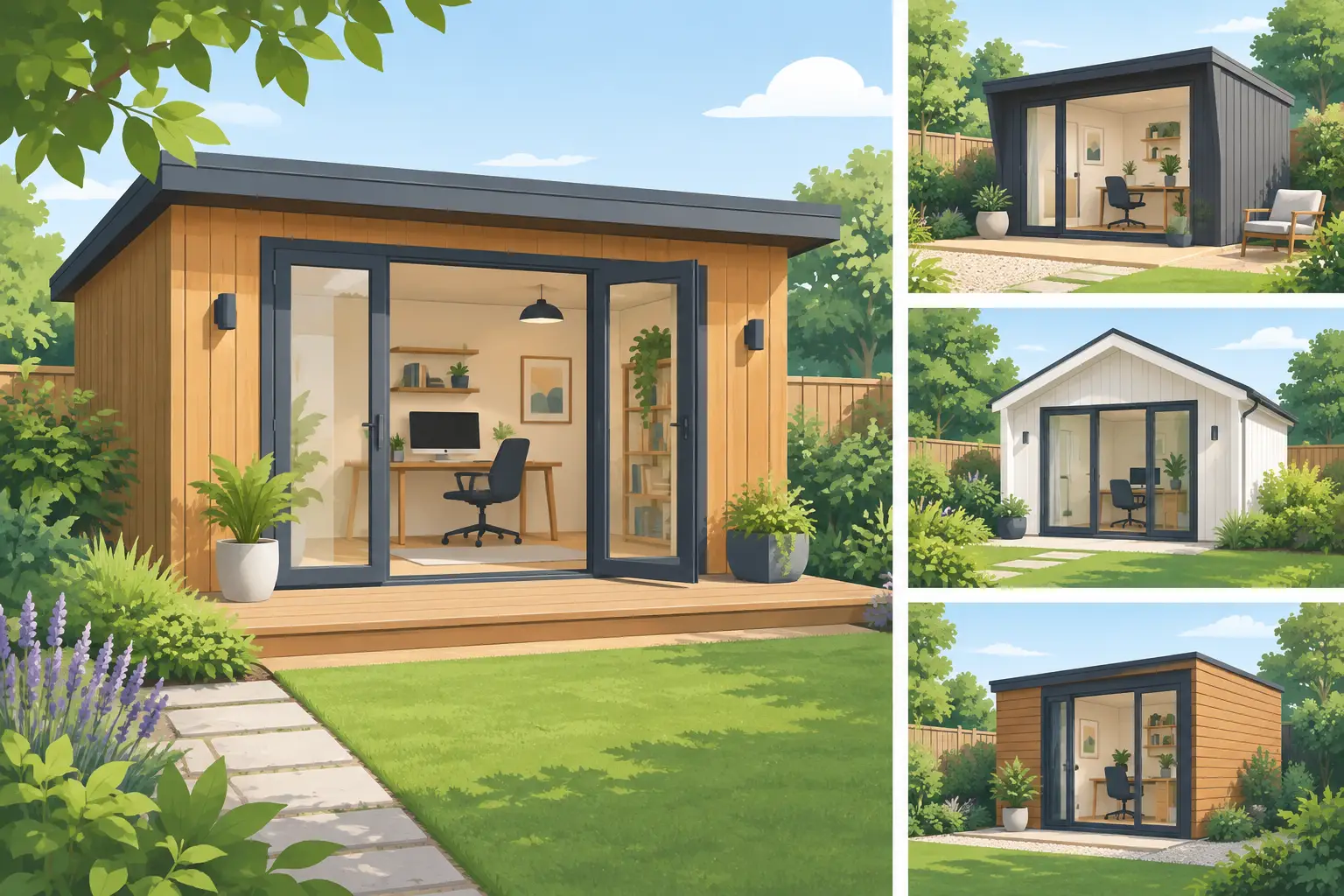
A spare bedroom may work for a while, but it rarely creates a clear boundary between work and home. A well-considered small garden office design example does something more useful: it gives you a dedicated place to focus, take calls and finish the day properly, without taking over the house or overwhelming the garden.
For most UK homeowners, the best small office is not simply the smallest building that will fit. It is a compact, insulated garden room designed around how you actually work. That means enough desk space, natural light in the right place, dependable warmth in winter and a finish that continues to look smart without a long list of weekend maintenance jobs.
What makes a small garden office work?
A small garden office can feel surprisingly generous when every part of the layout has a purpose. For one person, a footprint of around 2.4m x 3m can provide a focused workstation, comfortable task chair and useful storage. Move up to around 3m x 4m and there is usually room for a second desk, a meeting chair or a compact sofa for a change of position during the day.
The key is to begin with the working setup, rather than the external size. Measure your desk, chair movement, monitor depth and any filing or equipment you want to keep out of the house. A desk may only be 600mm deep, but a chair needs room to slide back comfortably. Allowing for these everyday movements prevents an office from feeling like a smart-looking storage shed.
Year-round comfort matters just as much. A building used for occasional summer hobbies can tolerate more compromises than a space used for eight-hour working days. Insulated walls, floor and roof, quality doors and windows, and suitable ventilation turn a garden building into a comfortable office in January as well as July. Heating should be planned early, along with electrics and broadband, so cables and sockets sit where they are needed rather than becoming an afterthought.
A small garden office design example for a typical garden
Picture a 3m x 3m composite garden studio positioned at the end of a modest back garden. The building has a contemporary timber-style exterior in a warm, natural shade, but the cladding is composite rather than traditional timber. It keeps the character homeowners like while avoiding the familiar cycle of painting, staining and worrying about rot.
Wide glazed doors sit on the front elevation, with a narrow opening window to one side. This arrangement brings daylight into the room and gives a pleasant view across the garden, yet leaves a solid rear wall for a full-width desk. A second small window on the side wall adds cross-ventilation without creating screen glare.
Inside, a 1.8m desk runs along the rear wall with two monitors, a laptop dock and concealed cable management. A low fitted cabinet stores paperwork and printer supplies beneath the window. On the opposite side, a slim shelf holds books, a lamp and a few personal items, keeping the work area useful without making it feel crowded.
The interior finish is light and calm: pale wall panels, practical flooring and a simple accent colour in the chair or soft furnishings. A compact electric radiator or efficient panel heater provides quick warmth, while blinds or solar-control glazing help manage strong afternoon sun. It is a small room, but it has all the ingredients of a proper workplace.
This type of design also suits changing routines. One homeowner may use it as a quiet office five days a week. Another may need a place for online appointments, a study space for teenagers or a hobby room at weekends. A bespoke garden studio gives you the freedom to plan for today while protecting the value of the space for later.
Put light in the right place
More glazing is not always better in a garden office. Full-height front doors can make a compact studio feel open and welcoming, but they need to work with the orientation of the garden. A south- or west-facing office may receive strong sunlight during the hours when you are trying to see a screen clearly. In that case, a side window, shading or blinds can make the room more comfortable than adding another large glazed panel.
Think carefully about your desk position. Sitting with a bright window directly behind the monitor can create glare, while sitting with the sun behind you can make video calls awkward. A desk at right angles to the main window is often the most practical solution. You benefit from daylight without constantly adjusting the screen or closing the blinds.
Privacy deserves equal thought. If the garden is overlooked, frosted glass on a side elevation, higher-level windows or careful planting can preserve light while reducing the feeling of being on display. The goal is a space that feels connected to the garden, not exposed to it.
Choose materials that reduce future work
A garden office should make working from home easier, not create another property maintenance task. Traditional timber has visual appeal, but it can demand regular treatment to protect it from weathering, moisture and fading. That may suit homeowners who enjoy maintaining a timber building, but it is not the right fit for everyone.
Composite cladding offers a practical alternative. It provides an authentic wood-style finish with low-maintenance performance, helping the exterior retain its smart appearance without routine painting or staining. Combined with an insulated construction and high-performance roof, it creates a garden office designed for reliable, all-season use.
This is where a bespoke build has a clear advantage over an off-the-shelf shed conversion. You can select the door position, window layout, exterior colour, internal arrangement and finishes around your garden and your working day. The result is more likely to feel like an extension of the home rather than a temporary structure at the bottom of the lawn.
Do not let storage steal the room
In a compact office, visible clutter has an outsized effect. A few parcels, chargers and folders can quickly make a well-finished room feel cramped. Build storage into the design from the outset, but keep it proportionate.
A low cabinet beneath a window, shallow wall shelving and a drawer pedestal can usually hold the essentials without consuming valuable floor area. If you use a printer only occasionally, choose a cabinet with a pull-out shelf rather than giving it permanent desk space. For paperwork, digital filing may be a better use of a small office than installing tall cupboards.
It is also worth deciding what should stay in the house. Garden offices work best when they support focused work, not when they become a dumping ground for household overflow. Keeping the room intentional will make it more enjoyable to use every morning.
Plan the practical details early
The most successful small garden office designs feel simple because the details were resolved before installation. Electrical sockets should be positioned for desks, monitors, lamps and charging, with enough capacity for heating and future equipment. Consider external lighting for winter mornings and evenings, plus a safe, attractive route from the house to the office.
A stable internet connection is essential for video calls and cloud-based work. Depending on the distance from the house and your existing set-up, this may mean a hardwired connection, a suitable wireless solution or specialist advice. Do not assume the household signal will be strong enough at the bottom of the garden.
Planning is another area where the answer depends on the building and site. Many garden offices can fall within permitted development rules, but height, position, garden size, whether you live in a listed property or conservation area, and intended use can all affect what is possible. Checking the requirements before committing to a design gives you confidence and avoids expensive changes later.
Make the journey to work feel worthwhile
A garden office is a practical investment, but it should also be a pleasure to enter. A neat path, simple planting and a small seating spot outside can transform the short walk from the back door into a genuine change of scene. That separation helps many people concentrate during the day and switch off afterwards.
Composite Garden Studios can tailor a low-maintenance garden office around the available space, the look of your home and the way you want to use it. Start with your desk, your daily routine and the view you want from the chair, then let the building earn its place in the garden for years to come.