
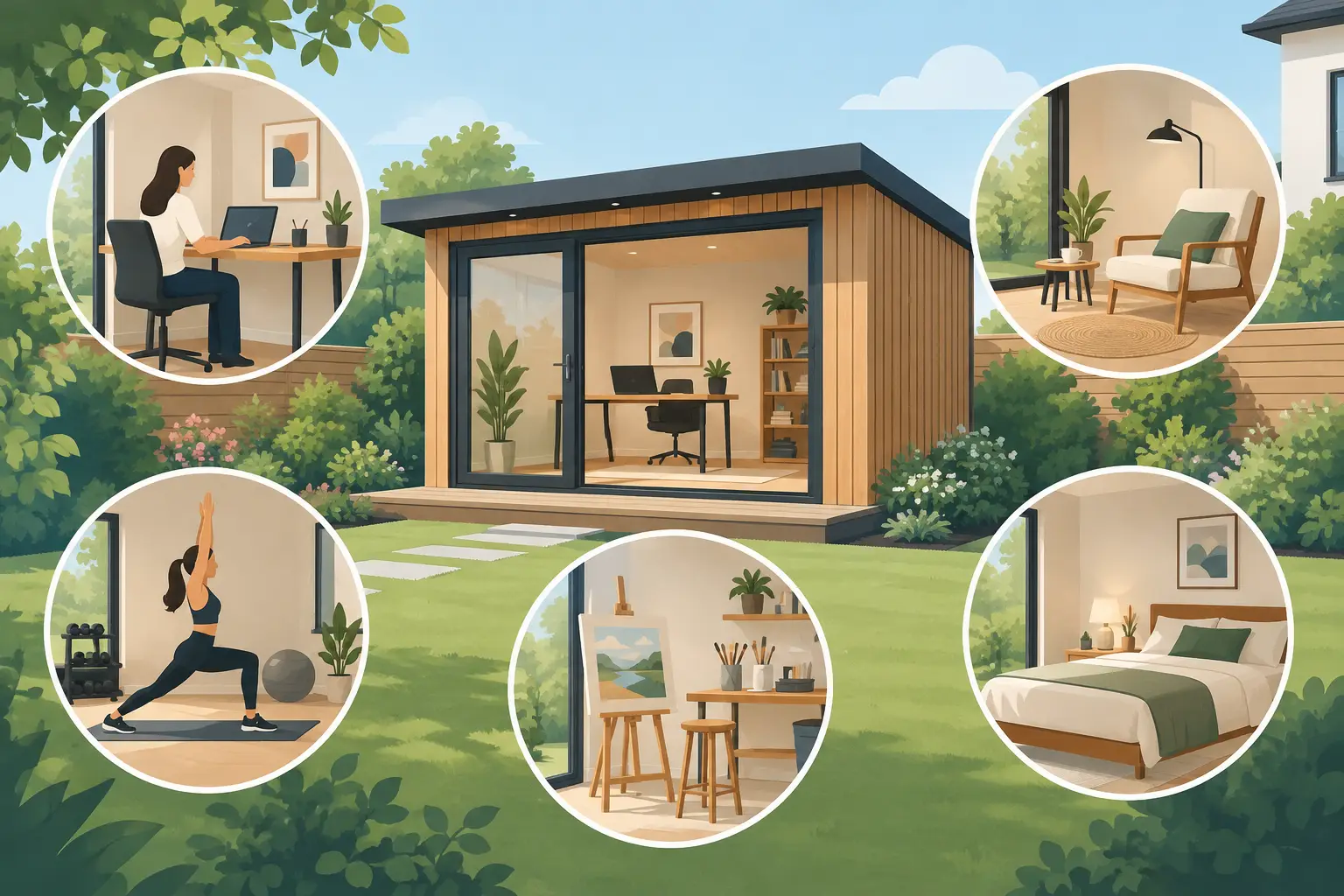
A spare room inside the house can quickly become a compromise: part office, part storage cupboard, part place to escape when the household gets busy. The best uses for garden studios solve that problem by giving one purpose its own proper home, just a few steps from the back door. With insulation, secure doors and windows, and a comfortable interior, a garden studio can be used throughout the year rather than only when the weather is kind.
For UK homeowners, the appeal is simple. You gain valuable, flexible space without the upheaval of extending the main house. The right design can work hard on Monday morning, feel sociable on Friday evening and still look at home in the garden for years to come.
The best uses for garden studios start with daily life
The most successful garden studio is not necessarily the largest. It is the one that removes a regular frustration from your home. Think about where space is tight, where noise travels, or where a hobby is always being packed away before it has properly begun. That usually points to the best use.
A bespoke garden building also gives you more freedom than an unused box room. You can choose the footprint, window positions, door style and internal layout around how you actually plan to use it. Composite cladding brings the warm appearance of timber without the familiar cycle of sanding, staining and repainting, making it particularly suited to homeowners who want the space to stay smart with minimal effort.
A focused garden office
A garden office remains one of the most practical choices for hybrid workers, business owners and anyone who needs a quiet place to concentrate. The key benefit is separation. You can leave the house, begin the working day properly and close the door at the end of it.
A well-planned office needs more than a desk and a plug socket. Consider natural light without screen glare, sufficient wall space for storage, reliable heating, power for monitors and a layout that works for video calls. If clients may visit, an independent entrance route and a more generous internal space can make the studio feel professional without bringing meetings through the family home.
This use tends to suit compact studios well, but do not undersize it. A room that accommodates an ergonomic chair, filing, shelving and the ability to stand or move around will be more comfortable over the long term.
A creative studio that stays ready to use
Artists, makers, photographers, musicians and crafters often need somewhere that can remain set up between sessions. That is difficult at the kitchen table, where materials compete with everyday life. A garden studio makes it easier to protect uninterrupted creative time and keep tools, canvases or equipment organised.
For a craft or art room, daylight and storage are often the priorities. For music practice or recording, sound management deserves early attention, especially if neighbours are close by. A photographer may value wide doors for bringing in props and carefully positioned windows for controlled light. There is no one-size-fits-all layout, which is exactly why a made-to-measure building is valuable.
A gym or wellness room
A garden gym removes travel time and makes exercise easier to fit around a busy day. It can be as simple as a calm space for a treadmill, bike and weights, or designed as a dedicated yoga, Pilates or treatment room. Privacy is a major advantage, particularly for homeowners who prefer to train away from crowded leisure centres.
Plan this use around the equipment, not just the floor area. Heavy weights may need a suitable floor build-up, while taller equipment and overhead movements need adequate ceiling height. Good ventilation matters too. If the room is intended for yoga or relaxation, softer finishes, uncluttered storage and glazing that frames the garden can create a genuinely restorative setting.
A family room for hobbies and play
When children get older, a separate space can be a welcome release valve for the whole household. A garden studio can become a homework room, gaming den, music space or arts-and-crafts room, giving young people more independence while keeping them close to home.
The same principle works for adults. A dedicated snooker room, golf simulator room or model-making workshop can protect a much-loved pastime from becoming an obstacle in the lounge. Leisure spaces benefit from careful dimensions: a golf simulator needs enough room for a safe swing, while a snooker table requires clear space around every side. Measure the activity first, then choose the building around it.
Garden studio ideas for entertaining and guests
A garden studio does not have to be purely private. With the right configuration, it can become the place where people gather without the main house feeling crowded.
A garden bar, games room or cinema room
For homeowners who enjoy hosting, a garden bar or games room gives social occasions a destination. Bi-folding or French doors can open the room towards a patio in summer, while insulated walls and high-performance roofing help it remain welcoming when evenings turn colder.
A cinema room is another strong option, but it needs a more considered design than a bright office. You may prefer fewer windows, blackout blinds, suitable wall space for a screen and attention to acoustics. For a games room, allow for circulation as well as the main attraction. A space can look large on a plan but feel cramped once sofas, a drinks area and a pool table are in place.
A comfortable guest space
A garden room can provide a useful occasional bedroom for visiting family or friends, particularly when the main house has limited spare rooms. It gives guests a little more privacy and can make longer stays easier for everyone.
However, there is a difference between a guest room and self-contained accommodation. Adding a bathroom, kitchen facilities or regular sleeping use can change the planning and building requirements. Before committing to a design, establish exactly how the space will be used and seek appropriate planning guidance. A clear brief at the start avoids costly changes later.
A granny annexe for multigenerational living
For families considering a garden annexe, comfort and accessibility should lead the design. A level threshold, wider doorways, an easy-to-navigate layout and a nearby bathroom can matter far more than extra decorative features. The aim is independence with the reassurance of family close at hand.
This is a substantial investment and should be treated as a long-term living solution rather than a standard garden room with a bed added. Planning permission, building regulations, drainage and utility connections may all be relevant depending on the proposal. A specialist can help you understand the practical route before the project takes shape.
Choose a use that will still work in five years
The best uses for garden studios are flexible enough to change as life changes. A home office might later become a tutoring room, teenage hangout, hobby space or reading retreat. Choosing a sensible layout, quality insulation and durable materials gives you that freedom.
It is worth thinking about future furniture positions, power points and storage before construction begins. Put sockets where a desk, television or gym equipment may eventually sit. Avoid filling every wall with glazing if you will need shelves or a large screen. Consider the walk from the house in winter, outdoor lighting, privacy from neighbours and how the building will sit alongside patios, planting and existing views.
Low maintenance is equally important. A garden studio should add enjoyment, not another weekend job. Composite Garden Studios designs bespoke spaces with authentic timber-style composite finishes, insulated construction and quality windows and doors, so homeowners can focus on using their new room rather than constantly maintaining it.
The right garden studio begins with an honest look at how your home currently feels. Choose the activity that deserves more room, more quiet or more freedom, then shape the building around it. That is how a garden space becomes part of everyday life, not simply an attractive feature at the end of the lawn.