
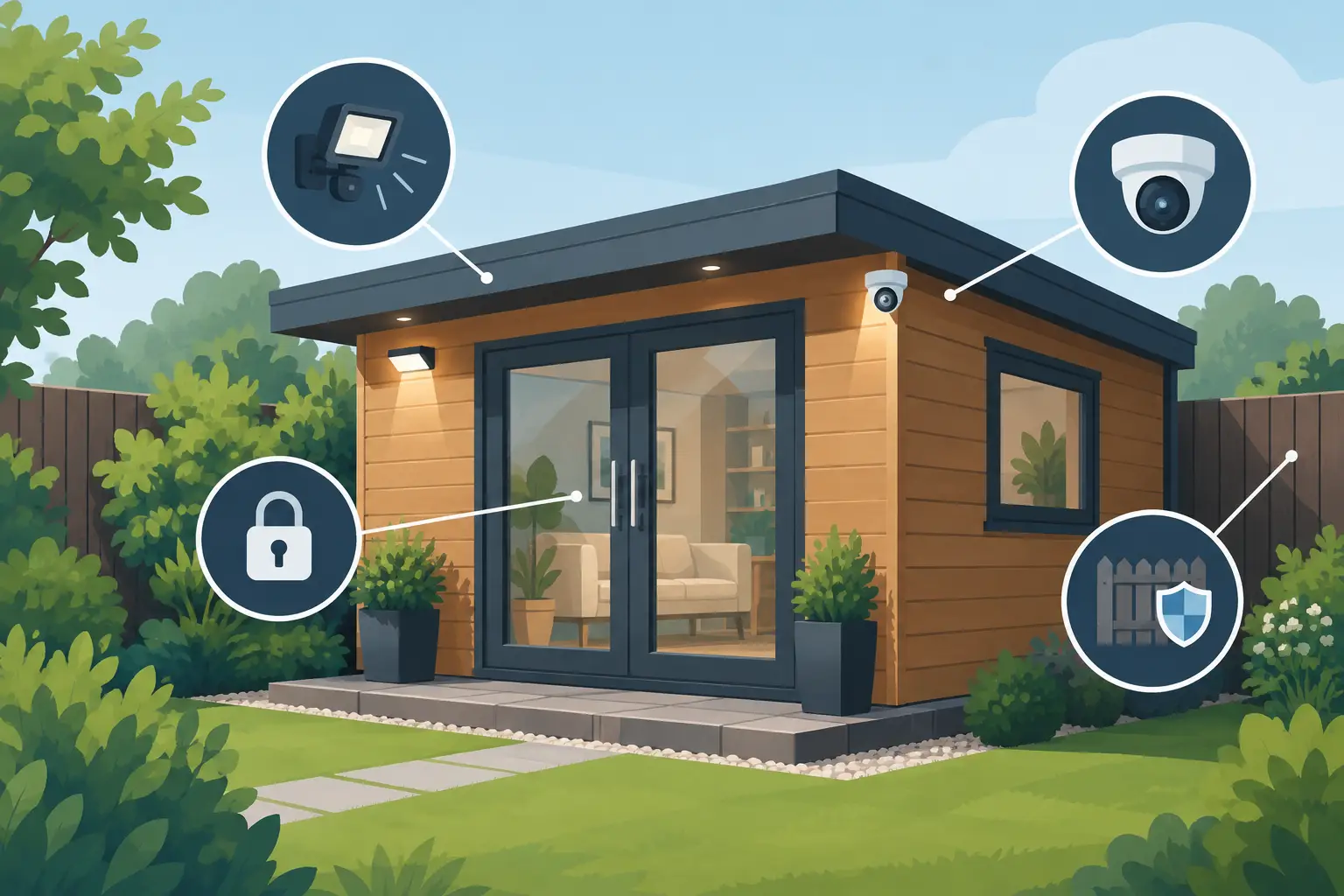
A garden office can hold far more than a desk. Laptops, screens, tools, sports equipment and personal items quickly make it a valuable part of the home. The right garden building security features help protect that investment without making your new space feel closed off or less enjoyable to use.
Security works best when it is considered during the design stage, rather than added as an afterthought. A well-positioned building, quality doors and glazing, sensible lighting and a few everyday habits can provide a strong, practical level of protection for a garden studio, summer house or leisure room.
Start with the building’s physical security
The doors and windows are the most obvious access points, so they deserve careful attention. A purpose-built garden room should use quality external doors with dependable locking hardware, rather than lightweight fittings intended for occasional-use sheds. Multi-point locking systems distribute the lock across the frame, helping the door remain firmly secured when it is closed.
The frame matters just as much as the lock. A secure door needs a stable, well-fitted frame that will not flex easily under pressure. Composite Garden Studios designs buildings for year-round use, where insulated construction, quality windows and doors, and a solid overall structure support both comfort and peace of mind.
Windows bring natural light and make a garden building feel connected to the garden, but larger glazed areas should be planned thoughtfully. Toughened or laminated security glazing can make forced entry more difficult, while lockable opening windows prevent an easy access point being left unsecured. The right choice depends on the building’s use and location. A garden room used daily as an office may benefit from generous glazing facing the house, while a building at the end of a long garden may suit a more private layout.
Garden building security features to specify early
A bespoke design gives you the opportunity to build security into the layout, rather than compromise on it later. Consider where the main entrance faces, which elevations need opening windows and how visible the building is from the house or neighbouring properties.
A door facing the home or a regularly used patio is generally preferable to one concealed behind dense planting. Natural visibility is a useful deterrent. It also makes it easier to notice if a door has been left open, a delivery has arrived or somebody is approaching the building.
Avoid creating hiding places around the entrance. Mature planting can look beautiful, but tall shrubs immediately beside windows and doors may obscure sightlines. Keep paths clear and use low planting near access points. This does not mean turning a landscaped garden into a floodlit fortress – it means making the route to the building visible and easy to oversee.
External lighting is particularly effective when used with restraint. Motion-activated lighting near the entrance and along a path can discourage unwanted visitors and make winter evenings more comfortable for you. Choose a warm, carefully directed light so it improves safety without glaring into your home or a neighbour’s garden.
Think beyond locks and alarms
An alarm can be a worthwhile addition, particularly for a garden office containing expensive technology or a leisure space with specialist equipment. Wireless systems are often convenient in detached buildings, but their reliability depends on signal strength, battery maintenance and the chosen monitoring arrangement. Test the connection from the exact building location before relying on it.
Cameras can provide reassurance too, especially where they cover the approach to the building rather than constantly recording private garden areas. Position them responsibly and ensure they are used in line with privacy requirements. A visible camera may deter opportunistic intrusion, while a well-placed doorbell camera at the house can alert you to activity through the main garden access.
For some homeowners, a smart lock adds day-to-day convenience. It can be useful when family members, cleaners or tradespeople need temporary access without keys being copied or misplaced. However, convenience should not replace sound physical security. Select a reputable lock, retain an emergency access method and keep its software or batteries maintained where applicable.
A monitored alarm, cameras and smart locks are not essential for every project. If your garden building will mainly be a quiet reading room or hobby space with little of value stored inside, quality door and window security plus good lighting may be entirely appropriate. If it is a fully equipped office, golf simulator room or studio used to store equipment, a layered approach is more sensible.
Protect the items inside your garden room
Security is not only about preventing entry. It is also about reducing the loss and disruption if someone does get inside. Keep high-value portable items out of direct view from the windows where possible. A laptop left on a desk beside full-height glazing is more tempting than one stored in a locked cupboard at the end of the day.
For an office, consider a lockable cabinet for devices, confidential paperwork and small electronics. Tools, bikes and hobby equipment may be secured with purpose-made anchors or locked storage, depending on what is kept in the space. Photograph valuable items, record serial numbers and check whether your household insurance covers possessions kept in an outbuilding. Policies vary, and some set individual value limits or require specific locks and alarm measures.
Do not overlook keys. A garden room key hidden under a pot, tucked into a meter box or left in the door defeats otherwise effective security. Keep spare keys in the house, and make sure everyone who uses the building understands the locking routine.
Everyday habits make the biggest difference
The most effective garden building security features can be undermined by a rushed departure. A simple closing routine is worth establishing from the first day: shut and lock all windows, lock the door, store portable equipment out of sight and switch on any alarm or security lighting setting.
This routine matters during the day as well as overnight. Garden buildings can be temporarily empty while you answer the front door, collect children from school or pop into the house for lunch. Closing and locking the door whenever the space is unattended is usually easier than deciding later whether it was only going to be a quick trip indoors.
It is also wise to avoid advertising what is inside. Packaging for expensive technology should not be left visible by bins, and social media posts need not show exactly where valuable equipment is stored. These are small precautions, but they reduce unnecessary attention.
Do not compromise safety for security
A secure garden building must still be safe and comfortable to occupy. If the room is used as a granny annexe, guest space or a regularly occupied work area, people need a clear, usable route out in an emergency. Security measures should never block escape or make doors difficult to operate from inside.
This is one reason a considered, bespoke specification is preferable to fitting multiple improvised locks after installation. The building should balance secure access, ventilation, natural light, insulation and safe use all year round. Planning requirements, Building Regulations and insurance conditions can differ depending on the size, position and intended use of the building, so it is sensible to discuss these details before finalising the design.
The best approach is rarely the most complicated one. A well-made garden building with secure doors and glazing, clear sightlines, discreet lighting and consistent locking habits gives most homeowners the reassurance they need. Build those decisions into the project from the outset, and your garden space can remain an inviting place to work, relax and spend time – not another thing to worry about.