
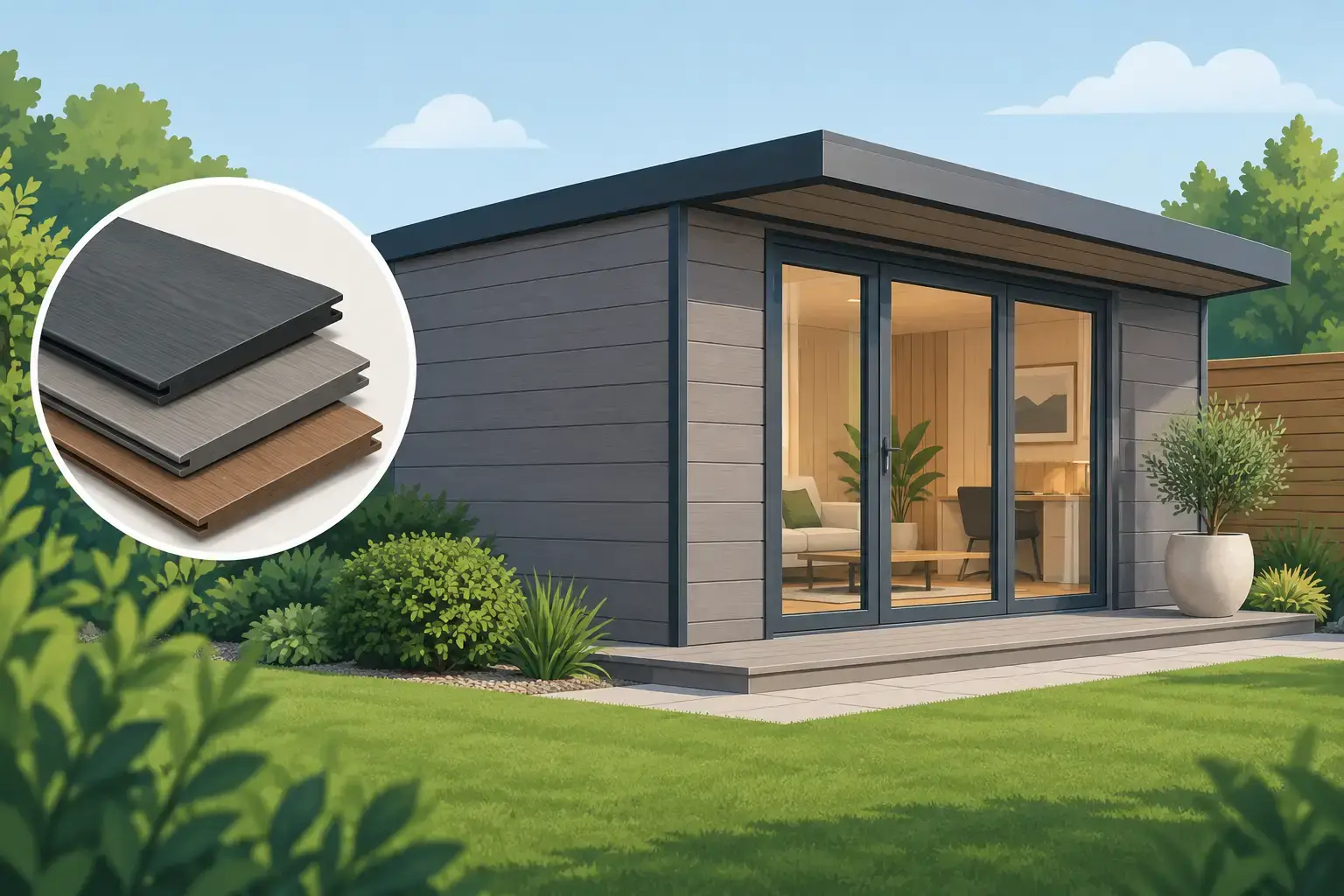
A garden room should make life easier, not create another weekend job. Composite cladding gives homeowners the warm, timber-inspired look they want, while avoiding the regular painting, staining and repair work associated with many traditional timber exteriors. For a garden office, hobby room, gym or entertaining space, that difference matters year after year.
The exterior of a garden building has to cope with rain, frost, changing temperatures and the occasional wayward football. It also has a major effect on how the building looks from the house. Choosing the right cladding is therefore about more than colour. It is about long-term appearance, day-to-day upkeep and confidence that your investment will continue to earn its place in the garden.
What Is Composite Cladding?
Composite cladding is an exterior finish made from a blend of recycled wood fibres and polymer materials. The exact blend and protective surface layer vary between products, but the aim is consistent: to create boards that have the visual character of wood with greater resistance to moisture, decay and fading.
High-quality composite boards are often capped, meaning they have a protective outer layer designed to reduce staining and improve colour retention. They are fitted to a timber or steel framework with carefully planned trims, corners and ventilation details, creating a smart, contemporary façade.
The result can suit both modern and more traditional gardens. Choose a deep charcoal or slate tone for a clean architectural look, or opt for warm brown and natural wood shades when you want the building to sit more softly alongside fences, planting and mature trees.
It is not the same as insulation
A common misunderstanding is that exterior cladding alone makes a garden room suitable for all-year-round use. Composite cladding is an excellent weather-facing finish, but the comfort of the room comes from the complete build-up behind it.
An insulated garden building needs properly insulated walls, floor and roof, along with quality glazing, a secure door and considered ventilation. The cladding protects and finishes the outside. The structure beneath it is what helps keep the space comfortable through a cold January morning and a warm summer afternoon.
Why Composite Cladding Works So Well for Garden Buildings
The main appeal is low-maintenance ownership. Unlike untreated or poorly maintained softwood cladding, composite boards do not need annual painting, staining or sealing to preserve their finish. A wash with warm soapy water and a soft brush is usually enough to remove everyday dirt, pollen and garden debris.
That is particularly useful for homeowners who want extra space without adding to the maintenance list. A garden studio may be used every working day, but it should not require the same attention as a painted shed or ageing fence panel. Composite cladding helps keep the focus on using the room rather than looking after its exterior.
It also performs well in the variable British climate. Moisture resistance means the boards are less vulnerable to rot and splintering than traditional timber. They are designed to withstand wet weather without the cycles of swelling, shrinking and surface breakdown that can affect natural wood.
Appearance is another significant benefit. Modern composite finishes have more depth and texture than the flat plastic boards many people imagine. Wood-grain effects, concealed fixings and coordinated trims can give a bespoke garden room a polished finish from every angle.
For a property where the garden is visible from the kitchen, patio or main living area, that visual consistency is valuable. A well-designed garden building should feel like a considered part of the home, not an afterthought at the end of the lawn.
Composite Cladding Benefits in Everyday Use
For most homeowners, the practical advantages become clearest after the building is installed. Composite cladding is designed for hassle-free, low-maintenance living, but it also supports the wider performance and appearance of the garden room.
- It resists rot, splitting and insect damage more effectively than many natural timber alternatives.
- It does not require routine painting, staining or varnishing.
- It offers a consistent colour and finish across the building exterior.
- It is available in a broad choice of shades to complement your garden and property.
- It can be used on garden offices, studios, leisure rooms, annexes and entertaining spaces.
These benefits are especially relevant when the building is intended as a permanent part of family life. A home office should still look presentable when a client visits. A granny annexe should feel secure and well finished. A garden bar or golf simulator room should look as impressive from the patio as it feels inside.
Where Composite Cladding Needs Careful Specification
No cladding material is completely maintenance-free or right for every project. The best results come from selecting a quality product and ensuring it is installed as part of a properly designed garden building.
Composite boards expand and contract slightly as temperatures change. This is normal, but it means installers need to allow the correct spacing, use suitable fixings and follow the manufacturer’s guidance. Boards should not simply be treated like timber planks nailed straight onto a wall.
Ventilation behind the cladding is equally important. A cavity allows moisture to escape and supports the long-term health of the wall structure. Well-fitted trims and flashings also help direct water away from vulnerable joints, windows and doors.
Colour choice deserves some thought too. Darker shades can look striking, particularly on a contemporary office or gym, but they absorb more heat in direct sunshine. Lighter tones may be more forgiving in a south-facing garden and can make a smaller building feel less dominant against the boundary.
As with any exterior material, occasional cleaning is still sensible. Bird mess, mud splashes and leaves left against the lower boards should be removed rather than ignored. This is simple maintenance, not a demanding annual treatment programme, but it helps preserve the finish.
Composite Cladding and Bespoke Garden Room Design
One of the strengths of composite cladding is its flexibility within a bespoke design. It can be fitted horizontally for a clean, wide-lined appearance or vertically to add height and definition. It can also be combined with feature elements such as wide glazed doors, picture windows, roof overhangs and contrasting fascias.
This makes it suitable for far more than a standard garden office. A compact work-from-home studio may benefit from pale cladding and a large front window to bring in daylight. A private wellness space might use deeper colours and minimal glazing. A family entertainment room could pair a bold exterior with wide opening doors for summer gatherings.
The building size, garden orientation and position of neighbouring homes all influence the final design. If your garden room faces the house, you may want the cladding to complement existing brickwork, render, window frames or fencing. If it sits at the far end of a long garden, stronger colours and architectural detailing can help it feel intentional rather than lost in the background.
Composite Garden Studios designs buildings around how customers plan to use them, not around a one-size-fits-all layout. The exterior finish is part of that decision, alongside insulation, roofing, glazing, electrics and internal space planning.
Does Composite Cladding Affect Planning?
Cladding choice can influence the appearance of a garden building, but it does not by itself decide whether planning permission is required. In many cases, a garden room can fall within permitted development rules, provided it meets conditions around height, location, coverage and use.
However, every property is different. Listed buildings, conservation areas, flats and homes with planning restrictions may be subject to additional rules. A garden room intended for sleeping accommodation or independent living may also need more detailed consideration than a simple home office or hobby space.
It is worth reviewing planning requirements early, before finalising the size, position and purpose of the building. That gives you more freedom to create a design that works for your garden and avoids costly changes later.
Is It Worth Choosing Composite Over Timber?
If you love the natural variation of real wood and are happy to maintain it, timber can still be a beautiful choice. It has a character that no manufactured finish completely replicates. But it needs commitment: regular treatments, checks for moisture damage and timely repairs are part of the ownership experience.
Composite cladding is often the more practical option for homeowners who want a reliable, timber-look exterior with considerably less upkeep. The initial cost can be higher than basic timber boards, but the value lies in reduced maintenance, greater weather resistance and a cleaner appearance over time.
For a building designed to be used throughout the year, that trade-off is often worthwhile. You are investing in usable space for work, family life or leisure, and the exterior should support that purpose without continually asking for attention.
The best garden rooms do not just add square footage. They make a busy home feel more flexible, give hobbies a proper place and create somewhere you are genuinely pleased to look at every morning. Choosing composite cladding is a practical way to keep that feeling intact long after installation day.