
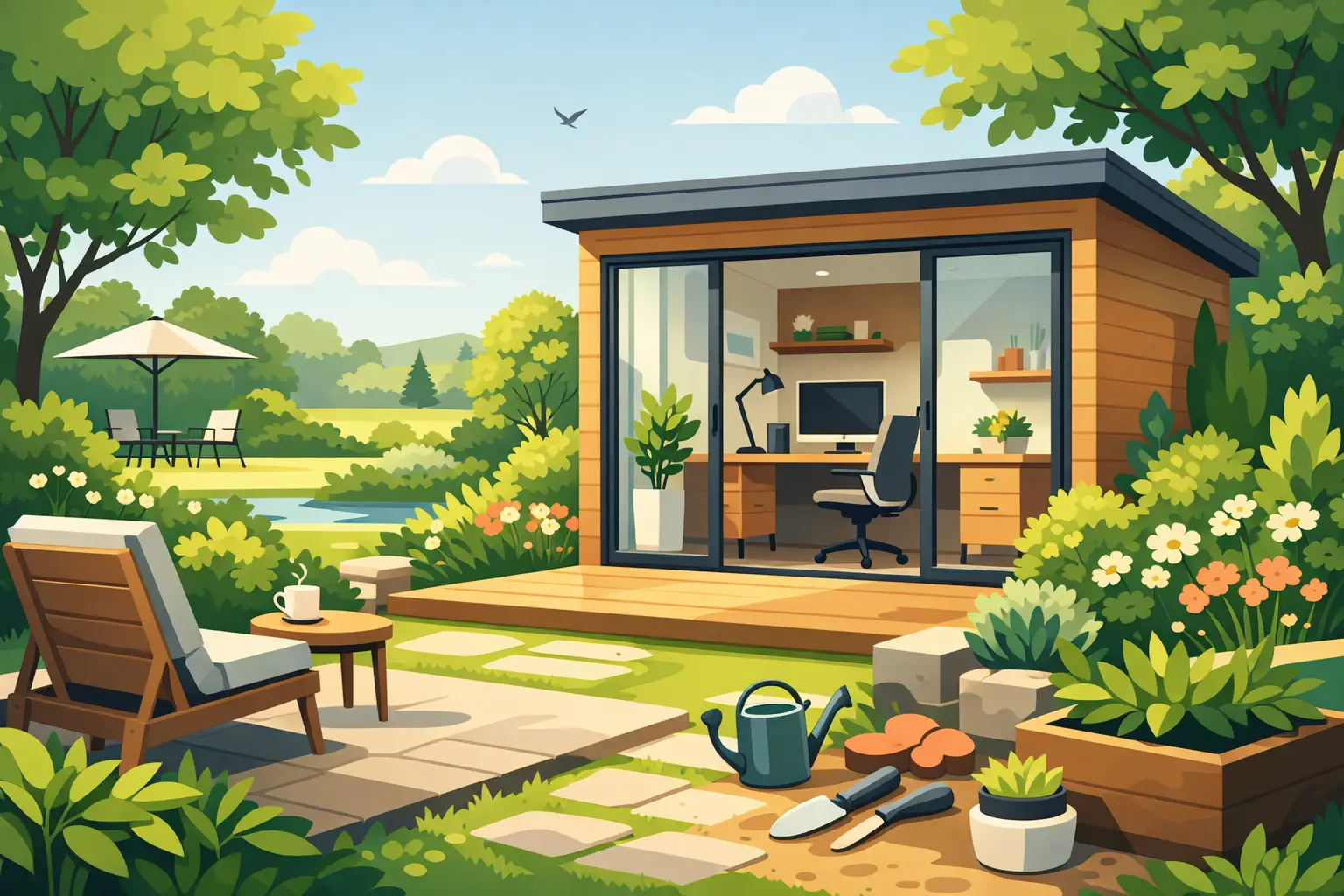
That spare corner of the dining table worked for a while. Then the video calls grew, the paperwork spread, and the line between work and home all but vanished. A garden work from home office solves a very modern problem in a way that feels surprisingly simple – step outside, shut the door, and get your working day back.
For many UK homeowners, the appeal is not just extra space. It is better focus, more privacy, and a proper separation between job and home life without the cost and upheaval of a full extension. The right garden office also adds something many temporary work set-ups never can – comfort in every season and a finish that actually complements your property.
Why a garden work from home office works so well
Working in the house often sounds convenient until real life gets involved. Deliveries arrive, the washing machine starts, children come in from school, and every room has to do three jobs at once. A dedicated office in the garden creates physical distance, which usually means better concentration and a clearer routine.
That distance does not need to be dramatic. Even a short walk down the garden can help switch your mindset into work mode in the morning and back into home mode later on. For professionals juggling calls, deadlines and admin, that mental reset matters more than most people expect.
There is also the question of appearance. If clients or colleagues see your workspace on screen every day, a well-designed garden office gives you a cleaner, more professional backdrop than a makeshift desk in the spare room. It feels better to use, and it often helps you present your business more confidently.
What makes a garden office comfortable all year round
A garden room only earns its keep if you can use it in January as happily as you can in July. This is where build quality matters. Insulated walls, a high-performance roof, quality windows and reliable doors make the difference between a room you use every day and one you avoid when the weather turns.
Heating and ventilation need just as much thought as the shell itself. Too much glazing can look impressive, but if it overheats in summer or loses warmth in winter, daily use becomes frustrating. The best balance depends on your garden, the direction the room faces and how long you spend inside. South-facing spaces may benefit from considered glazing rather than wall-to-wall glass, while a shadier plot may welcome more natural light.
Low maintenance materials are another practical win. Traditional timber can look attractive, but regular painting, staining and weather protection soon become another job on the list. Composite garden buildings appeal because they give you the timber-style finish many homeowners want, without the ongoing upkeep that usually comes with it.
Planning your garden work from home office
The most successful garden offices are designed around how you actually work, not just how the building looks from the patio. Before choosing sizes, finishes or doors, think about your day.
If your role is mainly laptop-based, you may only need space for a desk, storage and one comfortable chair. If you take frequent video calls, meet clients, use multiple monitors or need room for samples and filing, the room should be planned differently. A compact footprint can work brilliantly, but only if it is properly thought through.
Noise is another consideration people often spot too late. If you need quiet for meetings, position matters. A room tucked away from the road or shielded from neighbouring activity may be far more practical than one placed purely for symmetry in the garden.
Then there is access. A short, dry route from the house becomes much more important in wet weather. Good exterior lighting, sensible pathways and proximity to power are all part of making the office feel easy to use every single day.
Size, layout and storage
Bigger is not always better. An oversized office can feel empty and cost more to heat, while a room that is too small quickly becomes restrictive. The right size comes down to your equipment, whether more than one person will use it, and whether the building might need to serve another purpose later.
A simple rectangular layout is often the easiest to furnish. It gives you more usable wall space for desks and storage, and fewer awkward corners. Built-in storage is worth considering early on because it keeps the room uncluttered and helps the space stay calm and professional.
If you want the office to double as a reading room, hobby space or occasional guest area, say so at the design stage. A bespoke layout can make one room work much harder without making it feel compromised.
Light, privacy and screen glare
Natural light is a major advantage of working in a garden room, but too much direct sun on your screen will test anyone’s patience. Window placement matters more than square footage. Side windows can bring in daylight without causing glare, while larger front glazing can create an open, airy feel if the orientation is right.
Privacy matters too. If your garden is overlooked, frosted sections, careful positioning or a different door and window arrangement may give you a more comfortable working environment. A bespoke approach is valuable here because one standard design rarely suits every plot.
The case for composite over traditional timber
Homeowners often start by comparing styles, but the material choice has a direct impact on long-term satisfaction. Timber buildings can be appealing at first glance, yet they usually ask more of you over time. Weather exposure, repainting schedules and the risk of rot can turn a smart purchase into ongoing maintenance.
Composite offers a different proposition. You still get the warm, natural look that suits a garden setting, but with a more durable exterior designed for hassle-free ownership. For busy households and working professionals, that matters. The office should support your routine, not become another weekend task.
There is also a financial angle. A cheaper building that needs frequent upkeep can end up costing more in time and money than a better specified structure from the outset. That does not mean every buyer needs the same specification, but it does mean looking beyond the initial price tag.
A garden office is not just for work
One reason garden offices make such good investments is their flexibility. Your working pattern may change, but a well-built garden room stays useful. It can become a study space for older children, a creative studio, a home gym, a treatment room or simply a quiet retreat away from the main house.
That versatility matters when homeowners are weighing up cost. You are not just buying a desk in the garden. You are adding usable square footage that can evolve with your household. If remote work becomes hybrid work, the room still earns its place.
This is where tailored design has a real advantage. Composite Garden Studios focuses on bespoke garden buildings because households rarely need exactly the same thing. One family wants a calm office with hidden storage. Another wants a dual-purpose room for work in the week and entertaining at weekends. The best result comes from designing for both now and later.
What to look for before you buy
A smart-looking exterior is only part of the story. Ask what is included, how the room performs in winter, what the roof system is, and how much upkeep will be needed over the years. Guarantees, construction quality and specification details are not small print. They are the difference between short-term appeal and long-term value.
It is also worth asking about planning guidance and installation practicalities. Many homeowners want a straightforward route from first enquiry to finished building, especially if they are already balancing work and family life. Clear advice removes uncertainty and makes the whole project feel much more manageable.
Price will always matter, but convenience matters too. A bespoke garden office should feel like a genuine improvement to daily life from the moment it is installed. If it looks right, works well in every season and asks very little of you afterwards, that is where the real value sits.
A good garden office does more than create room for a desk. It gives your day structure, your home breathing space and your garden a purpose that earns its keep all year round.