
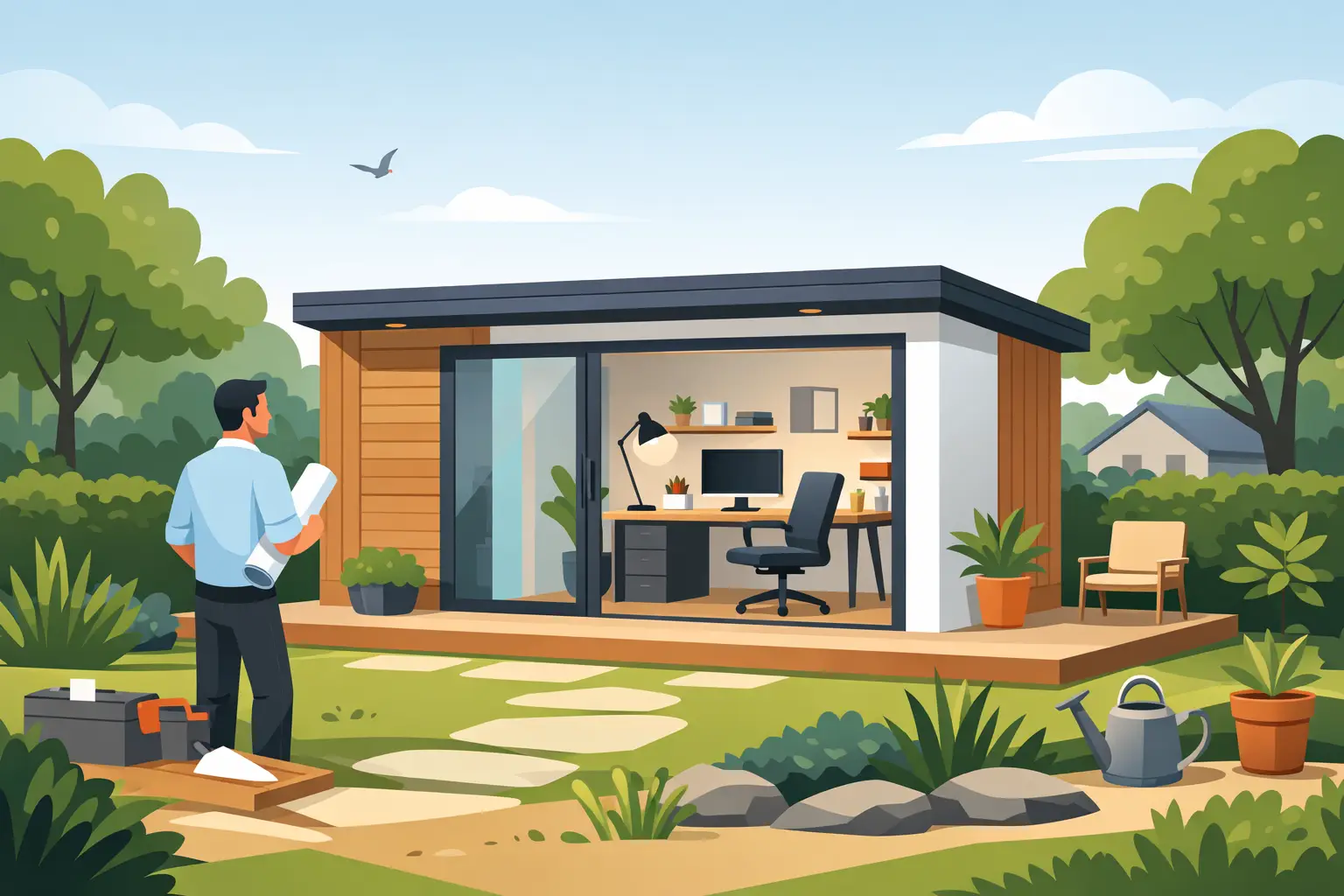
That moment when the kitchen table stops working as a desk usually comes with a hard truth – your home needs more space, but not necessarily a full extension. If you are looking at how to build a home office in the garden, the best results come from treating it as a proper working environment from day one, not a shed with a plug socket.
A garden office should feel separate enough to help you focus, but connected enough to make daily life easier. Done well, it gives you privacy for calls, room to concentrate and a comfortable place to work all year round. It can also add real value to your property and spare you the noise, mess and cost that often come with altering the main house.
How to build a home office in the garden the right way
The first decision is not the exterior finish or the desk position. It is how you plan to use the space. A garden office for one person who mainly answers emails has very different requirements from one used for back-to-back video meetings, client visits or creative work that needs storage and larger equipment.
Start with your working week. Think about how many hours you will spend in the building, whether you need room for two people, how much natural light you want and whether you need a toilet, kitchenette or built-in storage. These details affect the size, layout, insulation levels and electrical setup.
This is also where many homeowners realise that a bespoke building makes more sense than trying to adapt a basic garden room later. A purpose-built office is easier to heat, easier to furnish and far more convincing as a long-term solution.
Choose the right position in the garden
Where you place the building matters almost as much as what you build. Put it too close to the house and it may not feel like a true retreat from domestic distractions. Put it too far away and it becomes less convenient in bad weather, particularly in winter.
Look at sunlight across the day. A south-facing office can be bright and pleasant, but if glazing is not planned properly it may become too warm in summer. An east-facing position often gives softer morning light, which suits many working patterns. Consider your view as well. Looking onto planting or open lawn is far more enjoyable than staring at bins or a fence panel.
Access is another practical point that is easy to overlook. You will want a safe, simple route from the house to the office, ideally one that still works well in rain and frost. If installation access is tight, that can affect the design or the build method too.
Size matters, but not in the way you think
Most people focus on fitting the building into the available garden space. That matters, but internal usability matters more. A small office can work brilliantly if it is proportioned well and planned around your furniture. A larger building can still feel awkward if doors, glazing and desk positions are not considered properly.
As a rule, allow enough space for your desk, chair movement, storage and a little breathing room. If you spend full working days in the building, cramped layouts quickly become tiring. If two people will use it, avoid trying to squeeze two workstations into a space designed for one.
Prioritise insulation and year-round comfort
If you only remember one thing about how to build a home office in the garden, make it this: year-round comfort is what separates a real office from a seasonal outbuilding. Many cheaper structures look appealing at first glance, but become too cold in winter, too hot in summer and too expensive to run efficiently.
Walls, floor and roof insulation all matter. So do quality windows and doors. Heat loss through poor glazing will make the space less comfortable and increase energy use. Ventilation is equally important. Without it, even a well-insulated office can feel stuffy during long working days.
This is where low-maintenance composite construction has a clear advantage for homeowners who want hassle-free ownership. A well-built composite garden office offers strong thermal performance, durable external finishes and the timber-style appearance many people want, without the regular painting, staining or worries about rot that can come with traditional timber buildings.
Think beyond the shell
A comfortable office is not just about insulation boards and cladding. Ceiling height, glazing placement, airflow and heating all affect how the building feels. Underheating a large glazed space will never be efficient. Overglazing a south-facing office without shade can make summer afternoons uncomfortable.
The aim is balance. You want natural light, but not glare on your screen. You want warmth, but not a room that feels airless. You want a building that performs well in January as well as July.
Plan power, lighting and internet early
A garden office needs more than one socket in the corner. Before the build starts, think about everything you will use each day: laptop, monitor, printer, lamps, chargers, broadband equipment and heating. If you may add extra equipment later, plan for that now rather than relying on extension leads.
Lighting should work in layers. Natural daylight is valuable, but you will also need good overhead lighting for darker mornings and winter afternoons, plus task lighting at your desk. If video calls are part of your routine, think about how your lighting and window position will look on camera.
Internet performance is another priority. For some households, a strong Wi-Fi signal from the house is enough. For others, especially where connection stability matters, a hard-wired solution may be the better choice. It depends on distance, wall construction and the kind of work you do.
Make the layout work for real life
The best garden offices are simple to use. You open the door, sit down and everything is where it should be. That ease comes from planning the internal layout properly.
Think about where the desk should go in relation to windows, doors and sockets. A desk facing straight into harsh daylight can be uncomfortable. A desk with the window behind you may create poor lighting on calls. Built-in storage helps keep paperwork, tech and daily clutter under control, especially in more compact spaces.
If the office may also double as a meeting room, hobby room or quiet retreat, the design should support that from the start. Multi-use spaces can work very well, but only if they do not compromise your main working setup.
Check planning and building requirements
Many UK garden offices fall within permitted development, but not all do. Height, position, proximity to boundaries and intended use can all affect whether planning permission is needed. If your property is listed or in a conservation area, there may be additional restrictions.
Building regulations are a separate consideration. In some cases, the size, construction or electrical work involved may bring further requirements. The details depend on the project, so this is not an area to guess your way through.
A specialist supplier should be able to guide you through what is likely to apply to your site and design. That support can save time and avoid expensive changes later.
Choose materials that stay looking good
A garden office should improve your day-to-day working life, not add another maintenance job to the calendar. That is why material choice deserves proper attention.
Traditional timber has its appeal, but it usually needs ongoing treatment to keep it looking its best and protected from the weather. For many busy homeowners, that upkeep becomes a burden. Composite materials are designed to reduce that hassle while still delivering a smart, high-end finish.
This matters over the long term. A low-maintenance office is easier to enjoy, easier to budget for and easier to keep looking sharp as part of the garden. Composite Garden Studios focuses on this balance of durability, appearance and year-round performance because it suits how people actually want to use these spaces.
Budget for value, not just the starting price
It is tempting to compare buildings on base price alone, but that rarely gives the full picture. A cheaper structure may not include the insulation, electrics, finishes or design detail needed for genuine daily use. Once upgrades and maintenance are factored in, the gap can narrow quickly.
Think instead about whole-life value. A better-built office can mean lower upkeep, greater comfort, stronger visual appeal and a space you will still enjoy using years from now. If it allows you to work productively from home, it may also repay its cost in convenience and saved commuting time.
The right garden office should feel like part of your home, not a compromise parked at the end of the lawn. When the design is tailored to your routine, built with durable materials and finished for all-season use, it becomes one of the most practical upgrades you can make to your property.
If you are serious about creating a workspace that looks good, works hard and asks very little in return, start with the way you live and work now – then build a garden office that keeps up with both.