
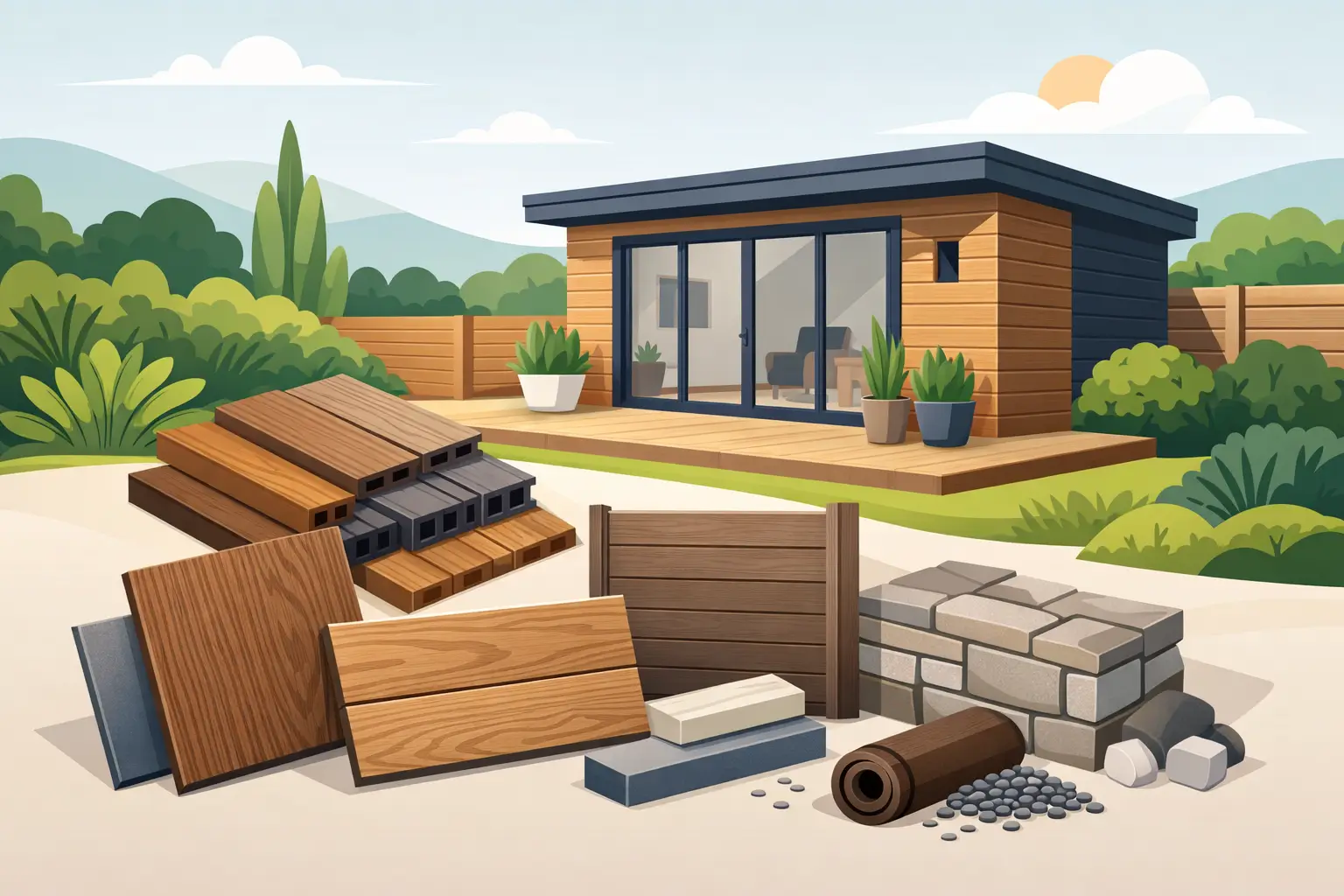
A garden room should not become another weekend maintenance job. If you are comparing options for a home office, hobby room, annexe or leisure space, this composite garden building materials guide explains what sits behind a building that looks good, feels comfortable and stays practical through British weather.
The right material choices affect far more than appearance. They influence how warm the room feels in January, how often it needs attention, how well it stands up to rain and UV exposure, and whether it still suits your garden years from now. Composite construction is designed to offer the character of timber without the familiar cycle of sanding, staining, painting and repairing rotten boards.
Why material choice matters in a garden building
A premium garden building is a system rather than a single product. Attractive external cladding matters, but it must work alongside an insulated wall structure, dependable roof, quality doors and windows, and a floor designed for everyday use. Focusing on one feature alone can lead to a room that looks impressive on installation day but falls short when temperatures change or maintenance starts to build up.
Traditional timber has a natural appeal and can be the right choice for buyers who enjoy maintaining it. However, timber reacts to moisture, sunlight and seasonal movement. Even well-treated wood can require ongoing care to protect its finish and prevent deterioration.
Composite wood cladding gives homeowners a different route. It is made to provide an authentic timber-style appearance while resisting the issues that make conventional timber demanding. There is no need for regular painting or staining, and it will not rot in the way untreated or poorly maintained timber can. That makes it particularly well suited to busy households looking for hassle-free, low-maintenance living.
Composite garden building materials guide: the key elements
Composite cladding for a lasting finish
Cladding is the visual face of your garden room, so its colour, texture and profile should complement your home and garden. Composite boards are available in contemporary shades and timber-effect finishes, allowing a modern studio to feel considered rather than separate from the property.
The practical benefit is just as valuable. Quality composite cladding is designed to cope with wet weather, changing temperatures and strong sunlight without the repeated finishing work associated with timber. It will still need occasional cleaning to remove surface dirt, pollen or garden debris, but this is a simple ownership task rather than a renovation project.
There is a trade-off to consider. Composite is a premium material, so the upfront cost can be higher than a basic timber shed or lightly insulated summerhouse. For a building intended for daily work, family use or long-term leisure, the reduced maintenance and improved durability often make it the more sensible investment.
Insulated walls that make year-round use possible
A garden office is only useful if it remains comfortable beyond the mildest months. Insulated wall panels help retain warmth during winter and reduce excessive heat gain during summer. They also create a more solid, finished feel than the thin timber construction found in many entry-level garden buildings.
Insulation should be assessed as part of the complete envelope. Walls, roof, floor, glazing and the seals around doors all influence thermal performance. A well-insulated wall cannot compensate for a poorly specified roof or draughty opening.
For homeowners working remotely, this matters every day. Better temperature control can make a garden office easier to heat, more pleasant to use for long calls and less dependent on supplementary heaters. For a gym, music room or family retreat, it means the space is more likely to be used throughout the year rather than abandoned when the weather turns.
A high-performance roof for British weather
The roof takes the greatest exposure to rain, wind, frost and summer sun. It needs to shed water effectively, protect the insulated structure beneath and retain a neat appearance over time. A quality roof system is therefore one of the most important parts of a garden building specification.
Look beyond the surface finish and ask how the roof is insulated, how rainwater is managed and how its edges and junctions are finished. These details protect the building from water ingress and contribute to its overall longevity. A building that is properly designed from the top down is easier to own and more dependable in all seasons.
Roof style can also affect the look of the project. A clean, contemporary roofline often suits a modern garden studio, while the overall height and positioning may be relevant when considering permitted development rules. Every garden is different, so planning guidance should be considered early, especially for larger buildings, annexes or sites with boundary constraints.
Quality windows and doors
Glazing has a major influence on how a garden room feels. Large windows and glazed doors bring in daylight, create a connection with the garden and make a compact footprint feel more generous. For a studio, they can turn the view outside into part of the working day. For entertaining or hobbies, they make the room feel open and inviting.
However, more glass is not always automatically better. South-facing gardens may benefit from thoughtful window placement to control glare and summer warmth, while a private garden may call for higher-level windows or carefully positioned doors. The best layout balances natural light, privacy, furniture placement and the way you intend to use the space.
High-quality windows and doors also support insulation and security. They should close firmly, be properly sealed and suit the level of use the room will receive. A garden office used five days a week needs a different standard from a seasonal storage building.
Flooring and the base beneath it
The floor is easy to overlook because it is hidden beneath furniture, but it contributes to comfort, durability and insulation. A stable, level foundation is essential before the building is installed. It helps doors operate correctly, protects the structure from movement and provides a sound platform for the finished room.
Inside, choose flooring that suits real life. A home office may need a hard-wearing surface that works with desk chairs. A gym benefits from an option that can cope with equipment and impact. A garden bar or family room may call for a warmer, more decorative finish. The right answer depends on the room’s purpose, not simply its appearance in a brochure.
Match the specification to the way you will live
The most successful garden rooms start with an honest brief. Consider whether the building will be a quiet place for focused work, a guest-ready annexe, a creative studio, a golf simulator room or a space where the family can spread out. This determines the size, insulation level, glazing arrangement, internal layout and services you may need.
A simple summerhouse may be enough if you only want a pleasant place to sit on warm weekends. If you expect to work there through winter, host friends, run a business or create additional living space, a fully insulated composite garden building is likely to offer better value over time.
It is also worth thinking ahead. A room that begins as a home office could become a teenage den, hobby space or guest room later. Bespoke design gives you the chance to choose dimensions, doors, windows and finishes that support both your current plans and future flexibility.
Questions to ask before you choose
Before committing to a supplier, ask what is included in the construction rather than relying on headline images. Clarify the wall, roof and floor specification; the type of glazing; the proposed base requirements; and what delivery and installation involve. If you are considering an annexe or a larger building, ask for clear planning guidance before finalising the design.
Also ask how the materials will look after several seasons and what care they require. Low maintenance does not mean no maintenance at all, but it should mean straightforward cleaning rather than a regular programme of treatment and repair. Guarantees and clear construction information provide useful reassurance when comparing like for like.
A well-specified composite garden room gives you more than an attractive feature at the end of the garden. It gives you usable space that is ready when you are, whether that means a quiet Monday morning office, a warm winter workout or somewhere to gather when the house feels too small. Start with the way you want to live, then choose materials built to support it.