
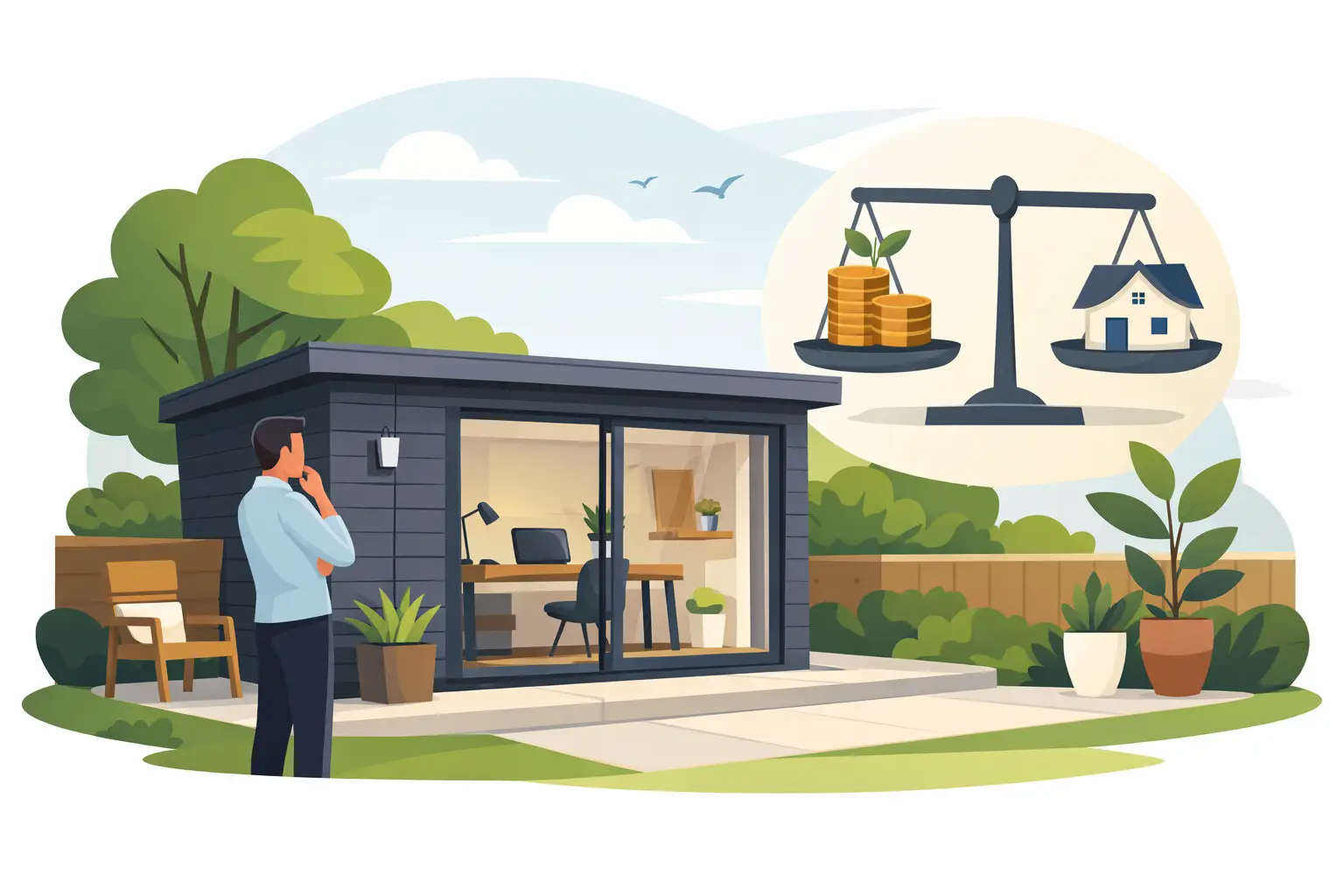
When the kitchen table has become your permanent desk and the spare room is doing three jobs at once, a composite garden office starts to look less like a luxury and more like a sensible upgrade. For many UK homeowners, it offers something a house extension often cannot – extra working space without months of disruption, and without taking over the rooms you already need for daily life.
What makes this option stand out is not just the location. It is the build quality, the day-to-day comfort, and the fact that ownership stays straightforward over time. A well-designed garden office should feel like a proper room, not a compromise at the bottom of the garden.
Why a composite garden office appeals to modern homeowners
Working from home has changed what people need from their property. Privacy matters more. So does being able to switch off at the end of the day. A garden office gives you physical separation from the house, which can make a real difference to focus during the day and routine in the evening.
Composite construction adds another layer of appeal. Traditional timber buildings can look attractive at first, but they often come with ongoing upkeep. Painting, staining, weather protection and worries about rot can turn a good idea into another job on the to-do list. Composite materials are chosen for a different reason – they are built to handle the British weather while keeping maintenance to a minimum.
For homeowners who want extra space without extra hassle, that combination is hard to ignore.
What makes composite different from standard timber builds
The biggest difference is long-term ownership. A timber office may suit some buyers, especially if they enjoy regular upkeep and prefer a more traditional construction route. But many people want the look of wood without the work that usually comes with it.
That is where composite cladding and high-performance construction have a clear advantage. You still get a smart, natural-looking exterior, but without the same risk of warping, rotting or regular repainting. In practical terms, that means less time spent maintaining the building and more time using it.
This matters even more in a garden office than it does in a summer house. If you are using the space daily for work, comfort and reliability are not optional. Insulated walls, a solid roof system, quality windows and secure doors all play a part in making the building feel like a true extension of the home rather than a seasonal outbuilding.
A garden office should work in January, not just July
One of the most common mistakes buyers make is focusing too heavily on appearance and not enough on year-round performance. A garden room can look impressive in photos, but if it is too cold in winter, too warm in summer, or prone to condensation, it will not deliver what you actually need.
A composite garden office should be designed for daily use across all seasons. Good insulation helps regulate temperature, keeps heating demands lower and creates a more comfortable environment for long working days. Combined with quality glazing and reliable roofing, it turns the space into a usable office twelve months of the year.
That year-round usability is often where real value sits. If the room only feels pleasant for a few weeks each summer, it is not solving the problem. If it gives you a quiet, comfortable place to work every week of the year, it starts paying you back in a much more practical way.
Design matters more than most people expect
A garden office is not just a box with a desk in it. The layout, door position, glazing, storage options and internal finish all influence how well the space works. A bespoke design usually makes more sense than forcing your routine into a fixed off-the-shelf format.
Some homeowners want wide front glazing to bring in as much natural light as possible. Others need more wall space for shelving, screens or storage. If video calls are part of your day, backdrop and acoustics may matter just as much as floor area. If the building will also double as a creative studio, workout room or occasional guest space, the design needs to support that from the start.
The right solution depends on how you actually live and work. That is why tailored configuration matters. A good garden office should fit your garden, your property style and your routine, rather than asking you to compromise on all three.
The real benefit is convenience
People often start by talking about style or added space, but convenience is usually what makes them commit. A composite garden office can simplify daily life in ways that are easy to underestimate.
It cuts the commute to a short walk across the garden. It gives you a place to close the door on work at the end of the day. It can reduce noise and interruption inside the house. For families, it can free up a bedroom, dining table or corner of the lounge that has slowly been turned into a permanent work zone.
There is also convenience in the material itself. Low-maintenance ownership is not a small detail. It is one of the main reasons people move away from conventional timber options. If you are investing in a premium garden building, it makes sense to choose one that keeps looking good without regular painting or staining.
Is it cheaper than an extension?
It depends on the scale, the specification and the site conditions, but for many homeowners, a garden office is a more cost-effective route to extra usable space than a full house extension. It is typically less disruptive, faster to install and does not involve sacrificing part of your existing living area.
That does not mean every garden office is a budget purchase. A bespoke composite building with proper insulation, quality finishes and tailored design features is an investment. But the comparison should be based on what you are getting in return: a dedicated, insulated, visually attractive room that expands how your property works.
For buyers looking at the long term, the lower maintenance requirements also affect value. A cheaper structure that needs constant upkeep can become more expensive in time, money and effort than it first appears.
Planning, placement and practical considerations
Before choosing a design, it is worth thinking carefully about where the office will sit in the garden and how you want it to feel. Position affects privacy, daylight, access and views from both the house and the office itself.
Planning permission is another consideration. Many garden buildings fall within permitted development, but not all sites and designs are the same. Size, height, intended use and location within the plot can all affect what is possible. Good guidance early on helps avoid delays and gives buyers more confidence about moving forward.
Access matters too. A beautiful office on paper still needs to work with the realities of delivery and installation. This is one reason specialist suppliers are valuable – they understand not just the building, but the full process around it.
Who gets the most from a composite garden office?
Home workers are the obvious fit, but they are not the only ones. A composite office can suit business owners who need a quiet client-facing space, parents who want work and home life more clearly separated, and households planning ahead for flexible use.
That flexibility is a major strength. Today it might be an office. In a few years, it could become a hobby room, a study space for older children, a wellness room or a stylish guest area. A well-built garden room does not lock you into one use forever. It gives you options as your lifestyle changes.
For that reason, many buyers are not simply purchasing an office. They are investing in a part of the home that can adapt over time.
Choosing the right supplier
The details behind the build matter. Materials, insulation levels, roofing systems, doors, windows and finish quality all influence how the building performs. So does the design process itself.
A specialist approach is often the safest route, especially if you want a building that looks premium and stays that way. Composite Garden Studios focuses on bespoke garden buildings that combine durable composite materials with authentic timber-style finishes, which is exactly the balance many homeowners are looking for – modern performance with a warm, natural appearance.
When comparing options, it is worth asking not just how the building looks on day one, but how it will feel after three winters, a wet autumn and years of regular use. The best garden office is not the one with the loudest sales pitch. It is the one that still feels like a smart decision long after installation.
A composite garden office makes the most sense when you want extra space that works hard, looks right and does not add to your maintenance list. If the goal is to make home life easier while creating a place you genuinely want to spend time in, it is a practical upgrade that can keep proving its value every single week.