
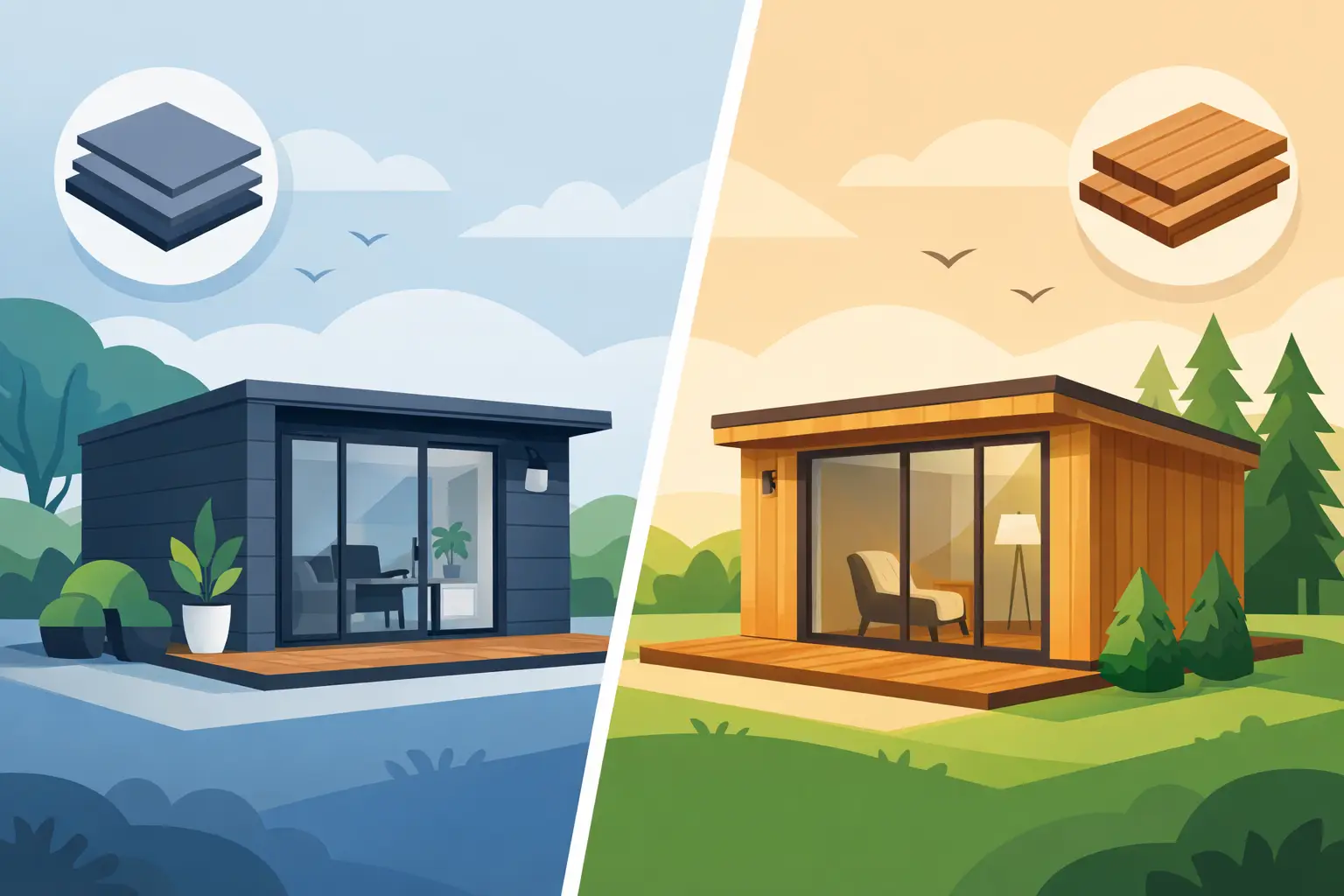
The difference between a composite garden room vs timber usually becomes clear after the first winter, the first repaint, or the first weekend you would rather spend relaxing than maintaining a building. On paper, both can give you extra space in the garden. In practice, they offer very different ownership experiences.
If you are planning a garden office, studio, hobby room or annexe-style space, the right choice is not just about looks. It is about how the building performs over time, how much attention it needs, and whether it still feels like a smart investment five or ten years from now.
Composite garden room vs timber – what is the real difference?
A timber garden room is built with natural wood as the main external finish. That gives it a traditional appeal and, for some homeowners, an immediate sense of warmth and character. Timber has been used for garden buildings for years, and when it is well made and properly cared for, it can look very attractive.
A composite garden room is designed to give you that same timber-style appearance with a much lower-maintenance exterior. Composite cladding is engineered to resist many of the issues that make timber ownership more demanding, such as rotting, warping and the ongoing need for staining or painting. For many households, that is where the decision starts to shift.
The key point is simple. Timber asks more of you. Composite asks less.
Maintenance is where the gap widens
This is often the deciding factor for busy homeowners. A timber garden room can look excellent when first installed, but keeping it that way takes work. Depending on the product, exposure and finish, timber may need regular treatment to protect it from moisture, UV damage and general weathering. If this upkeep is delayed, the exterior can start to fade, crack or deteriorate.
That may be fine if you enjoy hands-on maintenance and do not mind setting aside time and money for it. Some people genuinely prefer natural materials and accept the trade-off. But if your goal is hassle-free ownership, timber can become frustrating.
Composite has a different appeal. It is chosen by homeowners who want the space, the comfort and the visual impact of a premium garden building without adding another maintenance job to the calendar. A quick clean is usually enough to keep it looking smart. There is no annual cycle of sanding, staining and repainting hanging over you.
For a family using the building as an office, gym or extra living space all year round, that lower-maintenance advantage is not a small detail. It is part of the reason the building remains enjoyable to own.
Appearance – natural charm or long-term consistency?
Timber has an authenticity that some buyers will always love. There is a natural grain, variation in tone and a traditional look that suits certain gardens beautifully. If you are drawn to classic materials and do not mind the upkeep, timber can still be a good option.
The challenge is that timber changes. Weather, sunlight and moisture all affect its appearance. Some homeowners like that lived-in character. Others simply see a building that no longer looks as crisp as it did on day one.
Composite is popular because it offers a cleaner, more consistent finish over time. Modern composite exteriors are designed to replicate the look of timber while holding their colour and shape far more reliably. That makes a real difference if you want your garden room to keep complementing the house rather than becoming a project that needs attention every season.
For many modern homes, a composite finish also feels more in keeping with contemporary outdoor design. It offers a polished look without becoming overly clinical.
Performance through the British weather
In the UK, garden buildings need to handle driving rain, cold snaps, damp conditions and summer heat without missing a beat. This is where materials matter, but construction matters just as much.
A poorly built timber room will struggle. A well-built timber room can perform well, but it still depends heavily on protection from the elements and ongoing care. Natural wood expands and contracts, and over time that movement can contribute to wear, especially if maintenance slips.
A high-quality composite garden room is built for year-round use with performance in mind. When paired with insulated walls, quality roofing, and well-specified windows and doors, it creates a far more comfortable internal environment. That is important if the room is not just decorative, but genuinely part of daily life.
If you plan to work in the space every weekday, host guests, create a wellness room or set up a hobby space you will use in January as well as July, all-season usability should sit high on your list. Comfort is not a luxury when the room needs to function like a proper extension of your home.
Cost – cheaper upfront or better value over time?
Price comparisons can be misleading if you only look at the initial figure. Some timber buildings come in at a lower entry price, especially in simpler specifications. That can make them look attractive at first glance.
But upfront cost is only part of the story. Timber often brings extra lifetime costs through treatments, repainting, repairs and the time needed to keep it in good condition. If the building is not maintained consistently, there may also be earlier deterioration to deal with.
Composite usually represents a stronger long-term value proposition for homeowners who want a building that keeps performing without constant attention. You are paying for durability, lower upkeep and a finish that is designed to stay smart with far less intervention.
This is particularly relevant if you are investing in a bespoke garden room rather than a basic shed-style structure. When the building is intended to add real lifestyle value to your property, it makes sense to consider the full ownership picture rather than just the entry price.
Which option suits your intended use?
Not every buyer needs the same thing, so the best choice depends on how the space will be used.
If you want a simple garden retreat that you are happy to maintain and you strongly prefer natural materials, timber may still suit you. It can be a good fit for homeowners who enjoy the character of wood and are prepared for the care that comes with it.
If you need a dependable home office, a family room, a granny annexe, a gym or a premium leisure space, composite tends to make more sense. These are not occasional-use buildings. They need to feel comfortable, presentable and easy to live with throughout the year.
That is why many homeowners lean towards bespoke composite buildings. The material supports the lifestyle they want – practical, attractive extra space without the recurring jobs that come with traditional timber exteriors.
Composite garden room vs timber for resale appeal
A garden building should improve your day-to-day life, but buyers also think about how it supports the value and appeal of the home. A garden room that still looks sharp after years of use is far easier to present as a genuine asset.
Timber can still add appeal, but only if it has been looked after properly. If the exterior is faded or the structure appears tired, it may not create the same impression. Prospective buyers tend to notice condition quickly.
Composite has an advantage here because it is designed to retain a cleaner, more finished look over time. For homeowners who see the garden room as a long-term investment in both lifestyle and property appeal, that consistency matters.
The better fit for modern homeowners
For most households comparing composite garden room vs timber, the decision comes down to one question: do you want a building to use, or a building to maintain?
Timber still has its place. It can look beautiful, and for some buyers the natural material is part of the appeal. But it asks for more attention, more upkeep and more tolerance for wear over time.
Composite is the stronger choice for homeowners who want year-round comfort, a premium finish and a simpler ownership experience. It gives you the look people want from a stylish garden building, with far fewer of the drawbacks that often come with timber. That is why so many customers looking for a garden office, studio or flexible living space now choose a bespoke composite solution from specialists such as Composite Garden Studios.
When you are adding space to your home, the smartest option is usually the one that keeps working hard long after installation day – and lets you enjoy the room, not the maintenance.