
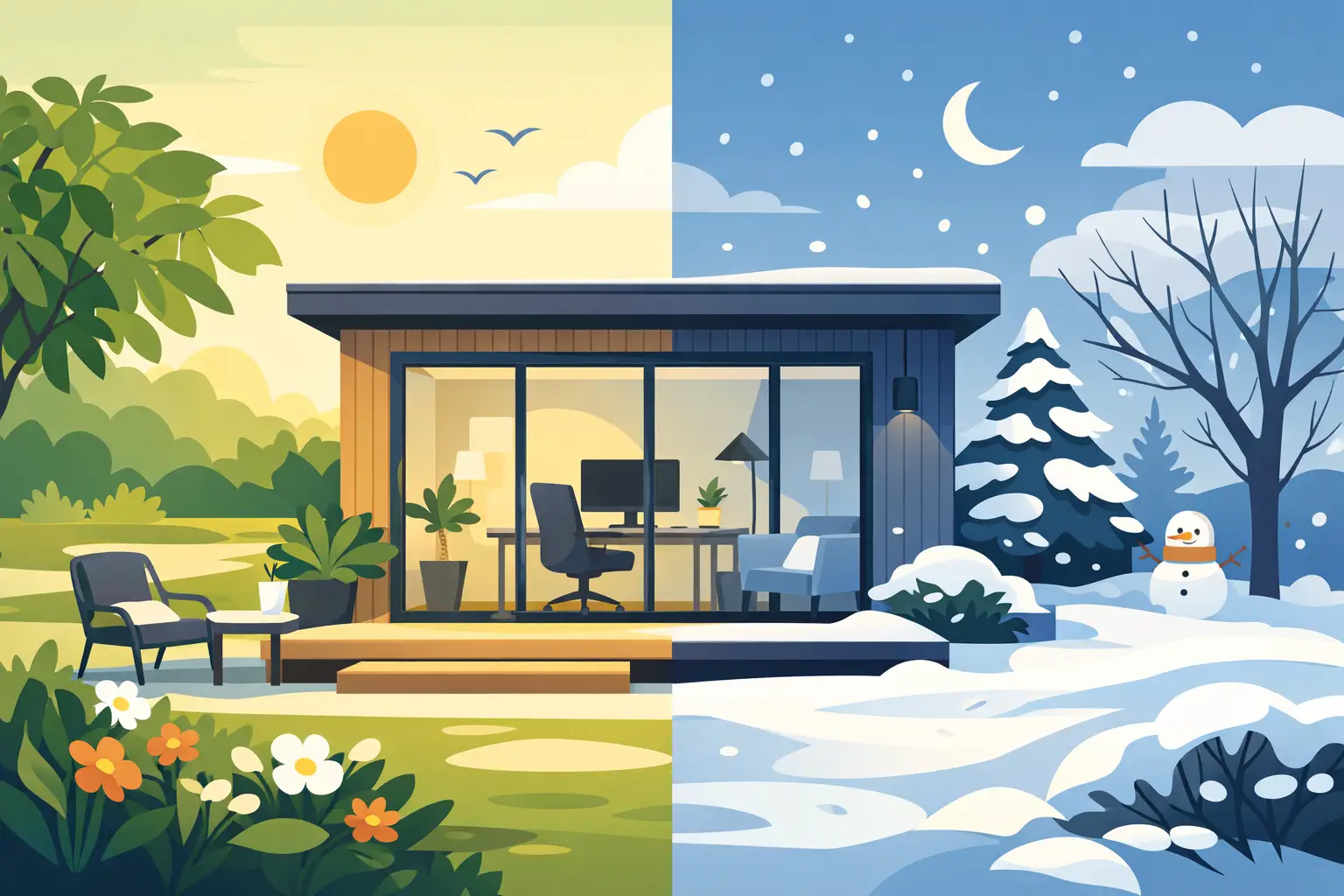
That spare bedroom works until it doesn’t. Calls get interrupted, the dining table never quite clears, and by winter the idea of stepping into a cold shed to work feels like a non-starter. Creating a year-round garden office solves a very specific problem for homeowners – how to gain proper working space at home without the cost, mess and compromise of a full extension.
A garden office only earns its keep if it works in January as well as July. That means looking beyond the basic idea of a garden room and focusing on comfort, insulation, durability and how the space will feel day after day. A smart design should give you somewhere quiet, warm and bright to work, while adding something attractive and useful to your garden rather than becoming another high-maintenance structure to worry about.
What creating a year-round garden office really involves
The biggest mistake people make is assuming any garden building can become an office with a desk and heater. It usually can’t, at least not if you want to use it properly throughout the year. A summer house may feel pleasant on a sunny afternoon, but if the walls, roof, floor, glazing and doors are not designed for all-season performance, comfort drops quickly once temperatures change.
Creating a year-round garden office starts with the building fabric. Good insulation in the walls, roof and floor makes the biggest difference to day-to-day comfort and running costs. It helps the room hold warmth in winter and avoid overheating in warmer months. High-quality windows and doors matter just as much, because weak glazing can undo the benefit of an otherwise well-built structure.
Material choice is another key part of the decision. Traditional timber has its appeal, but it often comes with ongoing maintenance, especially in the British climate. Rot, warping and the regular cycle of painting or staining can turn a garden office into another household job. Composite garden buildings appeal to many homeowners for exactly this reason. They offer the appearance of timber with far less upkeep, which is a practical advantage when you want the space to feel like an asset, not a chore.
Start with how you will actually use the space
Before settling on size, shape or finish, think honestly about your working week. If you spend most days on video calls, acoustics, background appearance and reliable natural light will matter more than they would for occasional admin. If your office will also double as a guest room, hobby space or quiet retreat, that changes the layout too.
A single-user office can often be more compact than expected, provided the proportions are right. You need enough space for a proper desk, comfortable chair, storage and movement around the room. For two people working side by side, the design needs more thought. Cramming in two desks may tick a box on paper but feel cramped in reality, particularly during full workdays.
It also helps to think about where the office sits in relation to the house. A short walk through the garden is part of the appeal, but the route should still feel easy in poor weather and darker evenings. Positioning affects privacy, light levels and how connected the building feels to the rest of your home.
Insulation, heating and ventilation make the difference
If there is one area where quality pays back quickly, it is thermal performance. A year-round office should feel comfortable without relying on a fan heater working overtime. Properly insulated walls, roof and floor create a stable internal temperature, making the room more pleasant and more economical to use.
Heating should be sized to the building rather than added as an afterthought. For many homeowners, an efficient electric heater is enough in a well-insulated garden office. Underfloor heating can also work well, especially where a clean, uncluttered finish is part of the brief. The best option depends on room size, usage patterns and budget, but the goal is always the same – steady, reliable comfort.
Ventilation deserves equal attention. A sealed room with no fresh airflow can become stuffy surprisingly fast, especially with laptops, monitors and long working hours. Opening windows help, but year-round usability is better when ventilation is considered from the outset. In summer, this helps control heat build-up. In winter, it supports a healthier and more comfortable working environment.
Why low maintenance matters more than people expect
When homeowners first picture a garden office, they usually focus on the finished look. A few months later, ownership experience becomes just as important. This is where low-maintenance construction stands out.
A building that needs regular treatment, repainting or repair can lose its appeal quickly. That is especially true if your working week is already full and the whole point of the project was to make life easier. Composite materials are popular because they are designed for hassle-free ownership. You still get the warm, natural look people want in a garden setting, but without the constant upkeep associated with many timber buildings.
For a year-round office, durability is not just about convenience. It supports performance too. Materials that stand up well to moisture, temperature changes and general weather exposure are better suited to long-term comfort and appearance. That matters if you want the building to look smart and function properly for years, not just the first season.
Design choices that improve working life
The best garden offices are practical first, but they should still feel good to spend time in. Natural light is one of the biggest factors here. Too much glazing in the wrong place can create glare and overheating, while too little can leave the room feeling enclosed. It depends on orientation, surrounding trees and how you use screens during the day.
Door and window placement should support both appearance and workflow. Front-facing glazing can create an impressive visual statement, but side windows may be more useful for desk positioning and privacy. Storage is another detail worth planning early. Built-in or well-considered storage helps keep the room calm and professional, especially if the office has multiple uses.
Finishes matter as well. Interior choices that feel clean, bright and modern help the building work as a true extension of the home. Outside, a timber-style finish often sits more naturally in the garden than something overly industrial. The strongest designs balance function with kerb appeal, because this space should improve your property visually as well as practically.
Budget, planning and long-term value
Cost matters, but the cheapest route is rarely the best value when creating a year-round garden office. A lower upfront price can be tempting until you add heating inefficiency, maintenance costs or the frustration of a building that is uncomfortable for part of the year. It is usually better to invest in the core elements that affect daily use – insulation, construction quality, roofing, glazing and finish.
Planning considerations vary depending on the size, height and intended use of the building. Many garden offices can fall within permitted development, but this is never something to assume without checking. A specialist can guide you through what applies to your property and layout, which gives far more confidence than trying to piece it together yourself.
It is also worth looking at value in the broader sense. A well-designed garden office can improve how your home works immediately, while making the property more appealing in the long run. Buyers increasingly understand the benefit of flexible outdoor rooms, particularly when they are clearly built for all-season use rather than occasional summer overflow.
Choosing a building that still works years from now
A garden office is not a short-term fix if it is designed properly. That is why bespoke options often make more sense than forcing your needs into a standard size and shape. Small adjustments to dimensions, window positions, door configurations and internal layout can make a major difference to how the room performs.
This is also where specialist construction matters. A purpose-built composite garden room designed for everyday use gives a different ownership experience from a basic outbuilding adapted later. Companies such as Composite Garden Studios focus on this all-year approach, combining insulated construction, durable composite exteriors and tailored layouts that suit real homes and real routines.
The right choice is not always the largest office or the most elaborate finish. It is the building that fits your garden, supports the way you work and stays comfortable with minimal effort. If you get those fundamentals right, the office becomes part of daily life very quickly – not an escape from the house, but a better way to use the space you already have.
A year-round garden office should make your working day easier from the moment you step outside, whether it is bright spring sunshine or a wet November morning. Build for comfort, choose materials that reduce upkeep, and the space will keep paying you back long after the novelty has worn off.