
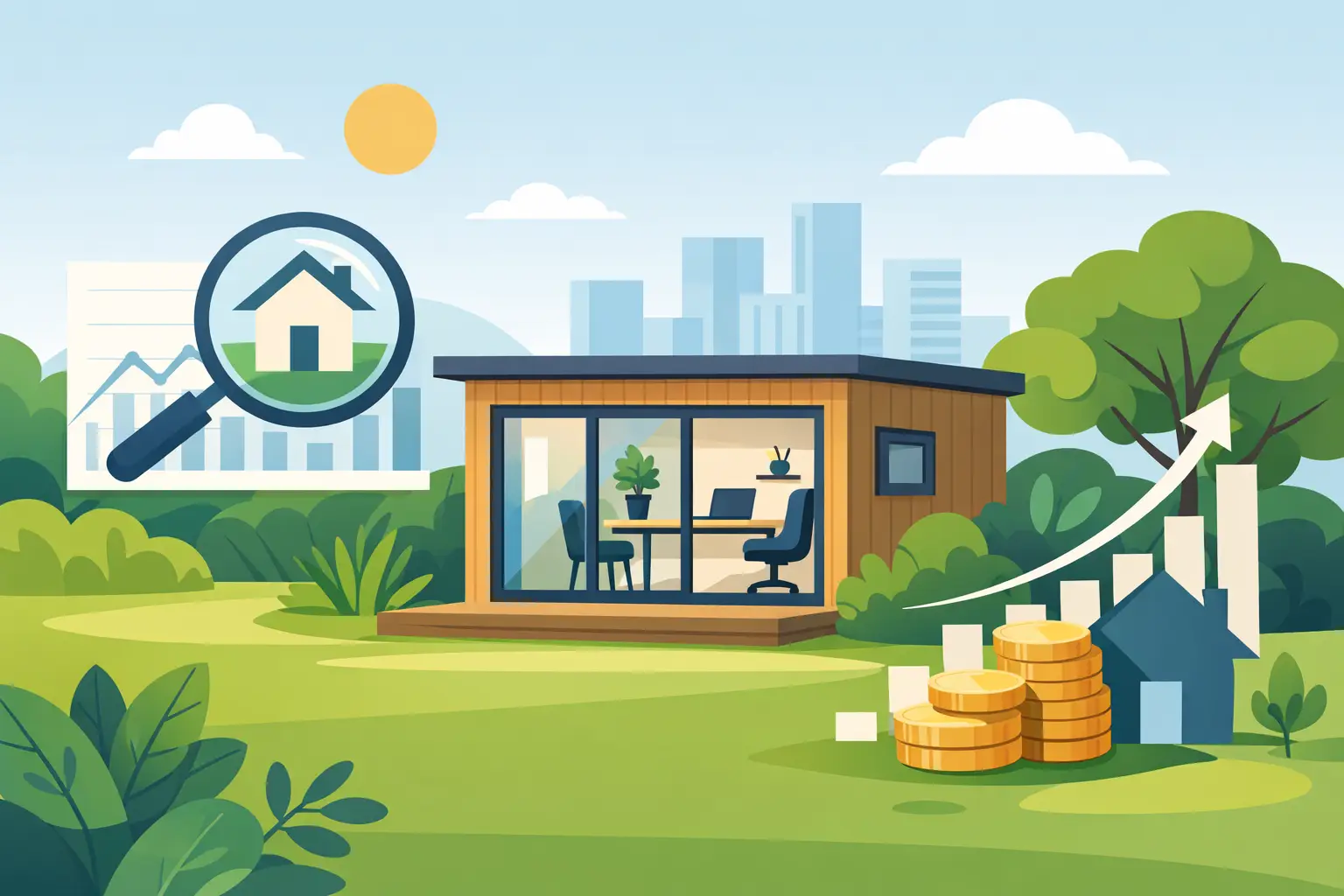
When you start pricing up a garden office, the question usually lands quite quickly – does a garden office add value, or is it simply a lifestyle upgrade for your own benefit? The honest answer is that it can do both. A well-designed, fully insulated garden office often makes a home more appealing to buyers and more useful to the people living in it right now. But not every garden building adds the same level of value, and the details matter.
For many UK homeowners, the real attraction is simple. You gain extra working space without giving up a bedroom, taking over the dining table or committing to the mess and cost of a full extension. That immediate day-to-day benefit is often what drives the purchase. Any uplift in property value is then an added advantage rather than the only reason to go ahead.
Does a garden office add value in the UK?
In many cases, yes. A garden office can add value because it increases the practical use of your property. Buyers are not only judging square footage on paper. They are looking at how a home fits modern life. A separate workspace in the garden can be a strong selling point for remote workers, business owners, growing families and buyers who want flexible space for hobbies or guests.
That said, estate agents and buyers do not value every structure equally. A basic shed with a desk in it is very different from a purpose-built, insulated garden office with proper glazing, electrics and a finish that complements the main house. The closer the building feels to a true extension of the home, the stronger its appeal tends to be.
There is also a wider point here. Value is not always just about the final sale price. It can show up in buyer interest, faster viewings, less hesitation during negotiations and a home that stands out against similar properties nearby. In a competitive market, that matters.
Why buyers respond well to a quality garden office
A good garden office solves a problem before the buyer has even moved in. That is powerful. Homeowners know how difficult it can be to create quiet, usable space indoors, especially when spare rooms are already doing double duty as nurseries, gyms or guest rooms.
A dedicated garden office offers separation from the house while staying close enough to feel convenient. For someone working from home three or four days a week, that balance is highly attractive. It creates a clearer boundary between work and home life, which has become a major factor in how people judge a property.
The strongest response usually comes when the building is genuinely usable all year round. Insulated walls, quality roofing, reliable doors and windows, and durable materials all affect whether the space feels like a serious asset or a seasonal extra. Buyers notice the difference.
What actually influences the value added?
The biggest factor is quality. A bespoke garden office built for year-round use is far more likely to support property value than a cheaper structure that looks tired after a few winters. Buyers want confidence that the building will last and that they will not inherit maintenance problems.
Materials play a major part here. Low-maintenance composite exteriors can be especially appealing because they offer the look of timber without the usual cycle of painting, staining and repair. That can make the building feel more premium and easier to own, which feeds into the overall impression of value.
Design matters too. A garden office should look intentional, not squeezed into the garden as an afterthought. Proportion, cladding finish, window placement and roofline all influence whether the space enhances the property visually. If it complements the home and garden, it is much easier for buyers to see it as a genuine upgrade.
Practical specification is just as important. Heating, lighting, sockets, data access and strong insulation all support the case for value because they turn the building into a functional room rather than a decorative extra. The more versatile the building is, the broader its appeal.
A garden office adds more than workspace
One reason these buildings can perform well in the housing market is flexibility. Even if you install it as a home office, a future buyer may see a studio, treatment room, teenage snug, hobby room or quiet reading space. That adaptability widens the pool of interested buyers.
This is especially useful for households that do not want to move but do want more room. A garden office creates usable space without the upheaval of a major build and without reducing the function of the main house. In some homes, it can free up a spare bedroom again, which strengthens the layout overall.
From a buyer’s point of view, flexibility reduces compromise. They are not being told what the building must be. They can picture it working around their own lifestyle.
When a garden office may add less value
There are trade-offs, and it is worth being realistic about them. A garden office may add less value if it is too small, poorly insulated, visually out of place or built with low-grade materials. If it feels temporary, damp-prone or expensive to maintain, buyers may treat it as neutral rather than positive.
Garden size also matters. If the building takes up too much outdoor space, especially in a smaller garden, some buyers may feel they are losing something important. Families with children, keen gardeners and buyers who prioritise entertaining outside may not want the garden dominated by one structure.
Planning and compliance can also affect confidence. If buyers are unsure whether the building was installed correctly or whether electrics and foundations were done properly, they may become cautious. Clear, professional installation helps protect the investment.
Does a garden office add value more than a home extension?
Not always in pure valuation terms, but it can offer a stronger balance of cost, convenience and lifestyle improvement. A traditional extension often delivers significant added value, yet it usually comes with a much higher budget, longer disruption and more impact on the existing house.
A garden office is different. It gives you extra usable space without months of building work through the centre of your home. For many households, that makes it a smarter practical decision, even if the percentage uplift in value is not identical to a brick-built extension.
There is also the issue of how the space is used. A rear extension may enlarge a kitchen or living room, but it does not always create the quiet separation that remote working needs. If the main aim is focused work, a bespoke garden office can be the better fit.
How to maximise the value of a garden office
If resale is part of your thinking, focus on lasting quality rather than the cheapest route. Choose a building designed for all-season use, with insulation levels that support genuine comfort in winter as well as summer. Buyers are far more persuaded by a space that feels solid and dependable.
It also helps to think beyond your own immediate use. Neutral, attractive design tends to age better than something overly niche. A stylish office can still have character, but it should be easy for a future buyer to imagine making it their own.
Durability is another major advantage. A low-maintenance exterior, quality glazing and strong roof system all support long-term appeal. This is where specialist garden building design really matters. A bespoke composite building from a company such as Composite Garden Studios is often attractive to homeowners precisely because it combines smart looks with hassle-free ownership.
Finally, do not ignore the setting. Landscaping around the building, a clean access path and thoughtful positioning can lift the whole result. Value comes from the complete impression, not just the structure on its own.
The real answer for homeowners
If you are asking whether a garden office is worth it purely as a resale tactic, the answer is: sometimes, but not automatically. If you are asking whether it can make your property more desirable while giving you immediate everyday benefits, the answer is much more often yes.
The strongest garden offices add value because they add function, comfort and flexibility in a way buyers understand straight away. They create room to work, think, host or unwind without asking the main house to work harder than it already does. That is why quality matters so much. A garden office should not feel like an add-on. It should feel like a natural extension of how the home lives.
If you build with that in mind, any future value is far more likely to follow.