
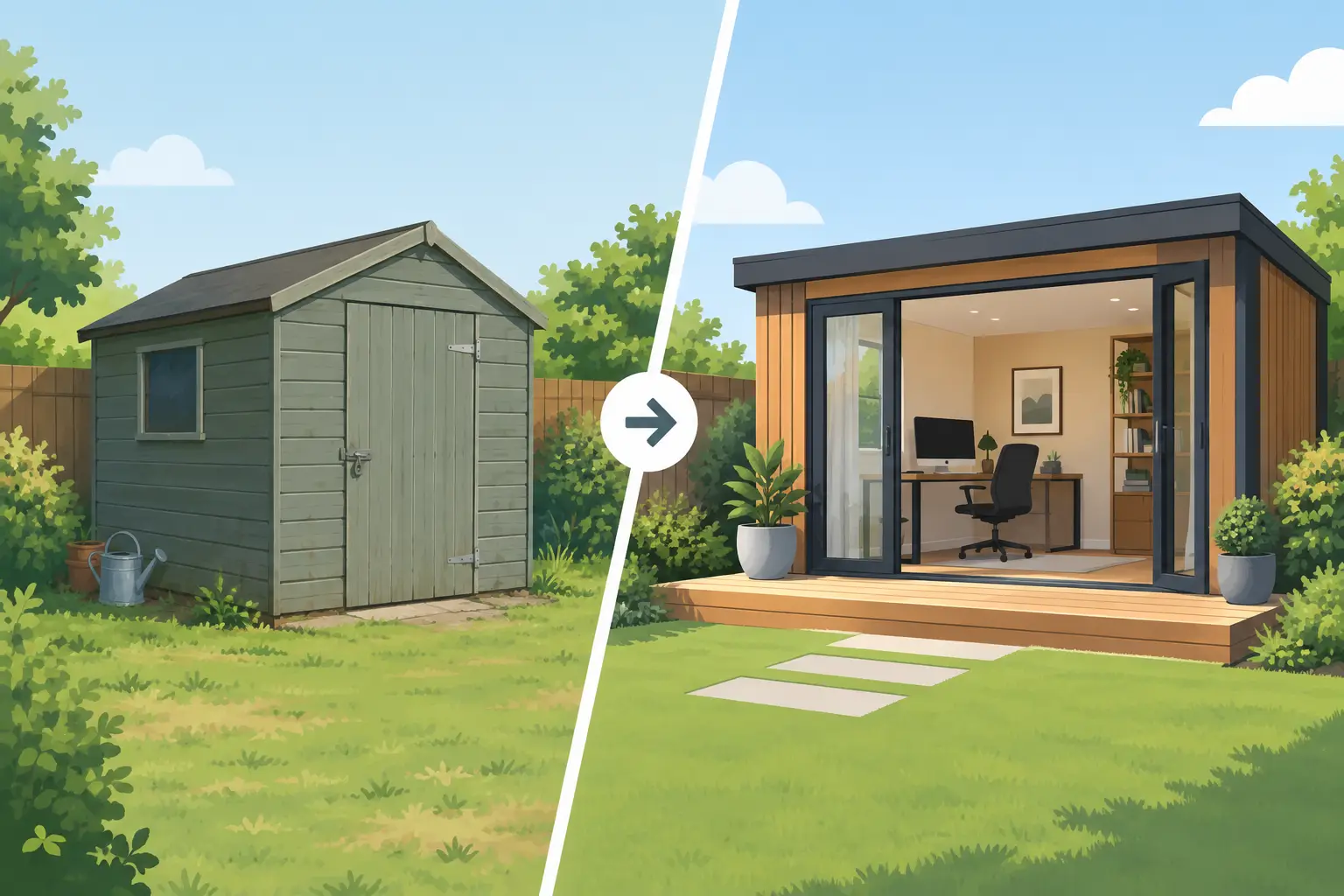
A garden office before and after transformation is rarely just about replacing an unused patch of lawn with a smarter-looking building. It is about changing how your home works from Monday morning onwards. The dining table is free again, video calls no longer compete with family life, and the commute becomes a short walk through the garden rather than a stressful journey across town.
For many UK homeowners, that difference is felt most on an ordinary wet Wednesday. A properly designed garden office gives you a separate place to focus, with warmth in winter, shade in summer and enough comfort to use every day. Done well, it becomes a valuable part of the home rather than a room you only enjoy when the weather is kind.
What a garden office looks like before and after
Before the project begins, the space may be a neglected lawn corner, an old shed, a patio that is not earning its keep, or simply a garden with no clear purpose beyond storage. It can still be a pleasant outdoor space, but it does not solve the practical problem of needing more room indoors.
Afterwards, that same area can become a calm, dedicated office with proper insulation, secure doors and windows, lighting, power and a layout designed around how you work. The visual change is striking, but the everyday benefit is even greater. You gain a room with a clear role, while preserving the main house for family life.
The best transformations do not make the garden feel smaller or crowded. They make it feel more intentional. Positioning a building carefully, choosing proportions that suit the plot and adding a path, planting or a small deck can help the office sit naturally within its surroundings.
The change you notice every working day
The biggest improvement is often separation. Working from a spare bedroom may save space initially, but it can blur the line between work and home. A garden office creates a physical boundary. You can close the door at the end of the day, leave the paperwork behind and return to the house without the feeling that work is still occupying your living space.
It also gives you more control over noise. High-performance insulated walls and quality glazing can create a quieter environment than a basic shed conversion or a busy kitchen. That matters if your day involves client calls, online meetings, focused creative work or confidential conversations.
Comfort should not be treated as an optional extra. A building that feels cold in January or overheats in July will not deliver the freedom you hoped for. Insulation, roof construction, window placement and ventilation all play a part in making a garden office suitable for year-round use. The aim is not simply to put a desk outdoors. It is to create a dependable working room.
More space without a traditional extension
A house extension can be the right answer when you need a larger kitchen, an extra bedroom or a complete reconfiguration of your home. However, it can also bring significant disruption, longer build times and greater impact on daily family life.
A garden office offers a different route to extra space. It can be designed around one specific purpose and installed away from the main home, allowing you to add usable floor space without turning the house into a building site. For homeowners who need a professional workspace rather than more internal living accommodation, this is often the more direct solution.
That said, it depends on the garden. A compact plot may need a smaller footprint, careful positioning and a design that protects light and access. Larger gardens can accommodate a more generous studio, perhaps with room for a meeting table, storage wall or sofa bed. Bespoke design is valuable because a standard box is not always the best fit for the way you live.
Choosing materials that still look good years later
The ‘after’ photographs of a garden office can be very appealing, but lasting performance is what protects that first impression. Traditional timber buildings may look attractive when new, yet they can demand regular painting, staining and maintenance to reduce the risk of weathering, rot and deterioration.
Composite cladding offers an alternative for homeowners who want a timber-style appearance without the same level of upkeep. It is designed for low-maintenance ownership, helping the exterior retain its smart finish without the recurring jobs that often come with untreated or painted wood. For busy professionals and families, that means more time using the room and less time looking after it.
The structure beneath the surface matters just as much. Insulated walls, high-performance roofing and quality windows and doors support a stable internal environment and help the office feel like a genuine extension of your home. Ask what is included in the specification rather than judging a building on cladding alone. A lower initial price can be less attractive if insulation, electrics, internal finishes or installation are treated as costly extras.
Design the inside around the way you work
A garden office should feel generous enough for its purpose, even when the footprint is modest. Start with the desk position. Many people prefer to face a wall or garden view rather than have bright sunlight directly behind them on video calls. Window placement can bring in natural light while avoiding glare on screens.
Storage deserves attention early. A built-in cupboard or shelving wall can keep printers, files and equipment out of sight, helping a smaller office remain calm and organised. If clients will visit, consider whether you need two workstations, a pair of comfortable chairs or a small meeting surface.
The room can also have a life beyond work. A desk that folds away, adaptable lighting and thoughtful furniture may allow the building to become a study room, hobby space or quiet retreat at weekends. This flexibility can make the investment feel even more worthwhile, particularly as work patterns change.
Do not overlook access, services and planning
The most successful before-and-after projects are planned as whole garden improvements, not just building purchases. Consider how you will reach the office in winter, where cables will run and whether there is a sensible route for delivery and installation. A simple paved path, exterior light and well-drained threshold can make a considerable difference on dark, rainy mornings.
Electrical requirements should reflect real use. A laptop and lamp need less provision than multiple monitors, heating, a printer and regular video calls. Think ahead about sockets, data connection and lighting so you are not relying on extension leads or making compromises after installation.
Planning requirements vary according to the size, height, location and intended use of the garden building, as well as the property itself. Many garden offices can fall within permitted development rules, but there are exceptions and conditions, especially for listed homes, conservation areas or buildings close to boundaries. A specialist supplier can help you understand the likely considerations, but checking the details for your own property is always the sensible approach.
Is a garden office worth the investment?
The answer comes down to how often you will use it and what problem it removes. If you work from home once a month, a spare room may be perfectly adequate. If home working is a regular part of your week, the benefit of having a warm, private and professional setting can be felt quickly.
There is also the question of lifestyle. A well-designed garden room can improve the appearance and usefulness of the garden while giving your household more breathing room. Rather than asking one room in the house to be an office, guest room, playroom and storage area, you give work its own place.
A cheap shed conversion may seem tempting, but its limits often become clear during colder months or when your working needs grow. Investing in insulation, durable materials and a tailored layout creates a room that is easier to enjoy and more likely to remain useful for years.
When you picture your own garden office before and after, focus on the routine you want to improve rather than the building alone. The right design should make the working day calmer, protect your time at home and give an overlooked part of the garden a purpose you will value every day.