
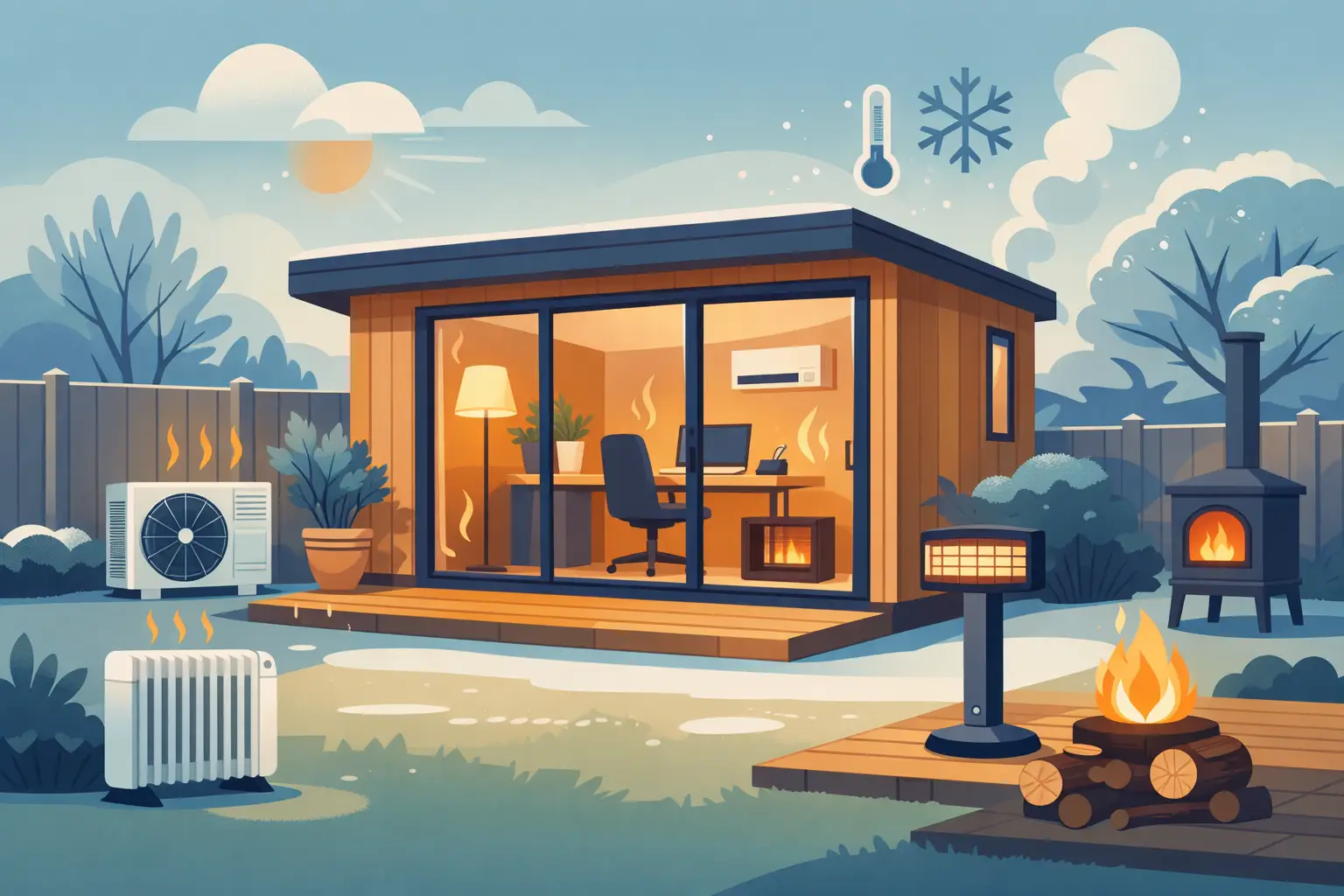
A cold garden office is not simply uncomfortable. It can make morning starts harder, shorten productive days and leave a valuable part of your home unused for months at a time. This garden office heating options guide looks at the practical ways UK homeowners can create a warm, dependable workspace without wasting energy or compromising the clean finish of their garden room.
The best answer is rarely just buying the most powerful heater. A well-designed garden office should retain heat effectively first, then use a heating system that suits how often you work there, the size of the room and the way you want the space to feel.
Garden office heating options: start with the building
Heating performs best when the garden office itself is built for year-round use. Insulated walls, a high-performance roof, quality windows and well-fitted doors all reduce heat loss, so your chosen system has less work to do. They also make the room more comfortable in every season, helping to prevent summer overheating as well as winter chills.
This is why a purpose-built garden room is a different proposition from a basic shed conversion. If cold air is entering around doors, glazing or the floor, even an expensive heater will struggle to provide consistent comfort. You may feel warm beside the unit while the rest of the room remains chilly.
Before choosing a heating option, consider the office orientation, amount of glazing, ceiling height and whether the room will be used daily. A compact office with a south-facing window has different needs from a larger studio used for full-time work, client meetings or evening hobbies.
Electric panel heaters for simple, reliable warmth
Electric panel heaters are a popular choice for garden offices because they are neat, straightforward to use and quick to install as part of an electrical fit-out. They warm the air in the room, creating an even background temperature that works well for a properly insulated office.
For homeowners who use their garden office most weekdays, a thermostatically controlled panel heater can be a sensible solution. Set it to maintain a low background temperature overnight or schedule it to warm the room before the working day begins. Modern controls can prevent the office being heated unnecessarily when it is empty.
The main trade-off is running cost. Direct electric heating is efficient at the point of use, but electricity prices mean it is worth choosing the correct heater size and using programmed controls. Oversizing the unit will not compensate for poor insulation, while an undersized heater may run constantly on the coldest days.
A wall-mounted panel heater keeps floor space clear and suits a sleek, uncluttered office layout. It is especially practical where desks, storage and seating need to make the most of a compact footprint.
Infrared heating for desk-focused comfort
Infrared heaters work differently from panel heaters. Rather than primarily heating the air, they emit radiant heat that warms people and surfaces in their path. This can feel pleasantly immediate when you sit down at your desk on a cold morning.
They are a strong option for occasional use, larger rooms where one person works in a specific area, or offices with higher ceilings. Ceiling-mounted infrared panels can be discreet and free up wall space, although placement matters. You should not position one where the heat will feel too intense at close range or where it is blocked by tall furniture.
Infrared heating can be an excellent companion to low-level background heating, but it is not always the best standalone choice for a room used by several people throughout the day. If you want the whole office to feel evenly warm, a panel heater or heat pump may be more suitable.
Electric underfloor heating for a clean finish
Electric underfloor heating creates a luxurious, evenly warmed floor and removes the need for visible radiators or wall heaters. It is particularly appealing in a multi-use garden studio, yoga room or garden office where clear walls and uninterrupted floor space are part of the design brief.
It is most cost-effective and practical when planned from the outset. Retrofitting underfloor heating later can involve lifting the finished floor, which is disruptive and may affect floor levels. It also tends to respond more slowly than a panel or infrared heater, so it is better for steady, regular use than for heating a room at short notice.
For many homeowners, underfloor heating works best as part of a complete garden room specification, paired with effective insulation and a programmable thermostat.
Air-to-air heat pumps for efficient year-round control
An air-to-air heat pump is often the strongest long-term option for a garden office used every day. It looks similar to an air conditioning system, with an outdoor unit and an indoor wall-mounted unit. Instead of generating all its heat directly from electricity, it transfers heat from the outside air, making it more economical to run than many direct electric systems in suitable conditions.
Its biggest advantage is flexibility. As well as heating the office in winter, it can provide cooling during warm weather. That matters in a glazed garden building, especially if it is used for concentrated work, video calls or equipment that produces heat.
There are practical considerations. The external unit needs a carefully chosen location with airflow, sensible drainage and consideration for noise. Installation must be carried out by an appropriately qualified professional, and the system should be sized for the room rather than selected on appearance alone.
An air-to-air heat pump has a higher upfront cost than a panel heater, so it may not be the right fit for a small office used only a couple of days each week. For a larger, all-year garden workspace, however, the improved control and potential running-cost savings can make it a worthwhile investment.
Choosing the right heating system for your routine
Your working pattern should shape the decision. If you need a compact office warm from nine to five, a programmable electric panel heater is simple, dependable and easy to manage. If you pop into the office for focused sessions or evening admin, infrared heating provides fast comfort where you need it.
For a premium garden studio used as an office, guest space and leisure room, underfloor heating creates a refined finish and works well when the space is regularly occupied. If you want one system that handles both winter warmth and summer cooling, an air-to-air heat pump deserves serious consideration.
Think about how the room will change over time too. A garden office may later become a hobby room, a space for teenagers or a quiet place to host friends. Choosing a flexible heating approach can help protect the value and usefulness of the investment.
At Composite Garden Studios, the focus is on creating insulated, low-maintenance garden spaces that are comfortable to enjoy throughout the year. Heating should support that all-season design, not compensate for a building that was never intended for winter use.
Installation, controls and electrical safety
A garden office heating installation should be planned alongside lighting, sockets, internet equipment and any appliances such as a kettle or fridge. The electrical supply must be capable of safely supporting the intended load, particularly if you are considering underfloor heating, a heat pump or several high-use devices.
Use a qualified electrician for fixed electrical work and ensure the installation is appropriate for an external building. A dedicated consumer unit, correctly specified cables and suitable protection are not glamorous details, but they are essential for safe, reliable use.
Controls make a noticeable difference to comfort and cost. A programmable thermostat allows the room to warm before you arrive, while smart controls can help you adjust schedules around changing work patterns. Avoid leaving a portable heater running unattended or relying on extension leads as a permanent solution.
Keep warmth in and costs under control
Small habits help a good heating system work better. Close blinds or curtains after dark to reduce heat loss through glazing, keep internal doors shut if the room is divided into zones, and avoid blocking heaters with desks, soft furnishings or storage.
Ventilation still matters. A warm office that feels stuffy is not a comfortable place to work, and regular fresh air helps manage moisture. The aim is controlled ventilation, not draughts. Quality doors, windows and insulation allow you to air the room when needed without permanently losing heat.
The most satisfying garden office is one you can use without checking the weather forecast. Choose heating around the way you live, build warmth into the fabric of the room, and you will have a workspace that feels welcoming on the darkest January morning as well as the brightest summer afternoon.