
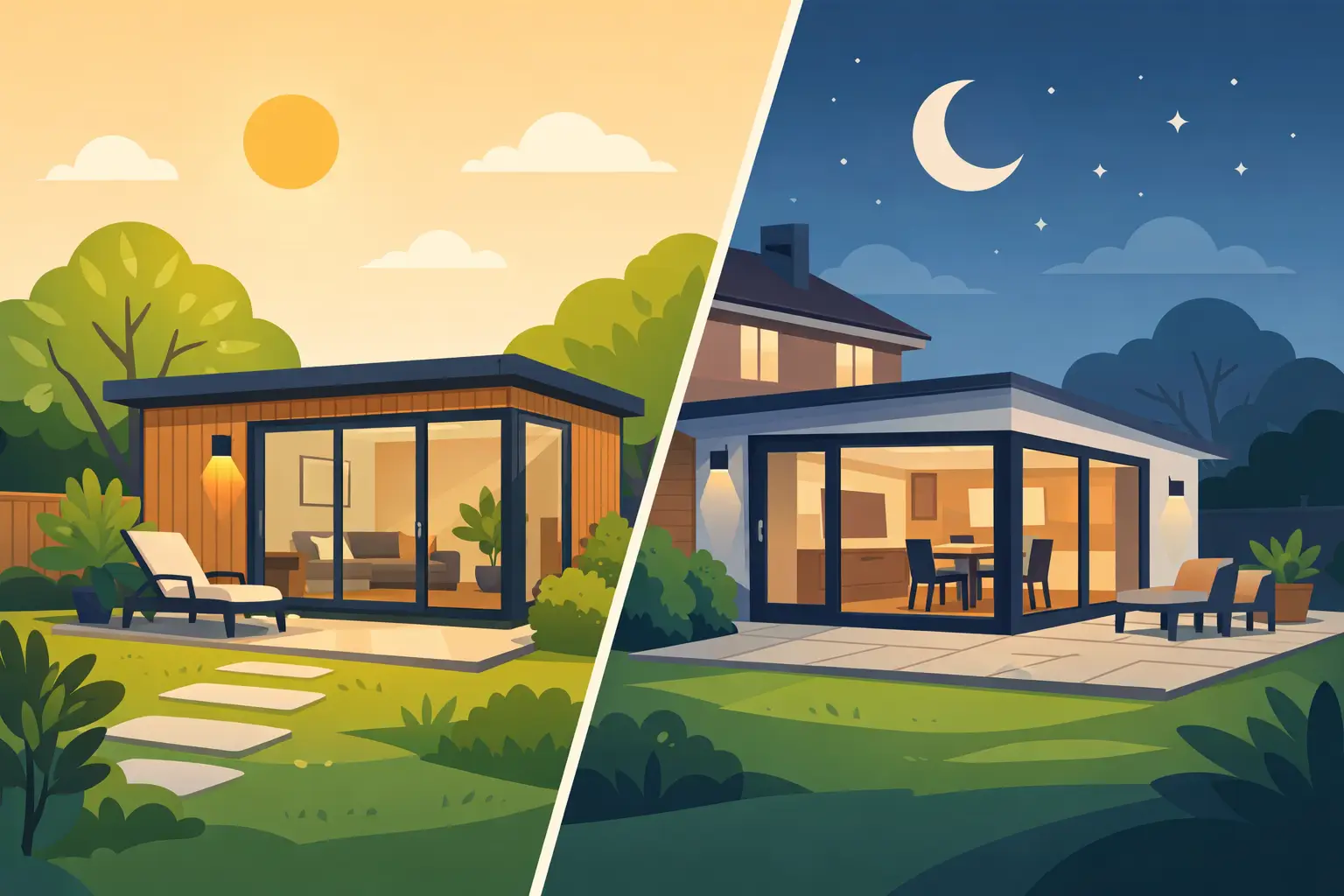
One spare room can change the feel of a house. It can give you somewhere to work in peace, a place for teenagers to disappear to, or the extra breathing space family life has been asking for. When homeowners start weighing up a garden room or extension, the real question is not just which adds space. It is which adds the right kind of space for the way you actually live.
For some homes, a traditional extension is absolutely the right move. For others, a bespoke garden room delivers more freedom, less upheaval and a better day-to-day result. The best choice depends on how you want to use the space, how much disruption you can tolerate, and whether you want to expand your home without turning the house itself into a building site.
Garden room or extension: what is the real difference?
An extension becomes part of the main house. It is physically attached, often opening off the kitchen, dining area or rear reception room. That can make it ideal if you need to enlarge the core living space and want the new area to feel fully integrated with the existing layout.
A garden room sits separately in the garden as a standalone building. Done properly, it is not a glorified shed or fair-weather summer house. A high-quality insulated garden room is a genuine all-year-round space that can work as a home office, studio, gym, annex, hobby room or entertainment area.
That separation is often the deciding factor. If you need more room for the family to gather around the kitchen table, an extension may make more sense. If you need privacy, focus, or a sense of escape without leaving home, a garden room can be far more effective.
Cost is not just about the build price
A lot of homeowners begin with budget, and understandably so. In many cases, a garden room will be more cost-effective than a brick-built extension, especially when you compare the full project rather than the headline number.
With an extension, costs can keep growing once foundations, drainage, steels, glazing, roofing, internal finishes and knock-through works are fully priced. Then there is the fact that the existing home is being altered. Floors may need making good, kitchens may need moving, and the project often involves several trades over a longer period.
A garden room is typically more contained. The structure is designed for a specific footprint, the installation process is usually more straightforward, and you are not reshaping the heart of the house just to gain an extra room. That does not mean every garden room is cheap. A premium bespoke building with insulation, quality windows and doors, composite cladding and a tailored internal layout is an investment. But it is often an investment with fewer hidden shocks.
The better way to look at cost is value over time. A low-maintenance garden room built from durable composite materials can save years of repainting, repairs and ongoing upkeep. That matters if you want a space that looks smart and performs well without becoming another job on your weekend list.
The disruption factor matters more than people expect
This is where many decisions are really made.
An extension can be worth every penny, but it usually comes with noise, dust, deliveries, trades moving through the property and a fair amount of inconvenience. If the works affect the kitchen or rear of the house, daily life can become awkward for quite a while. Families with young children, people working from home and anyone caring for older relatives often feel that strain very quickly.
A garden room is different because the work happens away from the main house. There is still a build process, of course, but the impact on everyday life is generally much lower. You can carry on using your home while the new space takes shape outside.
For many homeowners, that convenience is not a minor bonus. It is the reason a garden building moves to the top of the list.
Planning, permissions and practical limits
When an extension may be more complex
Extensions can involve planning considerations, building regulations and design constraints that vary by property type, location and the scale of the work. If you live in a conservation area or own a listed property, it can be more involved again.
That does not mean an extension is off the table. It just means the process can take time and often needs more coordination before work begins.
When a garden room is the easier route
Many garden rooms can fall within permitted development, depending on their size, height, position and intended use. That can make the path much simpler, although it is always sensible to check the details for your property.
A specialist supplier that understands planning guidance can make a real difference here. The aim is not just to design something attractive, but to shape a building that suits your garden and avoids unnecessary complications where possible.
Which one gives you the better lifestyle result?
This is where the choice becomes less about square metres and more about how the space will feel on an ordinary Tuesday.
If you work from home, a garden office often beats an extension because it creates proper separation. You finish work, shut the door and walk back to the house. That physical divide helps with focus during the day and switching off in the evening.
If you want a gym, games room, art studio, music room or garden bar, a standalone building usually feels more purposeful too. It gives the activity its own zone rather than squeezing it into family living space.
On the other hand, if your house simply does not have a big enough kitchen or dining area for family life, a garden room may not solve the central problem. In that case, extending the house could improve the way you live far more directly.
So the question is not which option is better in general. It is whether you need connected space or separate space.
Garden room or extension for year-round use
Some people still picture garden buildings as seasonal spaces. That is only true of lower-spec structures.
A modern insulated garden room built with quality materials can be comfortable right through the year. The construction matters here – insulated walls, reliable roofing, high-performance doors and windows, and durable external finishes all play a part. When those elements are done properly, the building becomes a practical extension of your lifestyle, even though it is not attached to the house.
This is also where material choice becomes important. Traditional timber has charm, but it can demand regular staining, painting and maintenance to keep it looking its best. Composite finishes appeal to many homeowners because they offer the warm look of timber with far less upkeep. That combination of appearance and convenience is a big part of why bespoke composite garden rooms continue to gain ground.
Think about flexibility in five years, not just now
A rear extension is usually designed around one main purpose. It might become a larger kitchen-diner or a more open family room, and that is often exactly what is needed.
A garden room tends to be more flexible over time. The office of today can become a guest room, a teenage den, a treatment room, a hobby space or a place for older relatives to stay with more independence. That adaptability is valuable if your plans may change.
For homeowners who want extra space without locking themselves into one use forever, a bespoke garden building can be a smart long-term move. It gives you room to respond as work patterns, family needs and lifestyle priorities shift.
The look of the finished project matters
An extension should feel like it belongs to the house. That can be beautiful when it is done well, but it can also be limited by what the existing property allows.
A garden room offers more freedom to create something distinctive. Contemporary lines, large glazed panels, timber-style finishes and tailored layouts can turn the end of a garden into a genuine destination rather than just an overflow room. For many buyers, that sense of style is part of the appeal. They are not just adding square footage. They are creating a space they actively want to spend time in.
Composite Garden Studios works with homeowners looking for exactly that balance – strong visual appeal, year-round comfort and hassle-free low maintenance ownership.
So, should you choose a garden room or extension?
Choose an extension if you need to enlarge the main body of the house and the new room has to connect directly with everyday family living. It is often the right answer for kitchens, dining spaces and major layout changes.
Choose a garden room if you want fast, flexible extra space with less disruption, strong year-round performance and a clear separation from the house. It is especially effective for home working, leisure, hosting and multi-use living.
The strongest decision usually comes from being honest about what problem you are trying to solve. If the house itself is too small in the wrong place, extend it. If you need more freedom, more privacy and more usable space without the mess and complexity of major building works, the garden may already be the answer.
The best extra room is the one you use constantly, not the one that only looked right on paper.