
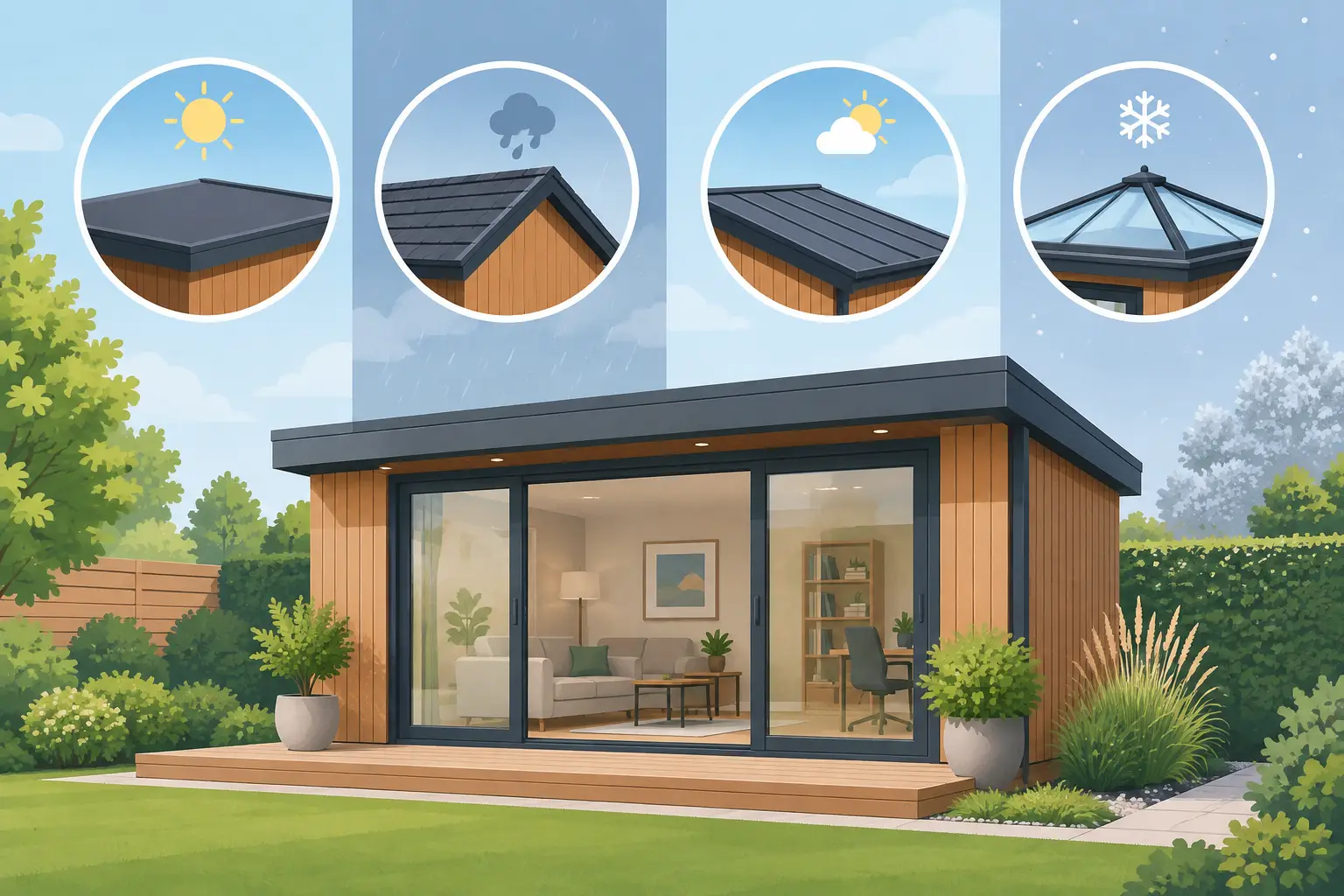
A garden room roof does far more than finish the look of your building. It affects how warm the space feels in January, how comfortable it stays on bright summer afternoons, how rainwater is managed and how the room sits within your garden. The best garden room roof options bring together insulation, weather protection and a design that suits how you plan to use the space.
For a home office, gym, hobby room or entertaining space, the roof should be considered early in the design process. It is much harder to add daylight, alter the roofline or improve insulation once the building is complete. Choosing well from the outset helps create an outdoor room that feels like a genuine part of your home, rather than a building used only when the weather allows.
Garden room roof options to consider
Most modern, insulated garden rooms use a flat or low-pitched roof construction. This creates clean contemporary lines, works well with composite cladding and gives flexibility over the room’s footprint. However, the right option depends on the building’s position, its height, the surrounding property and whether natural light or a particular visual style is a priority.
Flat warm roofs
A flat warm roof is one of the most popular choices for a premium garden room. Despite the name, it is not completely level. It has a carefully designed fall that directs rainwater towards a gutter or outlet, preventing water from sitting on the roof surface.
The word “warm” refers to the location of the insulation. Insulation sits above the structural roof deck, helping keep the building’s structure within the insulated envelope. For a garden studio used throughout the year, this is a practical approach because it supports stable internal temperatures and reduces the risk of condensation when the room is heated regularly.
Flat roofs suit contemporary garden offices and leisure rooms particularly well. They give a crisp, understated profile, which can be helpful where a building needs to sit discreetly near a boundary. They also work well with rooflights, allowing daylight to reach the centre of a deeper room where side windows alone may not be enough.
The quality of the waterproof covering matters as much as the roof shape. A high-performance membrane or similarly durable roofing system should be professionally installed with proper edge details and drainage. This is not an area where a thin, short-term covering offers good value. A well-specified roof protects the investment beneath it.
Pitched and pent roofs
A pitched roof has two sloping sides meeting at a ridge, while a pent roof slopes in one direction. Both offer a more traditional roofline than a flat roof and can be an excellent visual match for period homes, rural settings or gardens where a softer silhouette is wanted.
A pent roof can create useful internal height on one side of the room. It can also direct rainwater towards a chosen edge, which may simplify drainage in certain garden layouts. If the higher side faces the right direction, it may offer an opportunity for high-level glazing that brings in daylight while protecting privacy.
A dual-pitched roof often feels more like a small standalone building than an extension of the house. That can be ideal for a summer house, guest space or garden room designed as a destination at the end of the garden. The trade-off is that pitched forms can increase the overall height of the structure, so they need careful consideration alongside permitted development rules and neighbouring boundaries.
Neither style is automatically better. A flat roof is often the natural choice for a sleek, modern composite garden studio, while a pitched or pent roof may better complement the character of the property. The aim is to make the building look intentional from every viewpoint, including upstairs windows and neighbouring gardens.
Green roofs
A green roof uses vegetation planted over a waterproof roof system. It can soften the appearance of a garden room, helping it blend into planting schemes and making a low-profile building feel less prominent when viewed from the house.
For homeowners who value wildlife-friendly planting, a sedum roof can be an attractive addition. It may support insects and provide a changing texture through the seasons. It can also help slow the flow of rainwater during heavy showers, although it must never be treated as a substitute for properly designed drainage.
Green roofs are not maintenance-free. They need a roof structure designed to carry the additional saturated weight, a dependable waterproof layer beneath the growing system and safe access for occasional care. The planting may need weeding, feeding or watering during extended dry periods, depending on the system used. If your main reason for choosing a composite garden room is hassle-free ownership, it is worth being realistic about the extra attention a living roof requires.
Rooflights and lanterns
Natural light can transform a garden room, especially when it is being used as a workspace, art studio, treatment room or family entertaining area. Rooflights are often the most effective way to brighten the middle of a room without adding large windows that overlook a neighbour or compromise wall space for storage, screens or equipment.
A slimline flat rooflight keeps the external roof profile simple and contemporary. A roof lantern introduces more architectural presence and can make a larger garden room feel especially open, but it will usually add more height and visual impact. The best choice depends on the overall scale of the building.
Glazing needs to be balanced with thermal performance. Too much glass can create glare and unwanted solar gain, particularly on south-facing roofs. Well-positioned rooflights, quality glazing and appropriate ventilation give a more comfortable result than simply adding as much glass as possible. For a home office, think about where computer screens will sit before deciding on the location of overhead light.
Insulation and ventilation matter as much as style
A garden room can have an attractive roofline and still underperform if the roof is poorly insulated. Heat naturally rises, so the roof is a major part of the building envelope. High-quality insulation helps retain warmth in winter and slows heat gain in summer, making the room more economical and enjoyable to use.
For an all-year-round garden building, the roof, walls, floor, windows and doors should work as one system. A highly insulated roof will not compensate for draughty doors, just as premium windows cannot overcome a cold roof. This joined-up construction is what helps a garden studio feel comfortable whether it is being used for a video call in February or a family get-together in August.
Ventilation is equally important. A room used for exercise, music, entertaining or sleeping may experience higher levels of moisture and heat. Opening windows can help, but the design should also allow air to move effectively without turning the space cold in winter. Where a room has large areas of glazing or rooflights, consider shading and opening sections as part of the design conversation.
Drainage, maintenance and long-term ownership
The UK climate asks a lot of any roof. Persistent rain, wind-driven leaves, frost and occasional summer downpours all make drainage essential. Gutters, outlets and downpipes should be sized and positioned to move water away from the building and avoid overspill onto paths, patios or neighbouring land.
Keep access in mind too. Even a low-maintenance roof benefits from occasional checks, particularly after storms or when leaves are falling. A roof should be inspectable without creating an unsafe maintenance task. This is especially relevant for green roofs, rooflights and buildings positioned beneath mature trees.
Composite Garden Studios focuses on low-maintenance outdoor living, and that principle should extend to the roof specification. A durable waterproof finish, effective insulation and sensible drainage reduce the need for regular intervention. You should not need to spend weekends painting timber, repairing cracked felt or worrying that a damp patch means the room cannot be used.
Choosing the right roof for your garden room
Start with the purpose of the building. A compact work-from-home office may benefit from a low-profile flat warm roof with one carefully placed rooflight. A larger garden gym or golf simulator room may need greater internal height and a roof design that accommodates lighting, ventilation and equipment. A summer house intended for relaxed hosting may suit a pitched roof that echoes the main home or frames a view across the garden.
Then look at orientation, trees, surrounding buildings and sightlines from the house. A south-facing rooflight may be wonderful in a creative studio but less suitable above a desk without shading. A green roof can look beautiful from an upstairs bedroom, while a clean flat roof may be the more practical answer under overhanging trees.
The most successful roof is not simply the one that looks best in a brochure. It is the one that keeps your garden room dry, warm, bright and easy to own for years to come. Bring photos of your garden, details of how you will use the space and any ideas you have about light or style to your design consultation – those small details often lead to the roof choice that makes the whole room work.