
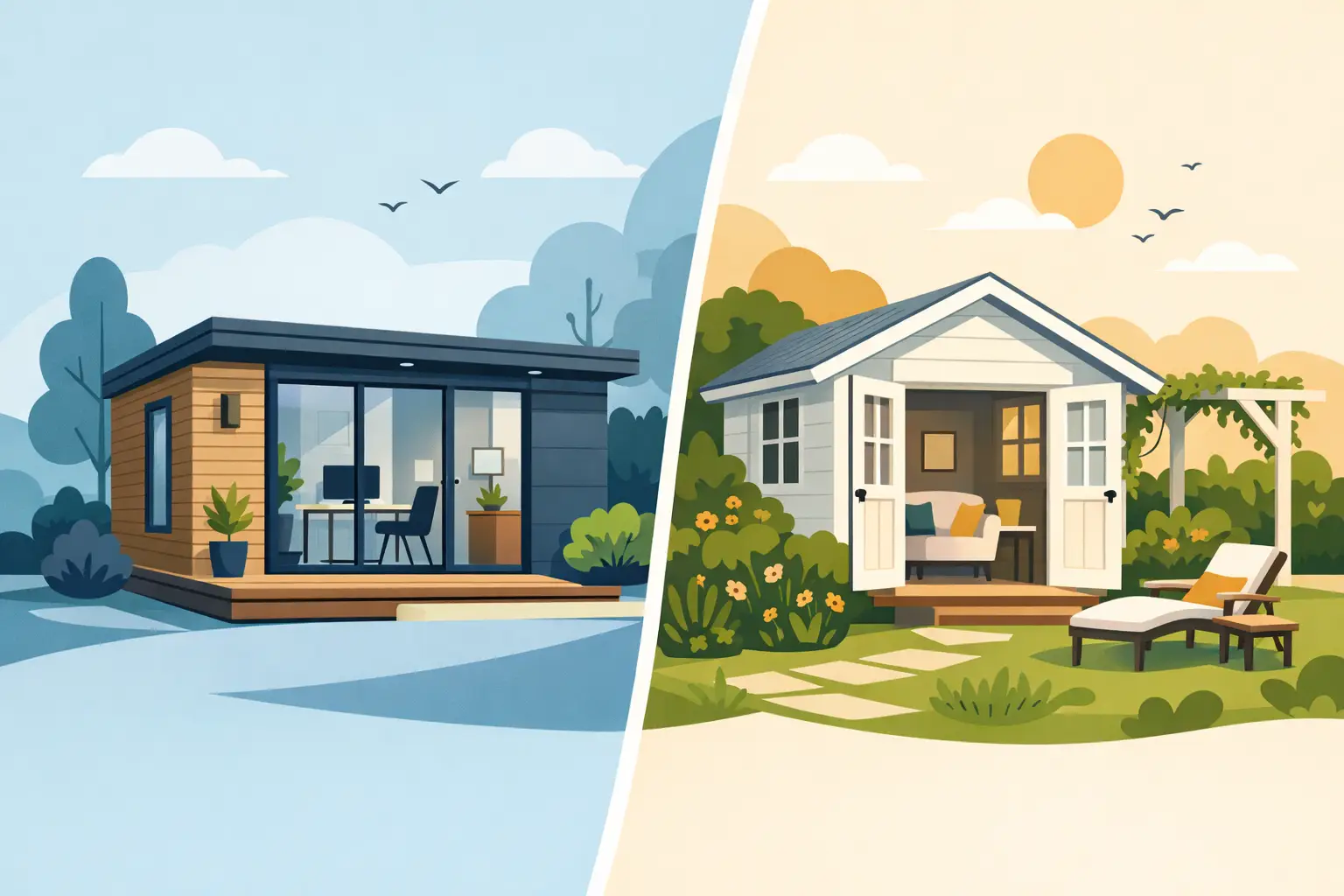
A garden building can solve a very real problem: the spare bedroom has become an office, the dining table is permanently covered in laptops, or your family needs somewhere to relax without extending the house. When comparing a garden studio vs summer house, the key question is not simply which looks better in the garden. It is whether you need a pleasant seasonal retreat or a properly usable extra room for every month of the year.
Both can add character, space and value to how you live at home. However, their construction, comfort, maintenance needs and long-term suitability are very different. Choosing well at the start means your new garden space works as hard as you need it to.
Garden Studio vs Summer House: The Main Difference
A summer house is traditionally a light, attractive garden building designed for fair-weather enjoyment. It may be used as a reading room, a place for children to play, somewhere to enjoy the garden, or occasional storage for outdoor furniture and accessories. Many are timber-built and supplied with basic glazing, thinner walls and little or no insulation.
A garden studio is designed as an extension of your living space. It is typically insulated in the walls, floor and roof, fitted with quality doors and windows, and built to provide a comfortable environment throughout the year. Depending on the specification, it can become a home office, gym, art studio, treatment room, music room, hobby space or entertainment room.
That difference matters most in a British winter. A building that feels inviting on a sunny July afternoon can be cold, damp or expensive to heat by November if it was never intended for year-round use.
Choose a Summer House for Seasonal Enjoyment
A summer house can be an excellent choice when your priorities are simple outdoor enjoyment and a lower initial outlay. If you mainly want a quiet spot to sit in the garden, a sheltered place to have coffee with friends, or a charming focal point at the end of the lawn, it can provide exactly that.
Its lighter construction may also make it suitable for homeowners who do not need power, heating or extensive interior finishes. Traditional timber summer houses have an informal, familiar look that suits cottage-style gardens particularly well.
The trade-off is that a standard summer house is usually less adaptable. Using it as a regular office, a workout room or a guest space can be difficult without adding insulation, electrics, heating and improved security. Once these upgrades are considered, the apparent saving can narrow quickly.
Timber also needs ongoing care. It may require regular treatment, painting or staining to protect it from the changing UK weather. Without consistent maintenance, timber can be vulnerable to moisture, fading, warping and rot. That does not make a summer house the wrong choice, but it does mean it suits buyers who are happy to maintain it and use it mainly during milder months.
Choose a Garden Studio When Space Needs to Work Harder
A garden studio is the more practical option when the building needs to function as a genuine room rather than a seasonal escape. For anyone working from home several days a week, insulation and a stable internal temperature are not luxuries. They are what make the space comfortable enough to use through cold mornings, heatwaves and wet weekends.
High-performance construction also gives you more freedom. A bespoke garden studio can be arranged around the way you live, from the position of doors and windows to the size, layout and interior use. Large glazed areas can bring in garden views and natural light, while considered insulation and roofing help maintain comfort without making the room feel enclosed.
For many households, this flexibility is the deciding factor. One family may need a peaceful office now and a teenager’s study space later. Another may want a home gym that does not take over the garage. A garden studio can support those changing needs far more easily than a basic summer house.
At Composite Garden Studios, bespoke composite buildings are designed around this all-year-round approach. Their timber-style composite finish gives the warmth of wood while removing much of the upkeep associated with conventional timber cladding.
Comfort, Insulation and Heating
The most noticeable distinction between the two options is insulation. A garden studio should have insulated walls, roof and floor as part of a complete building system. This reduces heat loss in winter and helps limit overheating in summer, particularly when paired with quality glazing and appropriate ventilation.
You will still need to consider heating. The right solution depends on the size of the room, how often it will be occupied and the electrical installation. However, a well-insulated studio needs far less energy to stay comfortable than an uninsulated or lightly built summer house.
If you plan to take video calls, see clients, exercise early in the morning or spend long periods in the building, this is where investing in a studio pays back in everyday usability. Cold feet, condensation and background rain noise can turn a cheap workspace into a frustrating one.
Maintenance and Long-Term Appearance
A traditional timber summer house can look beautiful when first installed, but it needs attention to stay that way. Painting, staining and checking for weather damage become part of ownership. Some people enjoy this routine, while others would rather spend their weekends enjoying the garden.
Composite cladding offers a low-maintenance alternative. It is made to handle rain, frost and strong sunlight without the regular painting and staining that timber often demands. For busy professionals, families and homeowners planning to stay in their property for years, that hassle-free ownership is a major benefit.
Low maintenance does not mean no care at all. Windows, gutters, ventilation and the surrounding ground should still be kept clean and checked. Yet the routine is much simpler, and the building can retain a smart, timber-effect appearance with far less effort.
Cost: Look Beyond the Starting Price
A summer house is often cheaper at the point of purchase, especially in standard sizes and off-the-shelf designs. That can make it the right option for a straightforward garden retreat with occasional use.
A garden studio normally costs more because it includes more: insulated construction, stronger roofing, better windows and doors, a more substantial base requirement, and greater design flexibility. Electrics, heating, internal finishes and access conditions may also affect the final price.
The useful comparison is therefore not just purchase price. Ask what you would need to add to make each building suitable for your intended use. If a summer house needs insulation, internal lining, upgraded glazing, power, heating and regular treatment before it can serve as an office, a purpose-built studio may represent better value over time.
It is also worth thinking about disruption. A garden building can create extra usable space without the dust, structural work and prolonged inconvenience of a house extension. For homeowners who need a dedicated room but want to keep the main house functioning normally, that is a meaningful advantage.
Planning and Practical Considerations
Whether you choose a studio or summer house, check how the building will sit within your garden before falling in love with a design. Size, height, location, access and intended use can all affect what is appropriate.
Many garden buildings can be installed under permitted development rules, but this depends on the property and the proposal. Listed homes, conservation areas, flats, properties with previous planning restrictions and buildings intended for sleeping accommodation require particular care. A granny annexe, for example, raises different planning and building regulation considerations from a daytime home office.
Think practically about the route into the garden too. A beautiful large studio needs suitable access for materials and installation. Consider the base, drainage, power supply, privacy from neighbours and the view from inside the building. A well-positioned window can turn an ordinary workday into something far more enjoyable, while poor positioning can make even a premium room feel exposed or dark.
Which One Is Right for Your Home?
Choose a summer house if you want an attractive, occasional-use garden retreat, enjoy the character of timber and are comfortable with seasonal use and maintenance. It can be a lovely addition when your expectations are modest and your main aim is to spend more time outside.
Choose a garden studio if you want reliable comfort, low-maintenance materials and a room that supports everyday life. It is the stronger choice for home working, fitness, hobbies, entertaining, specialist leisure rooms or flexible family space. It also makes sense when you want the building to look good and perform well long after the first summer has passed.
The best decision comes from being honest about how you will use the space on a cold Tuesday in January, not just a bright Saturday in June. Design the building for that real-life moment, and your garden can become the most useful part of your home.