
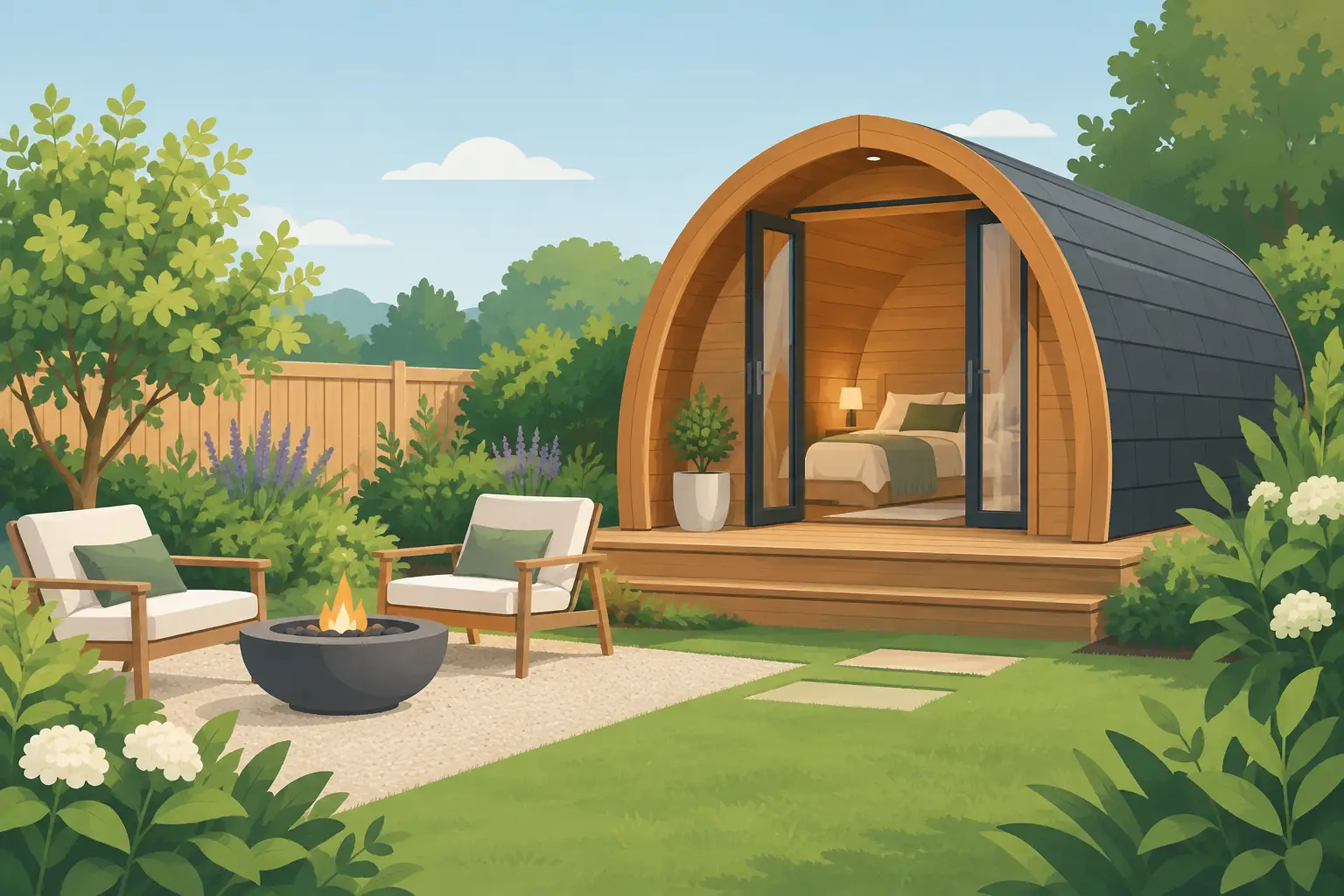
A glamping pod for garden use can turn an underused corner of your outdoor space into somewhere people genuinely want to spend time. It gives visiting family their own retreat, creates a memorable place for weekend stays, or simply provides a quiet escape from a busy home – without the cost and disruption of extending the house.
The best garden pods feel less like a shed at the bottom of the garden and more like a compact, comfortable room with a purpose. Getting there comes down to choosing the right size, insulation level, layout and finish for the way you plan to use it.
What can a garden glamping pod be used for?
The obvious answer is guest accommodation, and for many homeowners that is the starting point. A well-designed pod gives friends and family privacy while keeping them close by. It can make hosting easier during Christmas, school holidays or regular family visits, particularly when bedrooms inside the house are already in demand.
But a pod does not need to be reserved for overnight guests. With the right internal layout, it can be a reading room, hobby space, home office, teenage den or a peaceful garden room for morning coffee and evening drinks. Some owners choose a flexible design: a daybed or sofa bed provides occasional sleeping space, while a small table creates a useful working area the rest of the year.
If you are considering letting the space to holiday guests, the specification needs more careful thought. Heating, ventilation, electrics, plumbing and access all affect both guest comfort and the approvals you may need. It is worth deciding early whether your pod is purely for personal use, occasional visitors or a commercial venture, as this will shape the project from the ground up.
A glamping pod for garden comfort needs more than good looks
Curved timber-style cabins may look appealing in photographs, but a garden building has to deal with British weather for years, not just look inviting on a sunny afternoon. Insulation is what separates a fair-weather hideaway from a space you can use in February. Insulated walls, floor and roof help the pod hold heat in colder months and reduce overheating when the sun is high.
Quality windows and doors matter just as much. They bring in daylight, frame the garden view and make the interior feel larger, but they must also provide dependable thermal performance and weather protection. Opening windows or integrated ventilation are particularly useful if the pod will be slept in, used for exercise or fitted with a kitchenette.
Think carefully about heating before installation, rather than treating it as an afterthought. An electric heater can suit a smaller, insulated pod used occasionally. For more regular use, electric underfloor heating or a carefully sized wall-mounted system can create a more even, comfortable temperature. Your choice will depend on the size of the building, its insulation specification and how often it will be occupied.
Why composite construction makes sense
Traditional timber has warmth and character, but it also asks for attention. Painting, staining and dealing with rot or weathering can become a recurring job, especially on a building exposed to rain, frost and strong summer sun.
Composite cladding offers the timber-inspired appearance many homeowners want without the same level of upkeep. It is designed for low-maintenance ownership, so there is no routine cycle of painting or staining to plan around. For a glamping pod that should feel like an enjoyable addition to the garden rather than another weekend task, that is a meaningful advantage.
A high-performance roof and durable external finish also protect the investment behind the scenes. This is not the most glamorous part of a design conversation, but it is often the difference between a building that remains smart and usable year after year and one that quickly starts to feel tired.
Start with the experience, then plan the layout
A pod can be compact without feeling cramped, provided every part of the layout earns its place. Before choosing dimensions, imagine a real visit from start to finish. Where will guests put their bags? Is there room to sit comfortably indoors if rain arrives? Can the bed be made up without blocking the door? Where will coats, towels and bedding be stored?
For an occasional guest pod, a larger sleeping area and generous glazing may be the priority. If it will double as a work or leisure room, a clear section for a desk, table or seating is more valuable than squeezing in a permanent double bed. Built-in storage, fold-down tables and sofa beds can make a smaller footprint work much harder.
Positioning is part of the experience too. A pod set at the far end of a garden can feel private and escapist, while one closer to the house is more convenient for electrics, water and everyday use. Consider the view from inside, the amount of natural shade, access from the house and how the building will look from your main windows. A beautiful pod should enhance the garden rather than dominate it.
Plan for services before the build begins
A simple garden room with lighting, sockets and heating is usually more straightforward than a fully self-contained guest pod. Add a shower room, WC or kitchenette and the project becomes more involved, as water supply, drainage, hot water and ventilation must all be considered.
That does not mean a bathroom pod is out of reach. It simply means the site needs assessing properly. The distance to existing drainage, ground levels and the route for service connections can all influence cost and design. Access is equally practical: installers need a suitable route into the garden, and any groundwork should be planned to protect lawns, patios and planting as far as possible.
A proper base is essential. The exact solution depends on the ground conditions and building design, but it should provide a stable, level foundation that supports the structure and helps keep moisture where it belongs – outside. Skimping on groundwork is a false economy, particularly for an insulated building intended for regular use.
What about planning permission and building regulations?
Many garden buildings can be installed under permitted development rights, but there is no single rule that covers every home and every design. Height, position, proximity to boundaries, the size of the building and whether it will be used as sleeping accommodation can all matter. Properties in conservation areas, listed buildings and homes with specific planning restrictions may have additional considerations.
The intended use is central. A garden pod used as incidental accommodation – for example, somewhere guests sleep while still using the main house’s facilities – is treated differently from a separate dwelling. Renting it out, providing independent living facilities or using it as a permanent residence can require formal planning permission and may raise building regulations requirements.
The sensible approach is to establish the intended use before finalising the design. A specialist supplier can explain the usual considerations, but your local planning authority is the final decision-maker. Clear information at this stage can prevent costly changes later.
Choose a specification that will still suit you in five years
A garden pod is more convincing when it answers a long-term need, not just a short-term trend. Ask whether the space can change with your household. A guest room today may become a home office, hobby room or a quiet retreat when children are older. Neutral internal finishes, generous insulation and a flexible layout help protect that future value.
It is also worth looking beyond the headline price. A lower-cost structure may appear attractive initially, but regular maintenance, limited insulation and poor-quality doors or roofing can soon reduce its appeal. A bespoke composite garden building is an investment in usable space, so build quality and year-round comfort deserve proper weight in the decision.
Composite Garden Studios designs tailored garden buildings around the way homeowners want to live, from low-maintenance finishes to practical layouts that make the most of every square metre. The right design should feel considered from the first step inside, not like an extra room that has been squeezed into the garden.
Your garden does not need to be huge to create a meaningful escape. Start with the moments you want the pod to support – a peaceful night for guests, a slow weekend breakfast, a focused working day – and let those moments guide every choice that follows.