
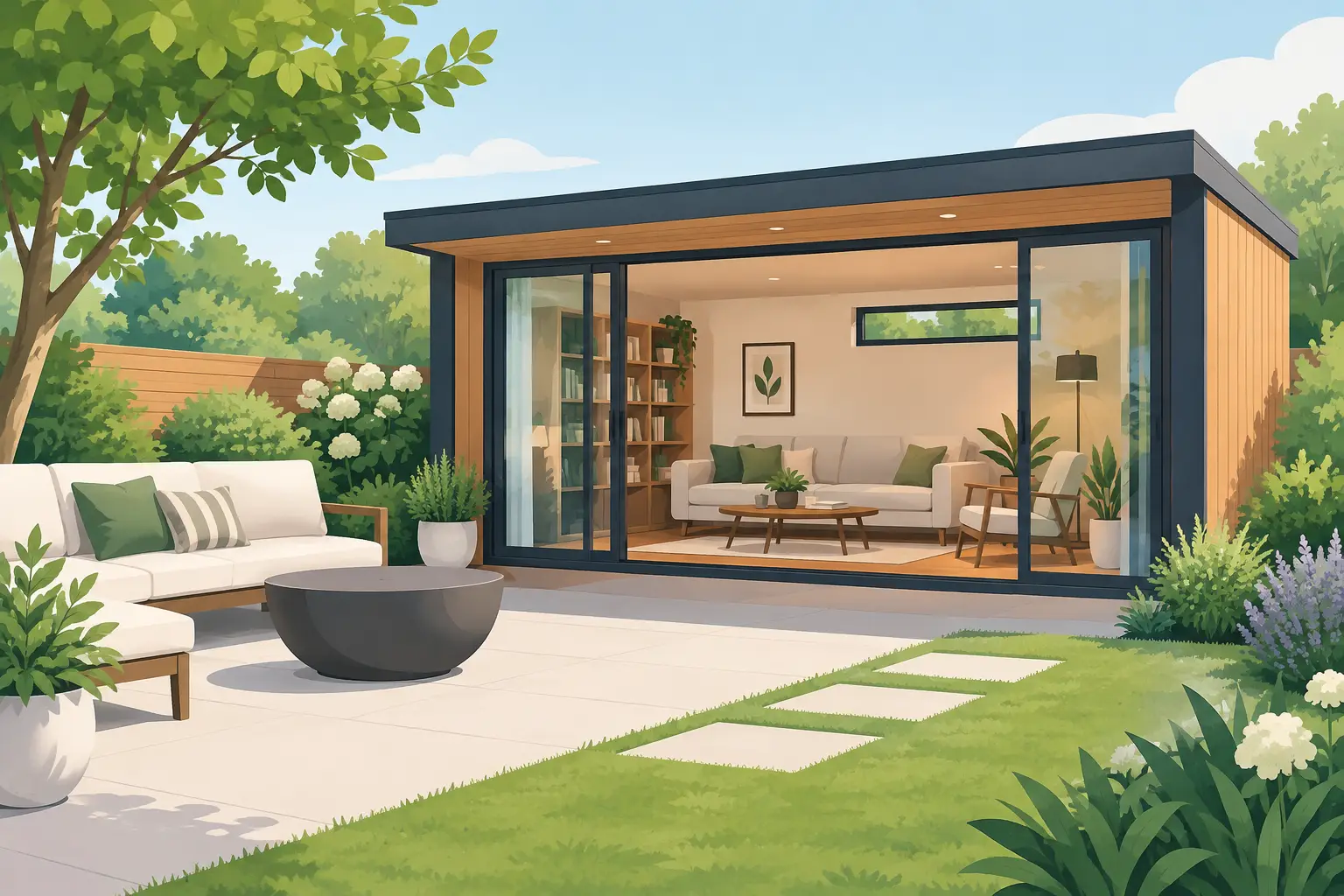
A leisure room should feel like a destination, not a spare shed at the end of the garden. Whether you picture a cinema room, home gym, bar, games room, art studio or a quiet place to switch off, knowing how to design leisure garden rooms starts with the experience you want to have inside it. The best designs balance that feeling with the practical details that make the space comfortable, durable and easy to enjoy in every season.
Start with the leisure space you will genuinely use
It is tempting to begin with the look of the building, but the intended use should lead every decision. A garden room designed for a golf simulator needs sufficient ceiling height, clear swing space and controlled lighting. A snooker room needs room around the table, while a family cinema room benefits from blackout options, acoustic control and comfortable seating.
Think about what will happen in the room on an ordinary Tuesday evening, rather than only on special occasions. Will it be a peaceful retreat for two, a place for teenagers and friends, or a social space for hosting? A flexible leisure garden room can work beautifully, but trying to fit too many competing uses into a small footprint can make it feel compromised.
Before choosing a size, answer four practical questions:
- How many people should use the room comfortably at one time?
- What is the largest item of furniture or equipment going inside?
- Do you need storage for games, gym equipment, drinks or hobby materials?
- Will the room be used mainly in daylight, evenings or throughout the day?
These answers give your project a proper brief. They also help avoid a common mistake: choosing a room based on external dimensions, then discovering that doors, seating, storage and circulation use more internal space than expected.
How to design leisure garden rooms around layout
A good layout creates a natural flow from the house, across the garden and into the room itself. Positioning matters. A building close to the house is convenient for drinks, guests and everyday use, while a room farther down the garden can offer a stronger sense of escape. There is no single right location – it depends on the shape of the plot, privacy from neighbours and how you want the room to feel.
Consider the view from inside as carefully as the view of the building from the house. Large glazed doors facing a well-planted border can make even a compact room feel generous. If the garden is overlooked, place glazing towards the most private aspect and use side windows carefully. Privacy planting, screening and thoughtful orientation can provide seclusion without making the room dark.
Inside, leave clear routes around furniture. For a cinema or entertaining room, it is often better to use fewer, more comfortable seats than crowd in extra furniture. For hobbies, create distinct zones: one for the main activity, one for storage and one for relaxing. Built-in cabinetry can keep equipment out of sight and preserve the calm, premium feel of the space.
Do not overlook the approach to the building. A simple path, well-drained surface and exterior lighting make the room more inviting after dark and easier to use through wet British winters.
Make year-round comfort non-negotiable
A leisure room that is too cold in January or stuffy in July will quickly become underused. This is where the quality of the building fabric matters far more than a decorative finish. Insulated walls, floor and roof, quality windows and doors, and effective roof construction all contribute to a stable internal temperature.
Heating should suit how you plan to use the room. If you will spend long periods there, such as in a gym, studio or hobby room, an efficient electric heating solution with simple controls may be appropriate. For occasional evening use, quick-response heating can be more practical. The right option depends on room size, insulation level and whether you want to maintain a background temperature.
Ventilation deserves equal attention. Exercise spaces, bar rooms and busy family rooms all create heat and moisture. Opening windows may be enough for some uses, but trickle ventilation and opening doors should be planned into the design rather than treated as an afterthought. For a cinema or music room, acoustic requirements may affect where openings can be placed.
Composite cladding is particularly well suited to a leisure garden room because it delivers the warm appearance of timber without the usual cycle of painting, staining, rotting and repairing. It is a practical choice for homeowners who want their outdoor space to look smart for years, without giving up weekends to maintenance.
Choose light for the activity, not just the view
Natural light is a major advantage of a garden building, but more glass is not always better. A bright art room may benefit from generous glazing and consistent daylight. A gaming room, golf simulator or cinema room may need more controlled light to reduce glare on screens and projectors.
Layered lighting gives a leisure room flexibility. Use general ceiling lighting for safe movement, task lighting where activities demand it, and softer feature lighting for atmosphere. Dimmable fittings are especially useful in entertainment rooms because they allow the mood to change from practical to relaxed without altering the room itself.
Plan power points early. Think beyond the obvious television or sound system. A gym may need outlets for equipment, a hobby room may need charging points and a bar area may need space for a fridge, lighting and appliances. Positioning sockets at the design stage keeps cables discreet and avoids relying on extension leads later.
Create the right finish without creating more work
Your interior choices should support the way the room will be used. Durable flooring is a sensible starting point, particularly in rooms entered directly from the garden. For a gym, resilient flooring can protect both the floor and equipment. In a social room, easy-clean flooring makes spills less stressful. For a creative space, choose surfaces that can handle paint, dust or regular cleaning.
Wall finishes, curtains, rugs and upholstered furniture can also improve acoustics. This matters in a cinema room, gaming room or music space, but it can make any leisure room feel more comfortable by reducing echo. A few well-chosen soft furnishings are often more effective than filling the room with decoration.
Keep the colour scheme connected to your home and garden. Natural timber-style finishes, soft neutrals and darker accents can give a garden room a settled, considered character. If the room is designed around a hobby or sport, bring that personality in through artwork, storage or lighting rather than making every surface overly themed. This keeps the room adaptable if your needs change.
Check planning and site requirements early
Many garden rooms can be installed under permitted development rules, but this is not automatic. Building height, location, proximity to boundaries, conservation areas, listed properties and intended use can all affect what is allowed. A room used incidentally with the home is treated differently from a building intended as separate accommodation or a business premises.
A granny annexe, for example, requires a different level of consideration from a leisure room. Likewise, plumbing, a bathroom, a kitchen area or sleeping facilities may have implications beyond the building itself. Checking the position, access and intended use early helps you design confidently and prevents costly changes later.
It is also sensible to consider groundwork, drainage and access for installation. A level, suitable base is essential for a long-lasting garden building, and restricted side access may influence how materials are delivered and assembled. These are not the glamorous parts of a project, but they underpin the finished result.
Design for change as well as enjoyment
The most valuable leisure garden rooms do not lock you into one lifestyle. A games room might later become a teenager’s study space, a fitness room or a quiet reading room. Choosing a sensible layout, strong insulation, quality glazing and adaptable lighting gives you options without requiring a rebuild.
At Composite Garden Studios, bespoke composite garden buildings can be configured around the way you want to live now, while providing the durable, low-maintenance foundation to support what comes next. Start with the moments you want the room to create, then give those moments the space, warmth and practical finish they deserve.