
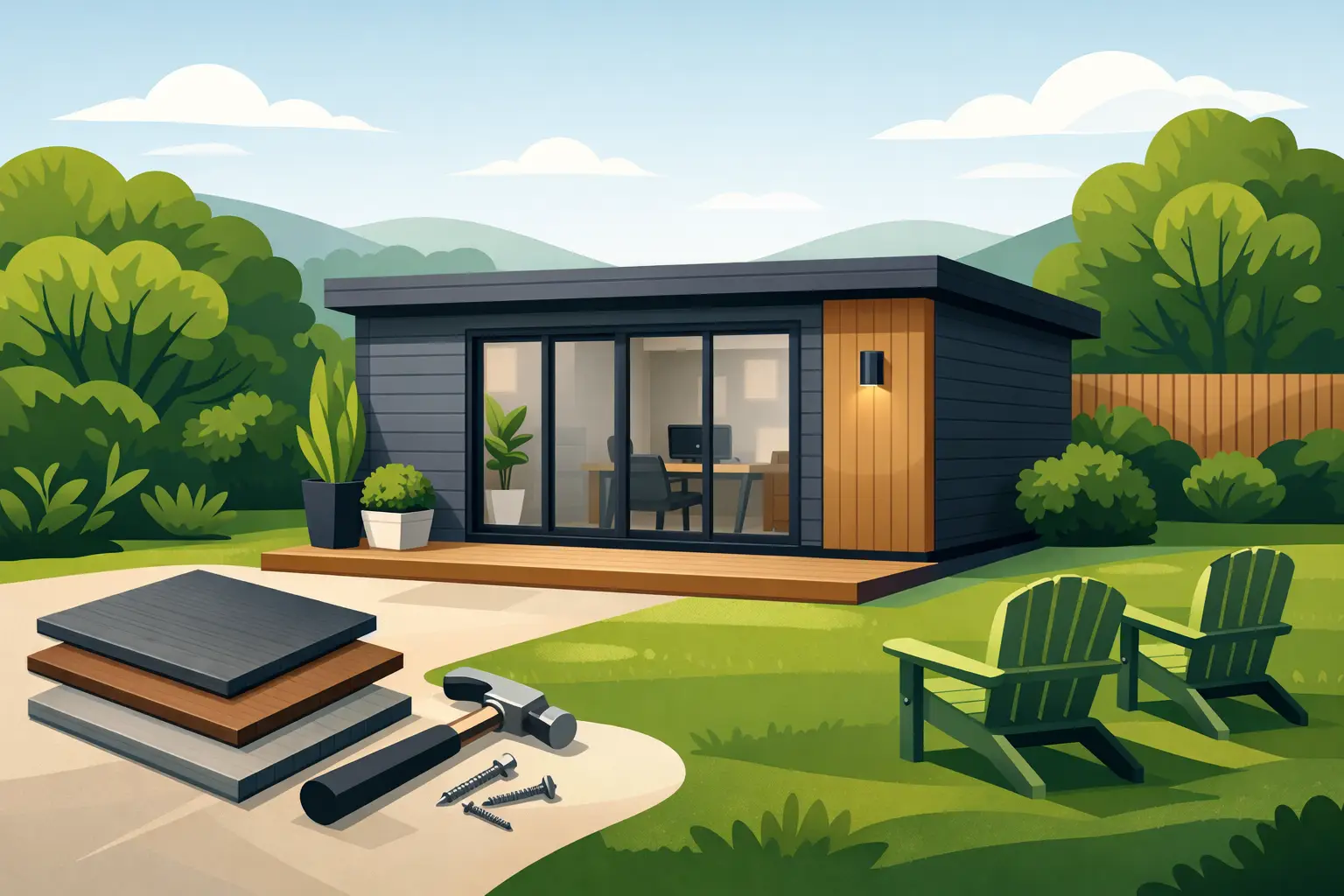
A garden room can look fantastic on installation day, but the real test comes after several British winters. Rain, frost, strong sunlight and everyday use soon expose the difference between a surface that needs regular attention and one designed for hassle-free ownership. So, is composite cladding worth it? For homeowners investing in a year-round garden office, studio, gym or leisure space, it can be a very worthwhile choice – provided the overall building is built to the same standard.
Composite cladding is not simply an aesthetic upgrade. It is a practical part of protecting your garden building, reducing upkeep and retaining that smart, timber-style appearance for longer. The initial cost is generally higher than basic softwood cladding, but the value lies in what you avoid: regular painting, staining, sanding, rot repairs and the gradual weathered look that can make an otherwise good garden building feel tired.
What composite cladding brings to a garden building
Composite cladding is typically made from a blend of recycled wood fibres and durable polymers. It is designed to create the warmth and texture associated with timber while addressing some of timber’s most familiar maintenance issues.
On a garden room, the cladding is the visible outer layer, but it has an important job. It helps form a weather-resistant exterior around the insulated structure, while giving the building its finished character. Available in a range of contemporary colours and wood-effect finishes, it suits everything from a compact home office to a larger granny annexe or garden entertainment room.
The main appeal is straightforward: it does not need the cycle of preparation and repainting that timber often demands. A wash down with mild soapy water and a soft brush is usually enough to keep it looking presentable. For busy households, that means more time enjoying the extra space and less time maintaining it.
Is composite cladding worth it compared with timber?
The answer depends on what you expect from your building over the next ten to twenty years. Timber has genuine appeal. It is natural, familiar and can be a lower-cost option at the outset. A well-made timber building can also look excellent, especially when it is properly treated and maintained.
However, timber needs commitment. It can require painting, staining or sealing at regular intervals, and neglected areas may be vulnerable to moisture, splitting, warping or rot. That is not necessarily a problem for someone who enjoys maintaining their garden structures. It is less appealing if your priority is a polished, reliable garden room that looks after itself.
Composite cladding costs more initially, but it can offer a more predictable ownership experience. It is resistant to rot and does not require painting or staining. Its colour and finish are designed to remain attractive with far less intervention, which is particularly useful on buildings with hard-to-reach elevations or larger external walls.
There is also an appearance consideration. Freshly painted timber can look beautiful, but it may fade or weather unevenly if maintenance is delayed. Quality composite cladding keeps a more consistent finish, helping a garden building continue to complement the house and garden rather than becoming another job on the weekend list.
The cost question: upfront price versus long-term value
Composite cladding is not the cheapest route to enclosing a garden building. If your only objective is the lowest possible purchase price, a basic timber structure may be more suitable. But comparing the two on upfront cost alone can be misleading.
Think about the whole period you plan to own the building. Timber may need treatment products, tools, time and occasional repairs. If you pay someone else to carry out the work, those costs can soon add up. Composite cladding reduces those ongoing demands, giving you a clearer idea of what the building will cost to live with.
It can also support the perceived quality of the whole project. When you are creating a dedicated place to work, welcome guests, exercise or spend time with family, the exterior matters. A clean, contemporary finish helps the building feel like a considered extension of the home rather than a temporary garden structure.
That does not mean composite cladding automatically makes sense for every project. A small seasonal summer house with a modest budget may not justify the additional investment. For a fully insulated garden office used throughout the year, a bespoke studio or an annexe intended to serve the household for many years, the case is usually much stronger.
Low maintenance does not mean no maintenance
One of the biggest reasons homeowners choose composite is the promise of low-maintenance living. That benefit is real, but it should be understood properly. Composite cladding still needs basic care to perform and look its best.
Airborne dirt, pollen, mud splashes and algae can build up on any external surface, especially in shaded gardens or near trees. An occasional clean will remove this and keep the finish looking fresh. It is also sensible to keep drainage routes clear and avoid allowing soil, leaves or stored items to sit against the lower cladding.
The key difference is that routine cleaning is very different from a programme of sanding, sealing, painting and repairing. Composite offers a simpler level of care, not a completely maintenance-free building. Windows, doors, gutters, roofing and ventilation all need suitable checks too.
Performance depends on more than the cladding
Cladding matters, but it is only one part of a comfortable, durable garden room. A high-quality exterior cannot compensate for poor insulation, inadequate roof construction, weak door and window specification or insufficient protection from moisture.
For genuine all-year-round use, look for a complete construction approach. Insulated walls and roof panels help retain warmth in winter and improve comfort during cooler evenings. Quality glazing and doors support security, weather protection and thermal performance. A well-designed roof helps manage rainwater effectively, while proper ventilation helps the room remain pleasant in use.
This is why it is worth considering the garden building as a whole rather than choosing a cladding board in isolation. A premium exterior finish on a poorly specified structure can be false economy. Equally, a well-insulated building with an exterior that constantly needs repainting may not deliver the hassle-free experience you hoped for.
At Composite Garden Studios, composite cladding is paired with a bespoke, insulated garden building design, allowing homeowners to choose the size, layout, finish and features that suit the way they want to use the space.
When composite cladding makes most sense
Composite cladding is particularly well suited to homeowners who want a lasting, polished exterior without taking on regular decorating work. It is a strong option for a garden office where professional video calls are part of the week, a fitness room that gets daily use, or a garden studio intended to feel as refined as the main home.
It also works well for families who need flexible space. A teenage hangout, hobby room, music space or guest accommodation should be easy to enjoy, not another exterior maintenance project. For older homeowners considering an annexe solution, the reduced upkeep can be especially valuable over time.
Location can also influence the decision. Buildings exposed to driving rain, coastal air, overhanging trees or long periods of shade face tougher conditions. While no material is entirely unaffected by its surroundings, composite offers reassuring resilience where regular timber care would be more demanding.
Factors to check before you decide
Not all composite products and garden buildings are equal. The finish, installation quality, fixing system and supporting structure all affect the final result. Ask what is included, how the wall system is insulated, how the roof is constructed and what guarantees apply to the materials and workmanship.
You should also consider colour carefully. Darker finishes can look striking and modern, while lighter tones may be better suited to a traditional garden setting. Looking at samples in natural daylight is useful, as the colour can appear different beside brickwork, fencing, paving and planting.
Finally, plan for the use of the room rather than just its footprint. A home office may need power points, data access and heating. A gym might need reinforced flooring and ventilation. A garden bar, golf simulator room or snooker room will need enough internal height and a layout that works for the equipment. Choosing the right cladding is part of the decision, but choosing the right building specification is what makes the investment work day after day.
If you want a garden building that keeps its timber-style appeal without the familiar cycle of painting and repairs, composite cladding is usually worth the extra consideration. The best result comes from treating it as part of a well-designed, insulated space that gives your home more room to live, work and enjoy.